
LISTEN TO THE EPISODE HERE:
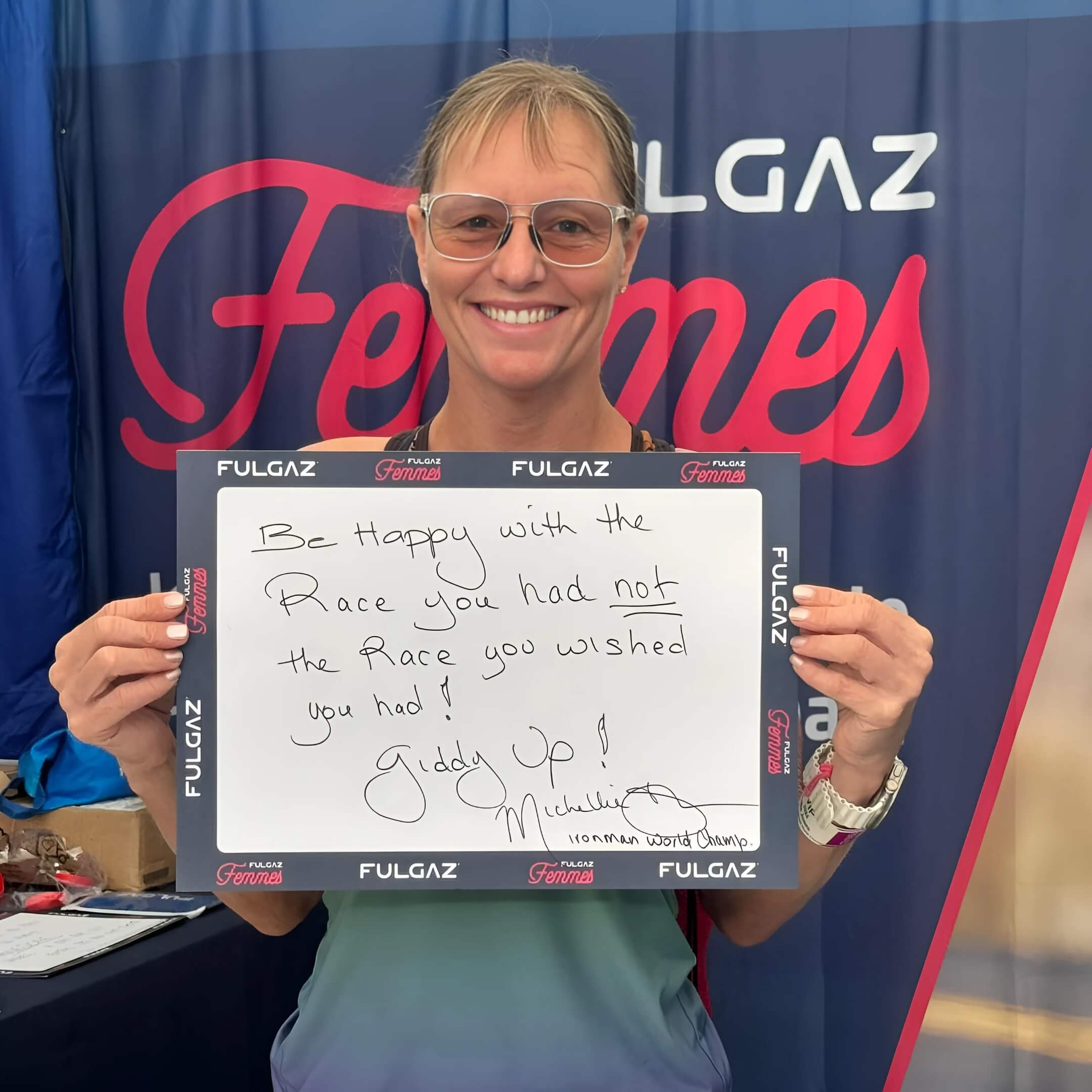
Michellie Jones is an Australian triathlon legend with a resume including two ITU World Championships, an Olympic silver medal at the 2000 Sydney Games, a victory at the 2006 Ironman World Championship, and a Paralympic gold medal as a guide to Katie Kelly in the PT5 (PTVI in today's classification system) in Rio de Janeiro in 2016. Michellie has a wealth of experience in coaching, and in this interview we discuss what she's learnt from a life in triathlon both as an athlete and as a coach.
HIGHLIGHTS AND KEY TOPICS:
- Michellie's athletic career and career highlights
- Transitioning to coaching
- Michellie's training philosophy, and how her own former coaches and athletic experience has influenced it
- Key aspects of swim, bike and run training for triathletes
- Balancing training strengths vs. weaknesses
- The importance of training for top-end speed
- Considerations for older athletes
Sponsored by:

Precision Fuel & Hydration
Precision Fuel & Hydration produce our favourite gels, sports drinks, and electrolyte and carbohydrate products here at That Triathlon Show and Scientific Triathlon. Use the free Fuel & Hydration Planner to get a personalised plan for your carbohydrate, sodium and fluid intake in your next event, and get 15% off your first 2026 order by using the code TTS2026 at checkout.
Shownotes
Michellie's background
03:16 -
- I started racing back in 1988. My high school running coach suggested I try triathlon, and I’m incredibly grateful that he pushed me in that direction.
- Growing up, I loved playing different sports, but interestingly, my talent identification was actually in race walking. For those in Europe, race walking is well known, but elsewhere, not so much.
- However, that wasn’t my passion. I used to run the 3,000 metres on the track and was a state cross-country champion, but my real background was actually in horse riding.
- I competed in horse riding competitively before eventually transitioning to triathlon.
- Once I made the switch, I funded my way through college by competing in small triathlon races, winning prize money here and there.
- My friends were pretty envious that I could make a few hundred dollars for an hour’s work. But it wasn’t just about the money—there was something about triathlon that I absolutely loved. Even today, I say that the best part of the sport is that just when you start getting sick of swimming, you get to ride, and just when you get tired of riding, you get to run.
- I competed in my first ITU World Championship in 1990, and things really took off from there. I won back-to-back ITU World Championships in 1992 and 1993, and then I had the honour of competing in the first-ever Olympic triathlon at the Sydney 2000 Games, which was held in my home country, Australia.
- The experience was phenomenal—the crowd was electric. Even during warm-up, the Australian fans were already cheering, and it was an overwhelming feeling to look up into the stands and see my friends and family.
- My twin sister was crying, and I was doing my best to stay composed because I knew this was the biggest race of my life. Winning the silver medal that day was something I was incredibly proud of.
- After that, I didn’t get another shot at the Olympics, which pushed me toward Ironman racing—a discipline I had previously sworn I would never do. I did my first Ironman in 2004 and then raced in Kona in 2005.
- Unfortunately, I broke my hip leading into that race, but I still managed to finish second. The following year, in 2006, I came back stronger and won the Ironman World Championship. At 36, I was the oldest first-time winner at the time, and it was only my second-ever Ironman, which made the achievement even more special.
- Another incredible opportunity came when I became a guide for Katie Kelly at the Rio 2016 Paralympics, where we won gold in the first-ever Paratriathlon at the Games.
- That was a career-defining moment for me—helping someone else achieve their dream in what is typically such an individual sport was deeply fulfilling.
- Throughout my professional career, I was always asked if I could coach athletes, and over time, I naturally found myself mentoring and guiding several athletes, including Chris McCormack and Craig Alexander.
- Coaching was never something I had explicitly planned to do, but my background in education—I have a degree in teaching—made the transition quite natural. Coaching, after all, is an extension of teaching.
- If you had asked me back in my racing days whether I would become a professional coach after retiring, I might not have been so sure.
- But today, I absolutely love it. I’m passionate about seeing my athletes set goals and achieve them. There’s something incredibly rewarding about helping others maximise their potential, just as I did throughout my career.
- It’s tough to pick just one. Winning the Paralympic gold in Rio is certainly one of the biggest highlights—it was so special to turn my focus from my own racing to helping someone else succeed. But there are other moments that stand out as well.
- Winning my first ITU World Championship was an incredible experience. Competing in the Sydney Olympics and feeling that overwhelming support from the home crowd was unforgettable.
- And winning the Ironman World Championship at 36, after having sworn I’d never even do an Ironman, was a massive personal achievement.
- Each of these moments represents something different—whether it was proving to myself that I could do something I once thought impossible, or realising the power of teamwork in a sport that is so often about the individual. Looking back, triathlon has given me so many special memories, and not just for me but for so many other people as well.
- I’m still competing in age-group races. Most recently, I raced in the 70.3 World Championships in Taupō, New Zealand, in December, and I won my age group in the 55-59 category.
- There’s always a debate about whether former professionals should compete in age-group racing, but for me, it’s not about that—I just love the sport and still have the passion to get on the start line.
- I know that not many former pros continue racing after their careers because triathlon is such a demanding sport. Many still love staying active, but not necessarily in such an intense way. For me, I’m just grateful that I still have the desire to train and compete.
- A lot of people assume that because I was a professional, I can just show up and win, but that’s not how it works. I still have to put in the training, and I can’t handle the same volume that some of my younger athletes can.
- I talk a lot about "triathlon age"—I compare it to dog years because of the physical and mental toll the sport takes over time.
- At this stage, I’m very selective about when I push myself. I set goals each year and use stepping stones to get myself to the start line, just as I do with my athletes.
- But the biggest thing for me now is that training and racing have to be fun. Whether you’re a professional or an age-grouper, if you lose the enjoyment, you won’t have longevity in the sport.
Transition into coaching
13:06 -
- I’d say my transition into coaching was more of a mentoring process rather than a distinct moment of deciding to become a coach. It started with me trying to help other athletes succeed, not just in racing but in their professional careers as well.
- I’ve spoken about athletes like Chris McCormack and Craig Alexander—helping them and others navigate the sport as professionals, not just competitors.
- The sport has grown so much, and it’s great to see athletes making more money now than before, though I still believe endurance sports remain underpaid compared to other professional sports.
- At first, my involvement was more about advising athletes—suggesting things they should do to improve. But over time, it naturally evolved.
- More and more athletes started approaching me, asking for guidance. I didn’t have a specific moment where I said, "Okay, I’m a professional coach now." It was a gradual shift, and in the last few years, it has become much more formalised.
- I do this because I genuinely love coaching and want to give back the knowledge I’ve gained over the years. It ties back to my passion for education—coaching is, at its core, a form of teaching.
- My athletes often inspire me as much as I try to motivate them. I also believe I have a strong understanding of what it takes to succeed in endurance sports.
- I always tell my athletes that I’d never assign them a workout I wouldn’t do myself. While it’s true that not all great athletes make great coaches, I think it really comes down to a coaching philosophy.
- For me, the key is consistency over perfection. If you can be consistent over a long period, you’re far more likely to succeed because you stay healthy, avoid injuries, and make steady progress.
- I also believe in adaptability. Coaching isn’t just about prescribing a plan and expecting it to work—it’s about solving a puzzle for each athlete.
- Some athletes are easy to figure out, while others require constant adjustments. Communication is crucial. In the early stages, progress comes quickly, but for long-term development, an athlete needs to be engaged in the process.
- A good coach doesn’t just tell an athlete what to do; they teach the athlete how to understand their own training, so they can eventually coach themselves.
- There have been many, but one that stands out was an athlete preparing for the Olympics who was struggling with an immense amount of emotional pressure.
- They had made a promise to their mother, who had passed away, that they would qualify for the Olympics. That emotional burden became overwhelming and was physically affecting their performance.
- Every time they lined up for a race, they felt drained—not from the training, but from the weight of that promise.
- I realised that the problem wasn’t just physiological; it was deeply emotional. Through our conversations, we unpacked this burden and reframed their perspective.
- Instead of racing with the pressure of fulfilling a promise, they needed to focus on racing for themselves. Once they were able to let go of that emotional weight, their performances improved significantly.
- It’s important to recognise that not every athlete responds to emotional motivation in the same way. Another athlete I worked with had recently lost a sibling and decided to put their name on their bike’s top tube as a source of inspiration. But instead of feeling motivated, it had the opposite effect—it made them too emotional, which hurt their performance.
- That’s why communication is so crucial in coaching. Training numbers only tell part of the story; the mental and emotional side of performance is just as important.
- Some athletes thrive under pressure, while others struggle. The key is figuring out how to tailor the approach to the individual and ensuring that motivation is being channelled in a way that enhances performance rather than hinders it.
Training strengths and weaknesses
20:56 -
- I always emphasise working on an athlete’s strengths rather than spending excessive time on weaknesses. The reality is that sometimes, no matter how much effort you put in, a particular skill or discipline may never become a true asset.
- Instead of pouring time into a weakness with minimal returns, I prefer to refine what an athlete is already good at. That’s not to say weaknesses should be ignored, but the focus should be on how much they can be improved without taking away from their strengths.
- In swimming, for example, efficiency is key. However, efficiency has its limits depending on an athlete’s physical attributes—thoracic mobility, ankle flexibility, and other structural factors play a significant role.
- The goal is to make each swimmer as efficient as possible within their natural limitations, rather than expecting every athlete to reach an elite level of technique. The best swimmers make it look easy, and I want my athletes to understand that swimming fast should feel smooth, not forced.
- This means shifting their mindset away from always pushing hard and instead dedicating time to refining their technique.
- Cycling, on the other hand, starts with a good bike fit. No matter how strong an athlete is, if they can't hold an aerodynamic and sustainable position, they won’t be able to produce their best power.
- Investing in a proper bike fit is a game-changer—it directly impacts endurance, power, and even the ability to run well off the bike. A strong engine is important, but if the position isn’t optimised, performance will suffer.
- When it comes to running, durability is the priority, particularly in Ironman training. The goal is to teach the body to run efficiently while fatigued and to maintain consistency over time.
- Many age-group athletes have structural limitations that prevent major biomechanical changes, so rather than trying to completely alter their running form, I focus on strengthening the key muscle groups—glutes, hamstrings, calves, and the Achilles chain.
- A stronger foundation improves running economy, and small technical cues can help refine their stride without forcing unnatural changes that could lead to injury.
- One of the biggest mental barriers for athletes is fixating on their weaknesses. I never tell my athletes they “suck” at something, but I do encourage them to recognise progress in any form.
- Whether it’s a significant improvement in race time or just a few seconds gained, every step forward matters. By focusing on strengths and creating a positive reinforcement loop, athletes gain confidence and motivation.
- This is especially crucial in triathlon, where a perceived weakness—like swimming—can overshadow enjoyment. Instead of forcing an athlete to swim every day, structuring their training in a way that allows them to enjoy their strengths while still improving in other areas creates a more balanced and sustainable approach.
- I also remind my athletes that more training isn’t always better. With the rise of professional athletes sharing their training online, many age-groupers feel they should be doing the same volume.
- But professionals have the advantage of prioritising recovery, activation work, and all the finer details that age-groupers often neglect due to work and family commitments.
- Many age-group athletes mistakenly increase their training load without improving their performance because they don’t balance it with proper recovery.
- One of the hardest conversations I have each year is convincing Ironman athletes to step back from constant long-course training. Many get caught in the cycle of year-round Ironman preparation, neglecting the importance of racing and speed development.
- Sprint and Olympic distance races are not just for beginners—they develop raw speed and race intensity, which can benefit Ironman performance.
- Racing short is hard, and many long-course athletes avoid it because it’s uncomfortable, but it’s a crucial part of development. If an athlete complains about stagnation, one of the first things I recommend is incorporating short-course racing into their schedule
Planning a season with a variety of race distances
32:44 -
- I’ve always been a speed-driven athlete. When I competed in Ironman races, I loved pushing myself beyond just being a diesel engine that can go all day.
- Many long-course athletes struggle with truly tapping into their anaerobic capacity, and I think incorporating VO2 max work is essential. However, many of them get stuck in the mindset that every session has to be long, when in reality, shorter, high-quality sessions can be incredibly beneficial.
- I use Tridot, a platform that aligns with this philosophy—starting with shorter, intense intervals before building into the longer sessions.
- Race selection should follow a structured progression. If you're training for an Olympic-distance race, doing sprint races is valuable.
- If you’re preparing for a 70.3, include both sprint and Olympic races. Nutrition becomes a key factor when stepping up to Olympic distance and beyond.
- And for Ironman preparation, racing 70.3s is a must. Looking at professional racing this year, we saw short-course athletes dominating the 70.3 scene—except for Kat Matthews, who is an anomaly in terms of consistency.
- Speed has become a defining factor at that distance. Meanwhile, in Ironman, those who focused exclusively on full-distance training won in Nice and Kona, proving that specialisation matters at that level.
- I’ve always believed in incorporating short races into Ironman preparation. I did a lot of sprint races before my Ironman events—it kept me connected to what I love about racing and preserved my speed.
- The philosophy in training has evolved; now, there’s a strong emphasis on working across all energy systems—sprints, threshold work, and avoiding the “grey zone” of Zone 3.
- One of the biggest mistakes age groupers make is not differentiating their training intensities. They don’t slow down enough on easy days, and their hard sessions aren’t hard enough. Professionals understand this well.
- My coach drilled into me from day one the importance of Zone 2—slowing down and chilling out. It’s a tough adjustment, especially for athletes who thrive on intensity.
- People tend to think of sprint-distance races as just for beginners, but they can be incredibly useful even for experienced triathletes. The professional field is pushing the limits—men are going sub-7 hours in Ironman, and women are racing close to 8 hours.
- That speed requires exceptional efficiency in managing lactate levels while maintaining power, especially on the bike. That’s where the Norwegian approach has excelled—they focus on training at precisely the right intensity, avoiding excessive fatigue, and conducting frequent lactate testing during workouts.
- While lactate testing has been around for ages, most age-groupers don’t use it nearly as much as professionals.
- In terms of short-course athletes excelling in long-distance races, I think it reflects the maturation of triathlon as a sport. The best triathletes are now winning the biggest races, regardless of background.
- Patrick Lange, for example, may not have been an Olympic-level short-course athlete, but he competed in Bundesliga racing, which shaped his skills. Laura Philipp is one of the rare exceptions, proving there are always outliers.
- The depth of the women’s field still lags slightly behind the men’s, but that gap is closing. In a few years, it will be even harder for athletes without a strong short-course background to break into the top level.
- I hesitate to compare men’s and women’s racing directly because they develop differently. Factors like societal expectations and life choices—such as having children—impact female athletes differently.
- For a long time, fewer women transitioned from ITU racing to long-course, but that’s changing. The introduction of maternity leave pay for professional triathletes is a game-changer—it will keep women in the sport longer and increase competitiveness.
- The power dynamics in racing also differ. In men’s racing, we often highlight “Uber bikers,” but in women’s racing, the gaps aren’t as dramatic—except for Taylor Knibb, who rides like a professional cyclist.
- Overall, the sport is evolving rapidly. Training methodologies are improving, coaching is more sophisticated, nutrition science has advanced, and equipment keeps getting better.
- The financial incentives are also growing, attracting more elite-level athletes who might not have considered triathlon before. It makes the racing incredibly exciting because every season, we see new breakthroughs. I love watching how athletes emerge after the winter season—who got it right, who peaked too soon, and who’s still building.
- Environmental factors also play a huge role in performance. Athletes who live in warm climates like Arizona or Florida often come into the season extremely fit, simply due to their training conditions.
- But sustaining that peak form through the summer can be challenging. As a coach, I consider these factors when structuring an athlete’s season—sometimes holding them back early so they don’t overdo it.
Mid season break for athletes living in hotter places
45:11 -
- Taking season breaks is absolutely essential. Last year was a perfect example—if you have a major race like a 70.3 in mid-December, that makes for an incredibly long season.
- Scheduling short breaks throughout the year, not just in structured training cycles but also within the competitive season, is a game changer.
- Some athletes may need four to six of these breaks, depending on their race schedule, and they’re especially crucial for age group athletes.
- These breaks are about more than just physical recovery; they’re also vital for mental freshness. Athletes need time to step away, reset, and come back feeling excited about training again.
- Mental burnout is real, and maintaining motivation is key to long-term performance.
- Another aspect that often gets overlooked is the emotional low that follows major achievements. When athletes set ambitious, long-term goals—sometimes spending a decade working towards something like qualifying for Kona—there’s often a deep sense of emptiness afterwards.
- This post-goal depression is real, and even when you warn athletes about it, many are surprised by how intense it feels. That’s why I always emphasise the importance of having a "next."
- It doesn’t necessarily have to be another triathlon goal, but there should be something on the horizon. Otherwise, the void left by achieving that massive milestone can be overwhelming.
- Professional athletes experience this after major competitions and especially when they retire.
- Personally, I was fortunate because I never felt like I truly retired. There was always something else—first triathlon, then horse riding—which helped me transition.
How Michellie works with her athletes
47:55 -
- When designing training plans, I am not afraid to incorporate short bursts of high-intensity efforts, such as 20-second sprints on the bike or 100-metre efforts on the track, ensuring athletes focus on good form.
- The key is to keep these sessions short and effective, avoiding unnecessary fatigue or injury. Proper warm-up and activation are crucial before ramping up the intensity.
- Athletes often assume high-intensity work needs to be lengthy, but that is not the case. A session could be as simple as six 20-second sprints with two minutes of recovery, adopting a sprint mentality.
- In swimming, short sprints are common, but breaking them down further—such as 12.5-metre sprints—can be highly beneficial. The approach varies depending on the athlete; some need more of this training, while others require less.
- The objective is always to keep these speed sessions sharp and concise, ensuring they do not turn into long endurance efforts.
- For Ironman athletes, it can be difficult to accept that a quality session might only take 45-60 minutes, especially when they are used to prolonged intervals like five-by-six-minute efforts or 18-by-one-kilometre reps.
- In running, for example, a session might involve seven 20-second sprints, repeated three times, with 40 seconds of rest between efforts and a three-minute break between sets.
- These workouts develop leg speed with minimal physiological strain, making them highly effective.
- Initially, athletes may experience some soreness, but these sessions build reactivity and efficiency. This is where carbon-plated shoes play a role.
- The combination of the carbon plate and foam density enhances ground contact time, helping athletes improve leg stiffness and run mechanics.
- It is about getting off the ground quickly—something that elite runners, such as Kenyans, excel at. When integrated correctly, carbon-plated shoes aid recovery, improve session quality, and allow for faster running at the same heart rate.
- Beyond sprints, VO2 max efforts are essential but do not have to be long, sustained efforts. Instead of an eight-minute straight effort, I might use a format like 40 seconds hard, 20 seconds easy, sustained over the full duration.
- This approach maintains motivation while still pushing the athlete's limits, helping develop the ability to tolerate and clear lactate efficiently. This is crucial for improving speed and endurance at race pace.
- In terms of periodisation, these sessions are typically spread over six to eight weeks, adjusting based on the race phase. For example, threshold testing, including a 5k run, a 200-400m swim, and a 20-minute FTP test, is often scheduled during recovery weeks to gain useful insights without excessive fatigue.
- Sometimes, I incorporate fun, short-format workouts, such as a mini triathlon—200m swim, 5k bike, and 1k run. These sharpen race-specific skills while also focusing on transitions, which are often overlooked.
- I am a strong believer in skill development, particularly in transitions. Effective transitions are not just about speed; they also improve the athlete’s physiological adaptation from one discipline to the next, such as from swimming to cycling.
- Many athletes get stuck in rigid training structures, but adding variety keeps training engaging and ensures well-rounded development. Short, sharp, and purposeful sessions are the key.
Working with different athlete profiles
54:23 -
- As an older athlete, I’ve learned the importance of being careful with training intensity. Personally, I have to be strategic about when I push myself because the risk of injury is much higher. Over the years, I’ve realised that when I feel really good and tempted to go all out, it’s often best to hold back.
- I advise my athletes to do the same—you don’t want to burn yourself out before race day. Shorter, well-structured sessions can be just as effective, provided there’s a proper warm-up and a gradual build-up in fitness.
- If you try to push your body to the limit without the necessary preparation—especially if you still think you’re 20 when you’re actually 50—that’s when injuries happen.
- When profiling an athlete, a simple question can reveal a lot about their training preferences and physiological tendencies. If I ask whether they’d rather do seven sets of 20-second sprints or seven minutes of sustained effort, their choice immediately tells me if they’re more of a speed-oriented athlete or a diesel engine.
- Of course, it’s not always that clear-cut, but it’s a useful starting point. Some athletes naturally excel in one area, while others need to be taught everything from scratch.
- However, by identifying their strengths and preferences early on, I can tailor their training approach accordingly.
- That being said, it’s crucial to develop all energy systems, regardless of whether an athlete is training for an Ironman or a sprint-distance race.
- Every system has its purpose, and even in an Ironman, where pacing and endurance are key, there are moments when an athlete may need to “burn a match” and push harder—such as when they find themselves in a draft zone and need to surge.
- As a coach, I believe in preparing athletes for those unexpected moments by incorporating a mix of training intensities.
- Variety in training not only improves performance but also helps prevent burnout and overtraining, which are major reasons why many athletes don’t achieve longevity in their sport.
- This is particularly true for age-group athletes, who need to be adaptable in their approach. Ensuring a balance between different types of workouts keeps training engaging and sustainable, ultimately leading to long-term success in endurance sports.
Education background and coaching
58:23 -
- My coaching philosophy is deeply rooted in the way children learn mathematics. When kids are learning math, there’s a structured process they must follow—each step builds upon the previous one, and there’s no skipping ahead.
- This same principle applies to coaching. If an athlete hasn’t mastered one level, they won’t progress successfully to the next.
- For me, coaching is about identifying exactly where an athlete is in their development, understanding what they need to do next, and mapping out the right path for them.
- Some athletes need more time at the foundational stages, while others move quickly through the ranks. My job is to recognise those differences and tailor my approach accordingly.
- This adaptability is crucial because athletes have different learning styles. Some are highly data-driven, while others rely more on feel and intuition.
- A single coaching strategy won’t work for everyone, just as a single teaching method doesn’t suit every student. That’s why I make a point to reflect at the end of each year—what kind of athletes am I attracting? What do they expect from me as a coach that they might not get elsewhere? How can I refine my approach to better serve them?
- One of the most important qualities I look for in an athlete is coachability. Some athletes come in rigidly attached to their previous training methods, making adaptation a slow and delicate process.
- Others want to overhaul everything at once, and in those cases, I often have to rein them in and ask, “What are the key changes that will give you the biggest return?”
- This analytical approach is something I honed during my own racing career. I had the ability to assess a course and immediately analyse both my own strengths and weaknesses and those of my competitors.
- Even if I wasn’t the most talented athlete in the field, I knew how to get into my competitors’ heads—both physically and mentally—by exploiting their weaknesses. Coaching is the same. To bring out the best in an athlete, I need to understand their mindset, what motivates them, and what approach will help them progress.
- Sometimes, that means pushing them harder; other times, it means providing more support. Ultimately, the key to being a great coach is understanding each athlete on an individual level and adapting to bring out their full potential.
Types of concepts for beginner and advanced athletes
1:01:48 -
- I once worked with an athlete who struggled with imposter syndrome. Despite showing up to every training session—something that, in itself, is half the battle—she never truly believed she was good enough.
- When the additional slots for women at the Ironman World Championships were introduced, it gave more athletes a chance to qualify, whereas before, only age-group winners would secure a spot. I had age-group athletes who finished second in the past and never had a chance to go.
- This particular athlete had performed well in her race, so I encouraged her to attend the roll-down ceremony just in case. But she resisted, saying, “I didn’t qualify automatically, so I don’t deserve to be there.”
- Changing that mindset was crucial. I reminded her that she had completed an Ironman, which, by default, meant she was capable of competing at the World Championships.
- It was never a question of whether she belonged; it was about believing that she did.
- She often showed up to workouts and immediately wanted to leave, feeling like everyone else was faster. That’s when coaching becomes more than just training sessions—it’s about teaching athletes that they’re racing against themselves, not others. I always try to take the pressure off.
- Athletes often place immense pressure on themselves, but success comes from focusing on the details—nutrition, activation, strength—rather than letting self-doubt take over.
- In the end, she went to the World Championships and performed exceptionally well. She feared finishing last, but I reassured her that focusing on her own race was the key.
- Another case I worked with was a highly athletic individual who physically excelled but lacked the confidence to take their hands off the handlebars.
- This was a different kind of challenge—a physical skill that needed development. We had to strip everything back and build confidence from the ground up: learning how to descend safely, corner properly, use the brakes effectively, and, most importantly, trust the bike.
- Both cases highlight that progression in sport isn’t just about fitness; it’s about addressing mental and technical limitations before moving on to advanced training or nutrition strategies. Athletes today, especially younger ones, often expect instant results.
- My personal philosophy follows what I call the “seven-year rule”—it takes about seven years of consistent training for an athlete to reach their true potential, whether they’re a professional or an age-grouper.
- If you track top athletes, you’ll often notice that their breakthrough performances come around that seven-year mark. There’s no formal research behind this, just my observation, but I encourage people to look at patterns in athlete development.
- Triathlon requires patience. Some athletes achieve early success, but the real rewards come from long-term commitment. It’s a lifestyle, not just a sport, and those who stay the course ultimately reach their best performance.
Tips from Michellie's previous coaches
1:08:48 -
- I recall how my first coach heavily emphasised the importance of speed, which became ingrained in my approach. Then, I had a swim coach who really pushed me to build consistency and endurance.
- Every Friday, without fail, we had to do 16 sets of 400-meter swims in a 50-meter pool, with the rest interval being just five and a half minutes.
- The warm-up, in his words, was simply to "turn the heater on in the car," which really drove home the idea of embracing the routine and sometimes boring, yet essential, aspects of training. It wasn't glamorous, but it taught me that consistency is crucial in reaching your goals.
- This old-school philosophy might seem outdated to some, but I still believe it has a place in coaching today.
- Another key coaching experience I had was with a Pacific-run coach who was an 800-meter Olympic silver medalist. We learned a lot from each other during our time together.
- However, one thing that stood out was how he viewed swimming as merely a recovery activity, something easy. I remember challenging him, saying, “Come and join us for a swim session, and then tell me it's easy."
- His focus on running was incredibly fast and intense, and it was clear he had mastered that aspect. But I had to help him understand that the demands of triathlon are very different.
- I wanted him to see that a coach in this space needs to be adaptable, especially when considering the unique challenges triathletes face, such as balancing running, cycling, and swimming.
- I've also worked with coaches who, despite being experienced, sometimes failed to understand the full scope of what was required. One such coach, during my time at the Olympics, took the micromanaging approach a bit too far.
- The night before a race, he insisted I needed to go to bed at a certain time, but at that point in my career, I felt I knew what my body needed. It was clear that micromanagement isn’t effective for everyone, especially for more seasoned athletes who can be self-motivated.
- On the other hand, when I was training with younger swimmers, there was a coach who had a different approach for different age groups. The kids needed more direction and oversight, but as adults, the focus should be on pushing ourselves. Sometimes, as an athlete, you just know when you're at your limit and when pushing harder isn't going to benefit you.
- I've had coaches who, despite seeing me exhausted, would insist I complete a workout, even chasing me into the changing room to ensure I finished it. It's not about trying to escape the workout; it's about understanding when it’s necessary to stop to prevent overtraining and harm to your body.
- One of the best coaching relationships I had was with the Australian Power of Coach during my triathlon career. After races, he would ask for my input on how to improve the performance of the athletes I worked with. It was a collaborative process, with him recognising that I was in the race with the athletes every step of the way.
- This collaboration is key because it shows that a good coach values teamwork and the input of others. A good coach also knows their strengths and weaknesses and builds a strong support system around them.
- I’ve always been aware of my limitations, and in coaching, I make sure I surround myself with experts who can offer the best advice in areas where I’m not as strong.
- One critical thing I believe a coach must do is identify their athletes’ strengths and weaknesses. But before you can do that, it’s crucial to understand your own strengths and weaknesses as a coach.
- You can’t guide others effectively unless you’re self-aware and open to learning. It’s really that simple, and it’s something I continuously apply in my coaching philosophy.
Tips for time-crunched and older athletes
1:13:53 -
- I've come to realise that the most important thing is to make the most of the time I have available. Motivation is key, and it's fascinating how athletes can always rise to the occasion, no matter how little time they have.
- But I also know that some athletes have time constraints, and that's perfectly fine. It's all about working with what you have. I tell my athletes that it’s not about comparing yourself to others; it’s about controlling what you can.
- You can control the time you’re willing to dedicate to training and the time you have available. So, even if you only have 30 minutes for a workout, make that 30 minutes count. The worst thing you can do is nothing – every minute counts. A 30-minute workout can still be effective if you give it your all.
- When it comes to older athletes like myself, I believe there are advantages. For athletes new to the sport, their muscles and neurons are still fresh, so they can make faster gains.
- But for someone like me, who's been in the sport for a while, my body has built up muscle memory and endurance, but my neurons aren't as fresh as they used to be. This means I need to be a bit more selective with my training.
- I’ve learned the hard way that pushing too hard when I feel good often results in injury. So, I’ve learned to take a step back, be patient, and resist the urge to push beyond my limits during training.
- I always remind my athletes, especially the older ones, that when you’re feeling great in training and the urge to push is there, it’s often better to hold back.
- The speed will come when you really need it – during the race. It’s crucial not to risk injury or illness by pushing too hard in training. I’ve seen many older athletes burn themselves out by not respecting their body’s limits.
- So, for older athletes, my advice is simple: be patient, pace yourself, and remember that the effort you put in today doesn’t always need to be at maximum intensity.
How to start in triathlon
1:17:33 -
- A good coach ensures you're on the right track and helps you avoid mistakes that could hinder your progress. However, the most important thing is to find your "why."
- When you commit to something, obstacles are inevitable, and the path won't always be straight. It's crucial not to get discouraged by these challenges.
- Many people start something but fail to follow through, so it's vital to keep reminding yourself why you started. Staying focused and true to your goal, even when negative voices surround you, is key.
- The sense of accomplishment that comes with crossing a finish line is incomparable. It’s especially true for an Ironman, where the feeling is both emotional and empowering. There's nothing quite like it, and it's what keeps drawing athletes back to the challenge.
- Whether it's the Olympics or an Ironman, that finish line represents more than just completing a race – it signifies all the hard work, struggles, and sacrifices that led to that moment.
- For anyone beginning this journey, remembering your reason for starting is vital. The struggles you face along the way will teach you valuable lessons about yourself.
- Yes, it's tough, but that is what makes it worthwhile. If it were easy, everyone would do it. So, stick with it, stay determined, and you will reap the rewards of your efforts.
Overrated and underrated concepts in triathlon
1:19:32 -
- In my experience, one of the most overrated concepts in endurance sports is the idea of quick fixes. There's no shortcut to success; it all comes down to consistent effort over time.
- I've had athletes come to me thinking they can achieve big results quickly just by purchasing the latest gear, but that's simply not the case.
- Take the example of "free speed," a term I often use. While it's possible to optimise speed with equipment, the truth is that no piece of gear will ever replace the work you put into training. I’ve had an athlete who was convinced that buying all the equipment she saw the professionals using would lead to significant gains.
- While those purchases might provide some marginal benefit, they won’t replace the hard work required to improve. Ultimately, you still need to invest the time and effort into training.
- For instance, when I was preparing for the 70.3 World Championships, I made sure I had everything in place, even the tiniest details, because I believed that everything would contribute to my performance.
- However, no matter how much I focused on the gear, I knew the real difference came from putting in the hard work day after day. So yes, we can enhance performance with good equipment, but nothing beats the time and effort you put into your training.
- Another thing that I think is underrated is the value of racing. Many age-group athletes become fixated on completing long rides and long runs in preparation for an Ironman, but they forget how much racing can teach you.
- A race is like a truth serum; it exposes all your strengths and weaknesses. I always tell my athletes, don't focus on the race you wished you'd had, but the one you actually had. Racing gives you honest feedback that you can’t get from training alone.
- Nutrition is another area where trends often cloud what’s truly important. While it’s useful to keep up with the latest nutrition fads, my philosophy is simple: everything in moderation.
- Too much or too little of anything can be harmful. I advise my athletes to keep their nutrition balanced. Make sure your plate is colourful, that you're getting enough protein for the kind of workout you're doing, and remember that carbohydrates are the fuel that powers you.
- Without proper fuel, your body won’t have the energy to train, and you’ll risk injury. Fats and oils serve a purpose too, so don’t neglect them. Supplements can be useful, but I always emphasise real food over pills.
- Lastly, when it comes to bike fit, I've noticed a common mistake: athletes trying to replicate the positions of professional cyclists without considering their own physical limitations.
- The pros may be the fastest athletes in the world, but their setups won’t necessarily work for everyone.
- It’s important to understand your own body and adapt the professional techniques that best suit your individual needs. Trying to imitate the pros without acknowledging your unique physical characteristics can lead to discomfort or even injury.
- So, while we can learn from the professionals, their solutions don’t always translate directly to age-group athletes.
Reflective Questions
A topic that Michellie is trying to learn more about
1:24:34 -
- I've always believed that you never stop learning, and I'm fortunate enough to be working on the Ironman certification coaching platform at the moment.
- It's one of those areas where I enjoy expanding my knowledge. Even though I have a lot of experience in the sport, I often remind my athletes that if something hasn't happened to me, it probably won't happen to them either.
- That said, I think it’s crucial to stay ahead of the curve, especially in coaching. One of my favourite quotes from a professional cyclist is, "Always act like you are behind," and I try to apply this philosophy to coaching.
- I strive to ensure that the information I provide gives my athletes a competitive edge and helps them stay ahead of others.
- Education is incredibly important to me, and my background in teaching undoubtedly plays a role in that mindset. Recently, I’ve been diving into the Norwegian method, which has generated a lot of buzz. I like to break down these trending methods to understand what aspects can genuinely enhance performance.
- With the Norwegian method, I find that it’s often overhyped, but when you strip it down, it boils down to the basics—doing the right kind of training at the right intensity to ensure you get the quality and recovery necessary for improvement. While this method might work for some athletes, it won’t suit everyone.
Michellie's most influential book
1:27:00 -
- I also love reading autobiographies. There’s something compelling about the raw, real-life stories people share. It’s not always about tragic events; it’s about understanding someone’s life, their challenges, and how they overcame them.
- Another example is a recent movie about an Australian tennis player, Jelena Dokic, which hasn’t been released internationally yet. While the story focuses on her struggles in tennis, it's more than just the sport—it's about the behind-the-scenes struggles, the aspects that the public doesn't always see.
- I think that’s the power of these types of stories—they reveal things that are often hidden from the outside world.
- For me, a good autobiography, or any personal story, is not just about what’s happening in the moment.
- Sometimes it’s the different parts of someone’s life that seem disconnected, but as you read or listen on, you see how they come together, which is what makes it so captivating. That's why I enjoy these kinds of narratives so much.
The best piece of advice Michellie received
1:29:38 -
- My twin sister always used to say, "Your unmotivated is somebody else's motivated," and it really stuck with me. It highlights how one's lack of drive could be seen as a source of inspiration for someone else.
- It’s a great reminder that what might seem like a setback to you could be an opportunity for someone else to push forward.
- Another piece of advice I received was from my first running coach. We would often run around this grass field, and he’d jokingly ask, "Will you remember me when you're famous?" At the time, I didn’t fully grasp the significance of his words.
- As a teenager, I’d laugh it off. But looking back, I now see the wisdom in it. He was urging me to stay humble. Triathlon, in particular, has a way of humbling you—no matter how far you go, the sport will always have a way of reminding you to stay grounded. It’s a powerful message that I’ve only come to appreciate over time.
- I think the reason I’ve managed to stay consistent throughout my career is because of that humility. I’ve always kept myself grounded, staying true to who I am and my roots.
- Triathletes, we’re all a bit crazy, and the sport sometimes feels like therapy. But in the end, it’s about appreciating the journey. I’ve adopted a mindset of being content with the race I’ve had, rather than wishing for one I didn’t.
- This attitude has helped me enjoy the sport and maintain longevity in it.
- Triathlon is challenging, and there are moments when you question why you’re doing it. But more often than not, I remind myself how lucky I’ve been. The sport has given me so much, and for that, I’m incredibly grateful.
LINKS AND RESOURCES:
- Training Talk with Jodie Swallow Cunnama | EP#332 (another fantastic athlete who's gone on to have a great career in coaching)
- Training Talk with coach Emma Carney (double ITU World Champion) | EP#276 (as above, but being Australian even more similar to this interview with Michellie)
