
LISTEN TO THE EPISODE HERE:
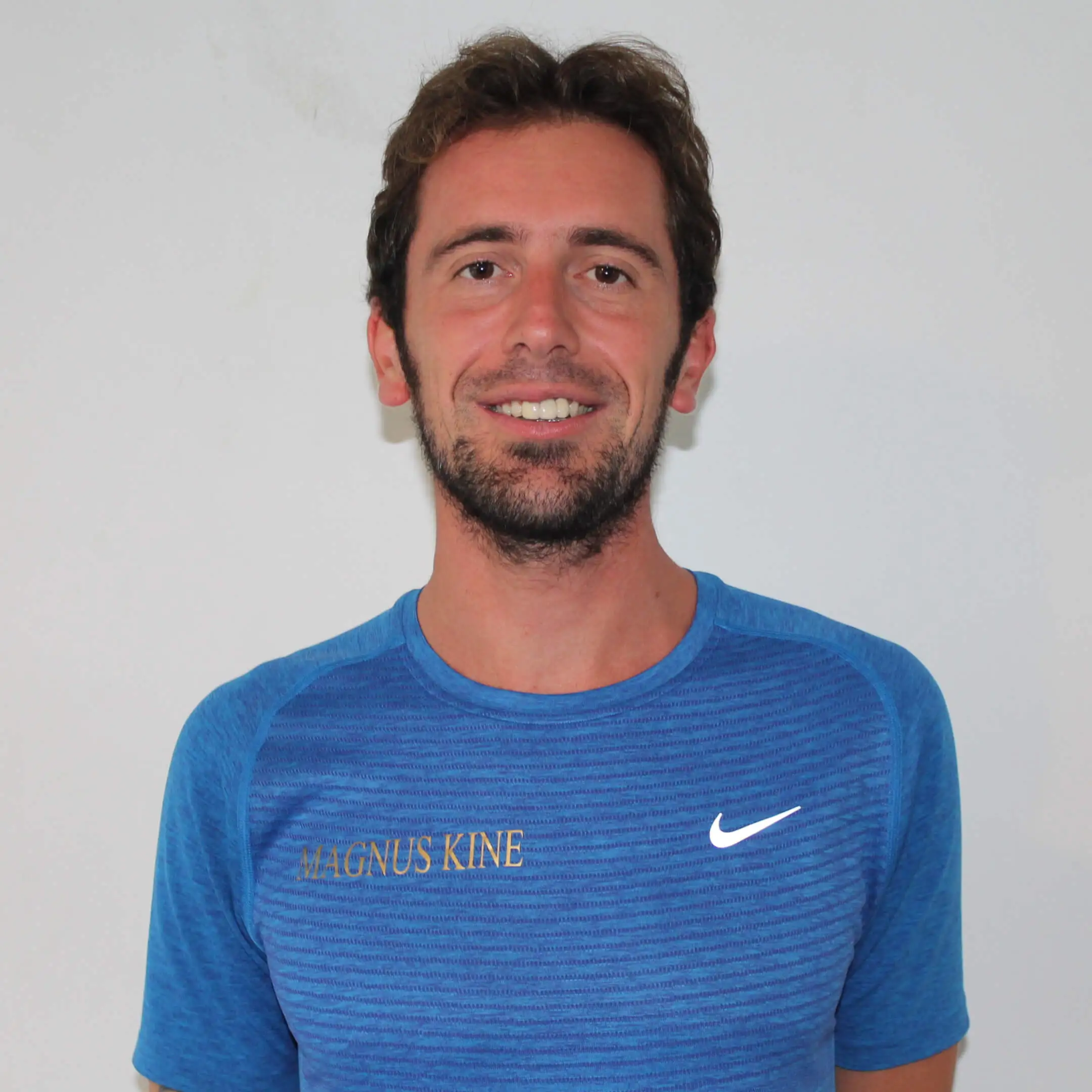
Coach Glenn Poleunis leads a Girona-based squad home to elite triathletes such as T100 World Champion Marten van Riel and Olympic and World Champion Cassandre Beaugrand (who joined the squad more recently, after her standout 2024 season). We talk about coaching at the highest level, the demands of WTCS, T100 and Ironman racing, and how Glenn's coaching is evolving with the demands of the sport.
HIGHLIGHTS AND KEY TOPICS:
- How Glenn's coaching and his squad has evolved over the past three years
- Lessons from the Paris Olympics and the Olympic qualification period
- Outlook on the LA 2028 Olympic cycle
- Comparing the WTCS, T100 and Ironman racing formats
- Preparing Marten van Riel for both T100 and the Ironman World Championships
- Season periodisation and managing long racing calendars
- Working with Cassandre Beaugrand, and how to improve an Olympic champion
Sponsored by:

Precision Fuel & Hydration
Precision Fuel & Hydration produce our favourite gels, sports drinks, and electrolyte and carbohydrate products here at That Triathlon Show and Scientific Triathlon. Use the free Fuel & Hydration Planner to get a personalised plan for your carbohydrate, sodium and fluid intake in your next event, and get 15% off your first 2026 order by using the code TTS2026 at checkout.
Shownotes
Glenn's background
04:14 -
- I'm originally from the Flemish region of Belgium and have always been deeply passionate about sports. I played soccer fanatically and was completely obsessed with it.
- However, after sustaining an injury, my focus shifted—partly influenced by relatives involved in cycling. I gradually became obsessed with the sport and eventually developed into a strong cyclist, taking my first steps toward a professional career.
- During that journey, I had the chance to experience both good and bad teams and coaches, which was incredibly educational.
- Unfortunately, another injury forced me to stop. I was diagnosed with a kissing spine and underwent surgery. That moment was devastating; my world collapsed as my one big dream was suddenly gone.
- In the aftermath, I took time to travel and reflect. Eventually, I decided to return to the world of sport—not as an athlete, but in another role. I enrolled in physiotherapy studies at KU Leuven in Belgium. While studying, I discovered triathlon and found myself increasingly drawn to exercise physiology. I started taking additional courses in sports science while completing my physiotherapy degree.
- Looking back, having both a mechanical and a physiological foundation has been extremely valuable in my coaching work. I had the privilege of learning from great professors like Peter Hespel. Coaching always came naturally to me—I remember even as a footballer, I would organise the defence and take initiative. As a cyclist, I kept a little notebook, riding to my coach on easy days, always full of questions.
- Coaching doesn’t feel like work to me, which can be both a blessing and a challenge because it means I’m constantly immersed in it.
Glenn's squad
06:17 -
- It’s more of a group of people who train together in Girona. I originally came from Belgium, where I worked with the Belgian Federation, focusing on under-23 development athletes.
- I witnessed some of them progress to the highest level, but I also felt something was missing—a genuine high-performance culture. There wasn’t always a sense of people going “all in.”
- Many athletes still focused on studies or other obligations, which is understandable, but I was interested in fostering an environment where athletes took the risk to fully commit to reaching the top.
- That’s what we’ve been building in Girona—a place where athletes from different countries come together with a shared commitment to performance.
- Over time, our squad has grown, and I now coach an incredible group of athletes. The racing landscape is also evolving, with many athletes now combining short, middle, and long distances, which makes coaching both more interesting and more challenging.
- My coaching philosophy blends individualization with group dynamics. I aim to tailor training to each athlete’s needs while maintaining a group culture that encourages shared motivation. Girona is a fantastic environment for this—aside from the past few weeks of heavy rain! But overall, the development of the squad here has been very rewarding.
- As for some of the better-known athletes currently in the squad:
- Marten Van Riel, who won the T100 last year and has moved up to longer distances.
- Charles Paquet and Alessio Crociani, both Olympians.
- Arnaud Dely, a top duathlete and recent European Champion.
- Cassandra Beaugrand, Olympic Champion, who joined the squad after the Games.
- It’s a strong and diverse mix of athletes—some very experienced, others still developing. They push each other while keeping the atmosphere fun and focused. The training is science-driven, with a strong emphasis on detail.
- Although our website lists 10 to 15 athletes, it’s outdated. I currently coach 14 athletes, which is quite demanding. Most are based in Girona, although a few join remotely or for camps. I try to see all of them regularly to maximize the benefits of in-person coaching.
- Right now, I’m in Sierra Nevada for a training camp. The group had to be smaller—only five athletes—because not everyone’s schedule or experience with altitude aligned.
- Some had races at the end of May, and others preferred not to come due to personal reasons. It’s always about listening to the athlete and understanding what’s best for them.
- Back in Girona, I have support from Vanessa de la Torre, a former professional athlete with a degree in sports nutrition. She knows our methods very well and works closely with the athletes. She was one of my athletes, so I trust her completely to manage things while I’m away.
- This kind of split setup is sometimes necessary, especially with constantly shifting triathlon calendars. I stay in daily contact with the athletes in Girona, but being here in Sierra Nevada is particularly useful.
- It allows me to guide the athletes through the early stages of altitude training, making sure they don’t push too hard too soon.
Glenn's coaching philosophy
11:53 -
- My knowledge continues to evolve. Every three years, I reflect and aim to learn more. This mindset is something I also encourage in my athletes. I never claim that what we’re doing is definitively the best—I try to gather as much data as possible to justify our methods.
- There’s always an element of trial and error, but I strive to reduce uncertainty as much as possible.
- Despite some refinements, my overall coaching approach remains consistent. I still focus on holistic athlete development, which means understanding not just their training, but also what’s happening in their lives. Building that connection and understanding their world beyond sport is a core part of my philosophy.
- This philosophy can sometimes create tension within the group—especially when someone is pushing when it's unnecessary. But we’ve built a culture where everyone understands what’s expected.
- We monitor training closely, including intensity, lactate, heart rate, and other metrics. Athletes are given insight into what’s happening with their bodies, and that shared development is something I’m proud of.
- I don’t want them to overthink. I provide the information they need, and at some point, I trust the process. We regularly evaluate and adapt training blocks, always with the belief that we’re pursuing the best available path forward.
- Cultural differences definitely play a role—some athletes are naturally open, while others are more reserved.
- That’s why in-person interaction is so important. You can’t always detect things through data or self-reported mood. Sometimes, it’s simply a matter of observing how an athlete enters the room or behaves in small moments.
- I’ve developed a skill for noticing when something’s off, and I try to find the right time to gently bring it up. Some athletes probably think, “Here he goes again,” because they’d prefer to hide how they’re really doing—but these conversations matter. Addressing issues openly is a key part of recovery and performance. It helps athletes find their flow again.
- Sometimes, we need to take the time to work through these things, even if performance dips temporarily. It’s worth it in the long term. Authenticity is essential to me. I want to be able to speak the truth—whether the athlete is a world champion or a developing under-23 rider.
- Often, top athletes are surrounded by people who only say yes and avoid conflict. But I believe in honest feedback. If I ever feel like I can’t give that, then I’m no longer doing my job properly.
- There's still room for growth. If athletes can become quicker at recognizing their issues—just as they’re eager to learn about training—they’ll have another powerful tool. Building that self-awareness, especially around psychological limits, could be a huge step forward in performance.
Individualization of the program
16:43 -
- One major shift is how we use data. I’ve always gathered physiological data, but now we do it with more structure and purpose. I’ve worked extensively with INSCYD, which helps us evaluate whether training is progressing as expected.
- In the past, it was more exploratory—now we follow a clearer plan and re-evaluate more frequently. That’s probably the biggest change.
- At the same time, I’ve introduced many new tools—breath data, heat data, software platforms —and the challenge has been managing the workload these tools create.
- There’s a fine line between using helpful metrics and overwhelming athletes with too much data collection. For example, sometimes we collect breathing data before a session and it doesn't work properly, leading to frustration.
- So I’ve changed my approach. I no longer try to apply every tool to every athlete. Instead, I tailor it—if I notice a specific issue, like with breathing, I’ll suggest a targeted solution for that athlete.
- I used to be more inclined to introduce new technologies as “the next big thing,” but now I prefer to discuss their potential with the athlete and determine together whether it's worth exploring. The goal is always to balance performance with life stress and recovery.
- As you pointed out, there’s also a learning curve with new metrics. You might start collecting a certain type of data—like aerodynamics (e.g., CdA = 0.20)—but early on, you don’t know if that number is good or bad. Only once you have more data, or a larger comparison group, can you interpret it properly. That applies across many new tools we now have access to.
- Working with elite-level athletes—who are often physiological outliers—has been especially fascinating. The data we gather sometimes contradicts the literature or expectations.
- That forces us to stop and ask, “Why is this happening?” Often, I reach out to topic experts, reflect, and return to the athlete with a more refined understanding.
- This is now part of the culture within our squad: a shared openness to explore, question, and adapt. That’s what makes working with top-level athletes so intellectually stimulating. These “physiological freaks,” as I sometimes call them, teach us so much beyond textbooks.
- Over time, I hope to use all this data not only to improve our own processes but also to support other coaches working with similar high-level athletes.
- But that requires trust and experience. Some training or recovery protocols I use today are things I would have never dared to try without having seen the data and lived through those processes. Data provides the confidence to make better, more informed decisions tailored to each individual.
Examples of outliers in training
21:11 -
- One major insight we’ve gained through consistent data collection is how individual lactate values can vary significantly between athletes.
- For example, I coach athletes whose LT2 (aerobic threshold) is below 2.2 mmol/L—a value that, without context, might suggest they're not pushing hard enough. But when you understand the athlete’s physiology, it becomes clear this is simply how their system operates.
- In those cases, we also assess whether their anaerobic system is strong enough to complement that low LT2. Finding the right balance between VO₂max and VLaMax has become a key principle in our approach, especially given the range of distances we target.
- This kind of analysis is rarely discussed in literature, yet it’s crucial for effective training.
- Another area where we’ve individualized training is recovery periods. These vary greatly between athletes. For example, swimmers with high VO₂max values often recover faster, allowing us to significantly shorten recovery durations compared to standard recommendations.
- By combining heart rate data with swim lactate values, we tailor sessions with greater precision—something that can have a meaningful long-term impact.
- Collecting and analyzing this data takes time, but the athletes have begun to appreciate its benefits and are increasingly engaged with the process themselves.
- Regarding breathing data, we collect metrics like breathing frequency and tidal volume. These can serve as indicators of W′ (W prime) depletion, helping determine whether an athlete is ready for another interval or if adjustments are needed.
- At lower intensities, discrepancies in breathing frequency can also signal inefficiencies in the breathing pattern.
- The technology for breathing analysis is improving, though there are still challenges in usability. We’re not working in a lab—we’re in the field—so it’s important that all tools are practical and effective in real-world training environments.
- For lactate testing, I’ve also developed simplified field protocols that closely simulate race and training conditions. This approach aligns with our philosophy: gather high-quality data, but always ensure it integrates seamlessly into the daily reality of training and competition.
Squad culture
24:09 -
- We try to maintain regular check-ins with the group—that alone is already a big step. In the past, this was much easier. The race calendar was more predictable, and by October, most athletes had wrapped up their season.
- Back then, we could organize weekends away—mountain biking trips in the mountains, casual talks, even sharing a few beers. These moments allowed us to connect beyond training, to talk about life, and to build stronger bonds within the team.
- Nowadays, it's more complicated. With athletes racing year-round and on varying schedules, it's a real challenge to get everyone together at the same time. So, we try to create these opportunities during training sessions. When we're all present, we might initiate a short group conversation—sharing observations, addressing struggles, or simply checking in.
- This past winter, we faced a difficult interpersonal situation within the group. It wasn’t easy. When these things happen, I always return to core ethical values—the foundation of how I lead. I had to make a tough decision, one that wasn’t based on personal ties but on what’s right for the team culture and integrity.
- For me, these principles are non-negotiable. If you start compromising on them, you lose credibility—not just in the moment, but in the long run.
- Even if people are close to one another, sometimes you have to make difficult calls. I hope the athletes take these experiences with them, learning not just about sport but about life—how to make principled decisions and remain accountable.
Olympic preparation
25:47 -
- There were both positives and negatives around our Olympic preparation, particularly in relation to the World Triathlon events and Paris 2024. The lead-up to the race was extremely stressful, especially due to the water quality concerns in Paris, which were poorly handled by the organizing committee.
- We tried to prepare the athletes for unpredictability, but waking up at 4:30 a.m. on race day without clarity—having to shift from a plan B to a last-minute plan C—just to ensure a race could take place in front of a picturesque Parisian backdrop, felt absurd.
- It created a sense of being puppets in a show rather than elite athletes preparing for the pinnacle of their sport. Some athletes were seriously affected by this stress, and at one point there were even talks of holding a duathlon instead. That’s unacceptable at the Olympic level.
- Despite this, our training preparation went well overall. One of the key takeaways reaffirmed what I already believed: early Olympic qualification is crucial to ensuring a smoother, lower-stress path to the Games. Unfortunately, that wasn't possible for all of our athletes.
- Take Marten Van Riel, for example. He suffered a serious crash and had a long recovery. Just as he returned to regular training, he had another accident, breaking ribs and his scapula.
- He wasn’t able to produce results for a long time, so we had to chase qualification at late races like Yokohama and Cagliari. That period reinforced the importance of a healthy mental state. Marten also had a strong interest in middle-distance racing (T100), which aligned well with his strengths. We created a plan for him to get one solid result there before the Olympics.
- That, however, involved difficult discussions with the federation, especially as leadership had changed and newer members didn’t know Marten’s history. I was confident he could combine both formats, and he proved it—motivated, professional, and resilient. His ability to recover is one of his greatest strengths.
- Similarly, Charles Paquet had an incredible journey. He stepped up in those last qualifying races. But the timeline was intense: qualify in May, rest briefly, then go right back into training. He went from almost not making the Games to being capable of a top-10 finish.
- We had another Italian under-23 athlete who also showed promise but only received clearance to participate very late. All of these cases illustrate the value of early qualification—it gives room to plan and reduces stress.
- One mistake I recognize as a coach was in heat adaptation. I often refer to my favorite book, Antifragile, and I aim to prepare for all scenarios. But when the schedule shifted and the race start time changed from 8:00 a.m. to 11:00 a.m., the heat in Paris became a significant factor. Standing on the Champs-Élysées, I realized just how hot it had gotten—and that we weren’t fully ready for that.
- We trained in Font Romeu and returned to Girona for the final two weeks before the Games. We had some heat exposure, but not enough. With the late qualification, we needed a short break after back-to-back Olympic-distance races.
- That forced a choice between prioritizing recovery, altitude, volume, or heat adaptation. In hindsight, we should have reduced the training load slightly and integrated more targeted heat sessions—especially alongside altitude work.
Olympic qualification process
32:39 -
- Looking ahead, I think there are two key considerations in preparing for the next Olympic cycle.
- First, the qualification criteria will differ by federation, and as of now, they haven’t been officially defined. We’ll need to wait for those to be released before we can fully plan.
- Second, it’s essential to assess the limiting factors of each athlete in relation to their medal potential or overall performance goals. For example, an athlete who excels in short-distance racing may need to improve at the Olympic distance. We then have to tailor their training accordingly and target the right moment for early qualification.
- Another important piece is testing and refining race setup strategies—such as how we approach altitude, heat adaptation, and other environmental variables.
- Key preparatory moments should be used not just for qualification, but also to simulate and evaluate our approach under realistic conditions. That way, we can learn what works and what doesn’t in advance.
- Of course, unexpected things can always happen, but the goal is to minimize surprises. If we treat the qualification phase with the same mindset and structure as we would the Olympic Games themselves, it puts us in a far better position.
- That kind of preparation makes everything downstream—from training to planning—much more relaxed and flexible, allowing for better decision-making and performance outcomes.
LA 2028 demands
34:15 -
- I don’t believe we’ll see a massive leap in overall performance in triathlon over the next cycle. Instead, progress will come from refining small details—things like equipment, suits, and bike-handling skills.
- The level on the bike has already risen significantly, especially among men, and now we’re seeing that same growth happening in the women’s field. As a result, the bike leg will become even more decisive, particularly in women’s racing.
- I don’t expect significant gains in run speed, but what will matter more is the ability to run fast after a hard bike. Executing transitions perfectly, maintaining focus under fatigue—those “small” things will be crucial. In a field where athletes are so closely matched, it’s often these details that determine who has just a little more left at the end of the race.
- One issue I see is that athletes with exceptional talent sometimes become too relaxed about execution. But at this level, every second counts. There’s no room for sloppy transitions or missed opportunities. Consistency in execution is vital.
- Looking at the men’s field, there’s a new generation of young, aggressive racers—fast swimmers, high power outputs, and dynamic strategies. It’s important for more experienced athletes to stay on top of the swim, because if the front group is riding at a high enough power that the back group can’t bridge up, it will dramatically affect race dynamics.
- More broadly, I think we also need to preserve a healthy performance environment. There’s growing pressure on athletes, as we’ve seen in cycling, and it’s important to keep things in perspective and not let that pressure become overwhelming.
- I like to keep things light—sometimes I use an analogy from my own life. On the day we were leaving for Sierra Nevada, my dog (rescued from a shelter) got extremely stressed from all the packing and change.
- That morning, she had an accident in the living room. It was a strong reminder: psychological stress has a direct effect on the body. Athletes experience the same.
- That’s why I emphasize, once again, the value of early Olympic qualification—not just for performance planning, but also to reduce stress.
- If you can create the right psychological environment and give the athlete space to be mentally prepared, it’s a massive advantage. Finding ways to manage that stress, keeping things light while still focused, will be one of my main priorities moving forward.
Bike skills
37:25 -
- Of course, it depends on the athlete—some need certain elements more than others. For example, I’m currently working with a former pro cyclist in Girona.
- I train with him because I no longer have enough time to maintain that level of cycling myself. We do focused technical circuits, sometimes emphasizing high-speed handling, other times low-speed control, always with the goal of gradually increasing efficiency and bike handling skills.
- These skills need to be practiced regularly. I remember seeing Cassandra at Font-Romeu, doing bike drills in a parking lot—things that many athletes may not enjoy, but which are absolutely crucial. Being efficient on the bike, both in positioning and technique, can save significant watts, which becomes critical at the end of a race.
- Beyond physical benefits, technical confidence on the bike allows athletes to race with a clear and relaxed mindset. That mental freedom is just as important as physical preparation, especially under pressure.
Marten's T100 success
38:28 -
- Transitioning from WTCS (World Triathlon Championship Series) to T100 racing isn’t such a massive shift in terms of training—especially for strong cyclists. The bigger challenge lies in adjusting bike positioning and energy conservation, which become even more critical over longer distances.
- For example, in Marten’s case, we emphasized aerobic efficiency on the bike—monitoring how his anaerobic system complemented his aerobic base and ensuring that he finished the bike leg with sufficient glycogen reserves to run well. We trained specifically for that balance, using ski sessions and strength work to improve his ability to finish the bike segment strong.
- At his first T100 race in San Francisco, Marten had barely ridden a TT bike before, yet he won. That was impressive, even though we knew physiologically he was ready.
- He had just come off two Olympic-distance races for qualification. Despite the lack of specific preparation for the TT position, he adapted and executed exceptionally well. This reinforces that, for certain athletes, WTCS and T100 performance levels are quite close, particularly if they’re strong bikers.
- However, Marten’s strong cycling capabilities haven’t always been visible in WTCS racing due to positioning—he swims well and often leads, but others tend to benefit from his efforts. It’s harder to showcase individual power when racing tactically.
- Swimming, for Marten, is relatively easy now in the T100 format. Still, we’re careful not to let him get complacent. He doesn’t love swim training, so we maintain quality over quantity—keeping him sharp while minimizing unnecessary fatigue.
- Regarding the run training, the shift has been toward more race-specific tempo work—running off long TT bike efforts and sustaining pace under fatigue.
- Marten handles LT2 and maximal steady-state efforts well, so the focus has been on longer tempos and race-pace brick sessions. We’ve deprioritized shorter intervals at 5K or 10K pace in favor of building durability. This is especially relevant now that he’s stepping up to Ironman, where the demands are different.
- Preparing for Ironman involves a distinct set of challenges. One of the key goals was to reduce VLAMax, and Marten responded well to high volume and longer sessions.
- Strategies included torque-based training to convert fast-twitch fibers into more aerobic ones, and nutritional periodization—occasionally training in a low-glycogen state after hard sessions to improve metabolic efficiency. This was a delicate balance, since energy availability is crucial when intensity is required again the next day.
- We increased session duration, particularly for the run, without necessarily increasing overall weekly volume. Swim volume decreased slightly, which suited Marten well—he enjoys the reduced swim load in Ironman prep.
- We had a solid training block ahead of Ironman South Africa, and though the race didn’t go as planned, the preparation process was encouraging. Marten was engaged and responded well to the work, which gave us confidence moving forward.
- Balancing T100 Singapore and Ironman South Africa a week apart was a gamble—but it worked. I wouldn’t have made that decision with any other athlete, but Marten’s recovery capacity is exceptional. We needed one result in the T100, and the timing allowed us to test a risky but potentially high-reward block.
- Now, after some recovery, we’re back at altitude training, with a clear focus on the upcoming T100 races in San Francisco and Vancouver. If all goes smoothly, there will be no further races, allowing a full focus on Ironman.
- I’m very curious to see how Marten performs on a true Ironman course, competing against the strongest long-distance athletes in the world.
Ironman training distribution
45:29 -
- Following the recent race period, we began with a block focused on easy aerobic volume, emphasizing LT1/fat-max intensity—whatever terminology you prefer. These sessions were closely monitored, particularly for lactate levels, to ensure that energy was being sourced primarily from fat metabolism.
- After this aerobic block, we incorporated altitude training, and in the final phase of the training block, we transitioned into long sessions around Ironman race pace.
- The objective was to bring threshold power as close as possible to VO₂max, maximizing aerobic efficiency without overreliance on short, high-intensity VO₂ intervals—which tend to drain energy more rapidly in athletes like Marten.
- Instead, we focused on long-term adaptations, maintaining a high VO₂max through stroke volume improvements from controlled, consistent volume. Marten responds particularly well to this approach. The final goal was to build his efficiency at Ironman race pace, keeping the physiological stress as close as possible to his aerobic ceiling without tipping into unsustainable efforts.
- Total Weekly Hours: ~30 hours on average
- This includes only actual work time, not padded session durations.
- Heat exposure is factored into the training load as it adds significant physiological stress.
- Bike:
- 15–17 hours per week, depending on the block
- Focus on both volume and strength endurance
- Run:
- Typically 100 km per week, ranging from 80 to 120 km depending on the week
- Swim:
- 4–5 sessions per week
- In specific phases, we reduce to 4 swims per week for additional recovery
- Encouragingly, swim performance has not declined despite slightly reduced volume, which boosts Marten’s motivation to continue quality-focused swim work
Torque work
49:00 -
- There are multiple ways to structure strength and torque work on the bike, and while the current trend in cycling appears to favor shorter, high-intensity intervals, my approach blends different methods depending on the training phase.
- For example, I often include high-intensity torque intervals at the end of a long LT1 (aerobic) session. This serves to recruit fast-twitch muscle fibers when the athlete is already slightly fatigued, pushing them toward a more aerobic adaptation. These are usually short efforts, high force, lower cadence, and high neuromuscular demand.
- As we move into more race-specific periods, the torque work becomes more structured and moderate in intensity—such as 3 x 20 minutes at 60 rpm.
- Sometimes, we perform these efforts in a slightly depleted state, again with the goal of encouraging fast-twitch fiber recruitment under aerobic strain. This helps develop strength and durability, especially for the final segments of the bike leg in long-course racing.
- So overall, it’s a combination of both high-intensity and sustained torque training, adapted based on the goal of each phase. It’s not always exactly as outlined in the literature—but it works in practice with this athlete, and I trust it.
- For me, it’s about matching science with real-world application, always asking: what does the athlete need at this moment?
Season planning and training periodisation
50:45 -
- With race calendars now stretching over longer periods—starting early and ending late, often packed with various events—it’s more important than ever to build the season around your “A” races. For example, if Ironman is in September and the T100 Grand Final is in December, we work backward to plan the year.
- One of the most crucial strategies is including regular recovery breaks throughout the season. Typically, we schedule two or three "off" weeks per year where athletes don’t follow a structured plan.
- They might do a few light sessions—like three runs, one bike, or a couple of swims—or simply go hiking or engage in something enjoyable. These breaks help both physically and mentally. It’s not about maintaining fitness during this week, but rather recharging motivation and energy for the next training block.
- If an athlete comes back slightly less fit but more motivated, that’s a win. Skipping recovery periods is risky and can lead to burnout or stagnation—especially when mixing race types like Super League and WTCS.
- That’s where long-term volume history matters. Athletes with several years of consistent training can handle more racing; others need a more cautious approach.
- Recovery requirements after racing are highly individual. Some athletes bounce back from an Olympic distance race in 3 days; others may need up to 10 days. A key factor is muscle fiber composition—fast-twitch dominant athletes tend to need more time.
- Post-race protocol: We always allow time for muscle recovery, especially from running, before reintroducing high intensity.
- Some can return to normal volume quickly; others require extended easy days.
- Even Super League or sprint formats can be exhausting, particularly with travel involved, and may demand extra recovery.
- You can’t assign a fixed recovery window based on race type alone. It's a mix of race intensity, travel, athlete morphology, and training background.
- When planning the race calendar, I absolutely take recovery needs into account:
- If an athlete recovers slowly, we are more selective about lower-priority races (e.g., French Grand Prix, Bundesliga).
- We evaluate whether a race will interrupt training too much for the gain it offers.
- I aim to give athletes the bigger picture—sacrificing short-term race opportunities for long-term performance and professional success.
- For example, skipping a minor race today might allow them to secure a bigger contract or result in the future.
- It comes down to good communication. When athletes understand the logic, it becomes easier to make smart decisions. Still, some will want to race more—and while I’ll advise against it if necessary, the final decision is theirs.
- There are rare exceptions (e.g., back-to-back events like T100 + Ironman) that I would never recommend for most, but might support for uniquely resilient athletes like Marten.
- Ultimately, you need to pick your battles, make clear trade-offs, and always tailor the strategy to each individual.
Training prescription for different athletes
57:17 -
- One of the most important steps in coaching is early recognition of an athlete’s physiological profile—especially in the build-up phase. For example, some athletes might spend a long winter doing only low-intensity work, but if they have a more glycolytic (fast-twitch) muscle composition, that can actually make them even more glycolytic, not less.
- That’s why we run early assessments through a combination of testing, training data, and race observations. We look at things like power profiles, response to intensity, and race performance to understand the athlete's characteristics.
- There’s no single rule of thumb—it’s about knowing who you’re working with and acting early. If you let it go too long, the corrections become much harder during the season.
- Once we identify a fast-twitch-dominant athlete, we tailor the intensity and structure of their training:
- In the off-season, we often introduce short, fast strides (e.g. 6 x 30 seconds with 1-minute rest)—not all-out sprints, but enough to activate fast-twitch fibers before moving into longer tempo efforts.
- These athletes tend to be naturally anaerobic, so we avoid long periods of pure low-intensity work without some stimulation of their neuromuscular system.
- We also introduce mild carbohydrate-restricted sessions, especially in periods of lower training volume, to promote aerobic adaptations and improve fat oxidation.
- The key is understanding that aerobic metabolism uses both lactate and fat as fuel, and those two energy systems are constantly competing. If the athlete always trains at the wrong intensity, they won’t develop the aerobic domain effectively.
- For these athletes, we focus throughout the year on making fast-twitch fibers more aerobic, just like with torque-based bike sessions. This is not something we do for a few weeks and then stop—it’s part of a year-round strategy, woven into four or five key sessions.
- As they adapt, their recovery time improves, and we see a gradual increase in total training volume. Some athletes, despite feeling like they’re not progressing, are surprised to realize they’re training two hours more per week than the year before. Part of the process is helping them see this progress and guiding them through their physiological realities.
- VO₂max sessions are a double-edged sword for fast-twitch athletes. They’re often very good at them—explosive and powerful—but they go too anaerobic, turning sessions into lactate-fueled efforts rather than sustained aerobic work. For these athletes:
- We might lower the power output slightly, sacrificing peak wattage for more time at VO₂max intensity.
- The focus is on time-in-zone, not anaerobic stimulus.
- It’s about training smarter, not harder—developing the systems that need to improve, not reinforcing what's already dominant.
- In contrast, slow-twitch athletes don’t need this kind of modulation early in the year. They can naturally handle more volume and tempo work without the same need for anaerobic control.
Cassandre Beaugrand joining the squad
1:01:38 -
- She’s done a great job getting to where she is now, and that’s something to acknowledge. But of course, there’s always room to improve, and it’s important that she also recognizes that.
- Over the past six months, we’ve started to identify several areas where small improvements can be made—not necessarily major changes, but incremental adjustments that help her stay balanced and motivated.
- After the Olympics, our focus has been on not rushing back into a strict program. Instead, we’ve been finding a healthy balance between training and the increased attention from sponsors and non-sport commitments.
- It’s a delicate line to walk: she needs to take advantage of the new opportunities that come with her profile, but also needs to protect performance. When performance declines, motivation tends to drop, too—so we’re managing that proactively.
- We’ve chosen a few key events that really matter to her, to help maintain motivation. For example, the 5K in Monaco was a great target, and her performance there was inspiring.
- She was motivated to chase the French record, and these types of goals are essential moving forward. Similarly, the 10K in Leuven (my hometown) and the European Championships would’ve been great opportunities—especially with a focused build-up. Going forward, we want to integrate more race variety like this to keep things fresh and exciting.
- Many athletes who’ve spent years on the WTCS circuit struggle with mental fatigue from doing the same races repeatedly. We want to avoid that by setting new, meaningful goals, keeping her emotionally engaged, and preserving the “fire” she had back in Paris and LA.
- One clear area for improvement is the bike leg. We’re making progress, but there’s still potential. She sometimes jokes about doing “long-distance” training when she’s doing long LT1 rides, but these efforts are critical for her current development phase.
- We’ve seen positive shifts in aerobic capacity on the bike, and want to continue that progress.
- Bike handling and skills are also key focus areas—especially given the importance of technical ability in women’s racing, as seen during the Paris test event, where unpredictable weather and conditions exposed weaknesses.
- She enjoys the science of training, but just like with Marten, there’s a balance to strike. Sometimes, it’s better not to overwhelm athletes with data and simply let them train freely.
- This balance between structure and autonomy is something I also observe with athletes like Pogacar and Van der Poel—they have strong science teams behind them, but they’re given the space to ride freely and race with joy.
- Cassandra is no different—giving her room to explore, recover mentally, and stay happy is critical. When she feels that freedom, she stays motivated, and when she’s motivated, she trains well and performs at her best.
Cycling training insights for triathlon cycling training
1:05:33 -
- To be honest, I don’t follow cycling all that closely—it still feels like a different world compared to triathlon. Interestingly, I sometimes think cycling could actually learn from triathlon, particularly in how we structure multiple sessions per day and manage training complexity.
- Many top triathletes have such strong bike capabilities that they could likely perform at a high level in professional cycling, especially if they develop the tactical awareness and punch needed at key race moments.
- That said, the fundamental dynamics are very different. In cycling, races are often decided by a split-second attack, whereas in triathlon, it’s more about accumulated endurance and execution.
- One area where I’ve learned a lot from cycling is in the planning of altitude camps and nutrition strategies. Cycling teams tend to be very structured and specific with fueling, energy availability, and training blocks. However, applying those exact protocols to triathlon isn’t always realistic.
- Triathlon introduces more complexity:
- The non-linear structure of the day (e.g. biking to the pool, transitions between sessions) impacts energy balance and recovery.
- It’s harder to track caloric expenditure and availability precisely across disciplines.
- Even in swimming, it’s difficult to quantify exact energy expenditure compared to a bike session with a power meter.
- Trying to measure everything in triathlon can overwhelm both the coach and athlete. While it may be helpful to do this for short periods to build awareness, it’s not sustainable or necessary year-round.
- The key is understanding what to borrow from cycling and what to leave behind. In the end, while both sports share foundational physiological principles, they remain distinct disciplines requiring tailored approaches.
AI impact on the sport
1:07:42 -
- I’d say I’m a bit old-school when it comes to AI in endurance sports. I’m keeping an eye on developments, but I’m not actively using it yet. One major limitation I see—especially when working with high-level, outlier athletes—is that AI systems generally require large, standardized data sets to function properly. But elite athletes often don’t respond like the average; their physiology and psychology make them exceptions, not the rule.
- Another challenge is data accuracy. In triathlon, for instance, an athlete might switch from a road bike to a TT bike, and that power meter difference alone (say, 15 watts) could mislead any automated system into thinking there’s been a huge performance gain.
- If AI is relying on inconsistent input, the recommendations it generates can be completely misleading. That’s risky when you’re making decisions that affect long-term progression or race performance.
- If you're working closely with someone—say, a performance scientist or data analyst—who can help maintain data integrity and interpret things in context, then an AI-assisted system might provide a useful helicopter view of an athlete’s development.
- But that’s not easy to scale, and it doesn't replace the coach’s role in integrating psychological and motivational factors.
- For example, self-reported metrics like mood or stress might look fine, but as a coach, I might still notice something’s off based on body language or communication. These nuances are hard for AI to detect, unless it reaches a point where it can assess tone, behavior, or even simulate real human interaction—as imagined in movies like Her.
- Where AI Could Help
- I do believe there’s more potential in areas like bike fitting and aerodynamics—testing setups, evaluating time savings, and guiding position optimization more efficiently. In those domains, AI might accelerate feedback loops and save time.
- I remain open-minded to useful tools. If someone comes to me with a solution that truly fits our context, I’m always willing to listen.
- The challenge isn’t just the tech—it’s data cleanliness and athlete compliance. Some athletes are very diligent, others are inconsistent. If the data isn’t good, the output isn’t useful, and that can do more harm than good.
- We actually had a positive case in Belgium: John Heymans, a runner who used AI to select optimal races based on predicted fields and points—and he qualified for the Olympics. That’s a great example of how AI can be valuable in race planning.
- But compare that to someone like Cassandra: an AI might suggest races with the highest point value, but not recognize that a specific race might excite and motivate her, even if it’s less strategic on paper. That motivation can be the key to a breakthrough performance.
Reflective Questions
1:12:37 -
How do you learn and improve your craft?
I read a lot—across a wide range of domains. It’s not limited to sport science but includes psychology, philosophy, and other fields that enrich my coaching. I see reading as a guiding principle in my life. I’m fortunate to collaborate with multiple federations that often send me articles, research, and data analyses, which gives me fresh perspectives and saves time on my own evaluations.
I regularly discuss training and testing with colleagues, such as a recent visit from an old friend in Girona. These conversations are always stimulating. I also attend online seminars, since travel is often difficult.
Whenever I encounter something in training—say, a change in lactate response—I go back to the scientific literature. I follow a few Substacks and critically assess the quality and context of studies: Who was the population? Was it a middle-aged, untrained group? Or elite athletes with a VO₂max of 80? Without a scientific background, it’s easy to misinterpret findings. Critical thinking is key to knowing how and whether to integrate research into practice.
What are you currently trying to learn more about?
Right now, I'm focused on aerodynamics. I want to deepen my understanding to better integrate it with athlete development. It’s become such a specialized field that, even though I come from cycling, I no longer feel entirely confident managing aero work on my own.
I’m looking to streamline the process—make it more efficient for the athlete, especially when testing sessions involve travel and logistical planning. It’s a time-consuming area, and I want to work with the right people to elevate how we approach aero testing.
Books that have influenced you (besides Antifragile)?
Two that come to mind:
- Illusia’s Eyes by Arto Paasilinna – A beautifully written novel from the perspective of the woman who meets Don Quixote. It explores empathy, change, and personal growth after setbacks. It reminded me how quickly things can shift in life—and in sport—and the importance of preparing athletes for life beyond triathlon.
- This Is Water by David Foster Wallace – Originally a graduation speech, this short book (or video, for those who prefer it) is a brilliant reminder of perspective. It encourages you to put yourself in others’ shoes, especially in mundane situations, and to realize how narrow our personal worlds can become. It helps me remind athletes: triathlon isn’t everything—even if it feels like it.
Best advice you’ve ever received?
At a World Triathlon science congress in Switzerland, Arild Tveiten shared a very simple but profound point:
“If the athlete's head is in their breakfast bowl in the morning, that’s when you back off the training.”
It was a reminder that beyond all the monitoring tools, body language is often your best data. You don’t need a screen to tell you what’s right in front of you. Trust your eyes. Trust your instincts. That’s also one of the limitations of AI—it can’t read the human side as clearly as a coach can.
Advice you’d give your younger self as a coach?
I’d tell myself to leave Belgium earlier. I was limited by my environment, and it was only when I moved to Girona and worked with different federations and high-level athletes that I realized how much more there was to learn. Exposure to that kind of performance culture accelerated my growth.
I’d also advise myself to set boundaries. When your passion is your job, it’s easy to become completely absorbed. But it's important to prioritize family, friends, and rest. I also try to educate athletes to respect those boundaries—there are times when a message or question can wait until Monday.
What did moving to Spain teach you that Belgium couldn’t?
In Belgium, triathlon was still very lab-based and theoretical. The focus was on metrics like VLAMax, VO₂max, etc., often modeled on swimming physiology, without much regard for practical variables like total training hours or race volume.
When I moved to Girona, I saw firsthand how high-performing athletes consistently operated at a higher training volume—and how that was critical to long-term development. There was a real awareness of “critical volume”, which wasn’t acknowledged much back home.
Every athlete is different—morphology, muscle fiber composition, history—but the insight that theory must be applied in context was a major takeaway. Sometimes, the theory says one thing, but what athletes actually need to perform and grow tells you something else entirely.
Gender training differences
1:22:33 -
- In general, female athletes tend to tolerate slightly lower training volumes than male athletes, but there are certainly exceptions—some women can handle quite a lot, especially over time. The key is always to individualize the approach and get to know each athlete deeply.
- With Cassandra, for example, we’ve been gradually figuring out what her optimal volume is. Right now, the focus is on maintaining quality, and although we could theoretically push the volume higher, we believe she’s at a good level for her current needs. It may seem low compared to what some male athletes are doing, but for her, it’s enough at this moment. If the quality remains high, we can always reassess later whether to increase the load.
- Some athletes—especially those with a more diesel-type physiology, particularly in cycling—can handle more volume. But when it comes to running, the impact is a bigger limiting factor, and female athletes typically run less overall. That can change over time, of course, as they develop durability.
- It’s also a multi-dimensional puzzle—you have to consider nutrition, recovery, hormonal health, fueling, and more. When you’ve worked with an athlete for a long time and built trust, and you have all of these aspects dialed in (e.g., carbohydrate fueling strategies during sessions), then you feel more confident about pushing the volume higher.
- Ultimately, it's about close collaboration, long-term development, and knowing when to push and when to hold back.
Listener questions
1:24:07 -
On Arnaud Dely and Ironman
I’d love to see Arnaud Dely make his Ironman debut one day, but it’s not happening in the near future. Honestly, I’m a bit disappointed he never had a proper swim coach early on—his basic swim technique is actually really solid, and he could have been a great triathlete.
Right now, he’s made major progress on the bike, which was one of our key goals, and we’ve improved his run a bit too. If anything, he could become the new Sam Long or Lionel Sanders type—someone who catches people on the bike and runs through the field. His time will come eventually, but not yet.
On Applying Olbrecht's Training Philosophy
I still use many of Jan Olbrecht’s principles, especially regarding lactate dynamics, glycolysis, and the aerobic engine—they help me understand threshold and energy expenditure better. However, I believe the system is limited. It lacks emphasis on muscular demands and stroke volume development, which are crucial for long-term VO₂max improvement.
So I use Olbrecht's work as a foundation and layer other methods on top, particularly when coaching for WTCS and middle-distance triathlon.
On Staying Current in Exercise Physiology
As I mentioned earlier, I learn most when I need answers—I search PubMed, reach out to physiologists, or dive into specific studies. Recently, I had a valuable conversation with the INSCYD team around 3D testing and race data interpretation. I also rely on my network—being surrounded by knowledgeable people means there’s always something to learn.
Why Girona?
To be honest, I traveled around Spain looking for the ideal training location and initially didn’t want to move to Girona—it seemed too crowded. But in the end, nothing else compared:
- 50m pool access
- Varied cycling terrain
- Off-road running trails
- Close proximity to an airport
- Access to Banyoles lake
Other regions had drawbacks—Valencia had nice terrain but less reliable pool access; Galicia/Pontevedra had welcoming people but worse weather.
Catalan culture can be a bit stubborn—sometimes even if you speak Spanish, locals insist on Catalan—but it’s part of the experience. And while I do miss cultural events like concerts you’d find more easily in Belgium, Girona is still the best overall training environment for what I need now.
LINKS AND RESOURCES:
- Glenn's website and Instagram
- Glenn's previous appearance on That Triathlon Show: Training talk with Glenn Poleunis | EP#335
