
LISTEN TO THE EPISODE HERE:
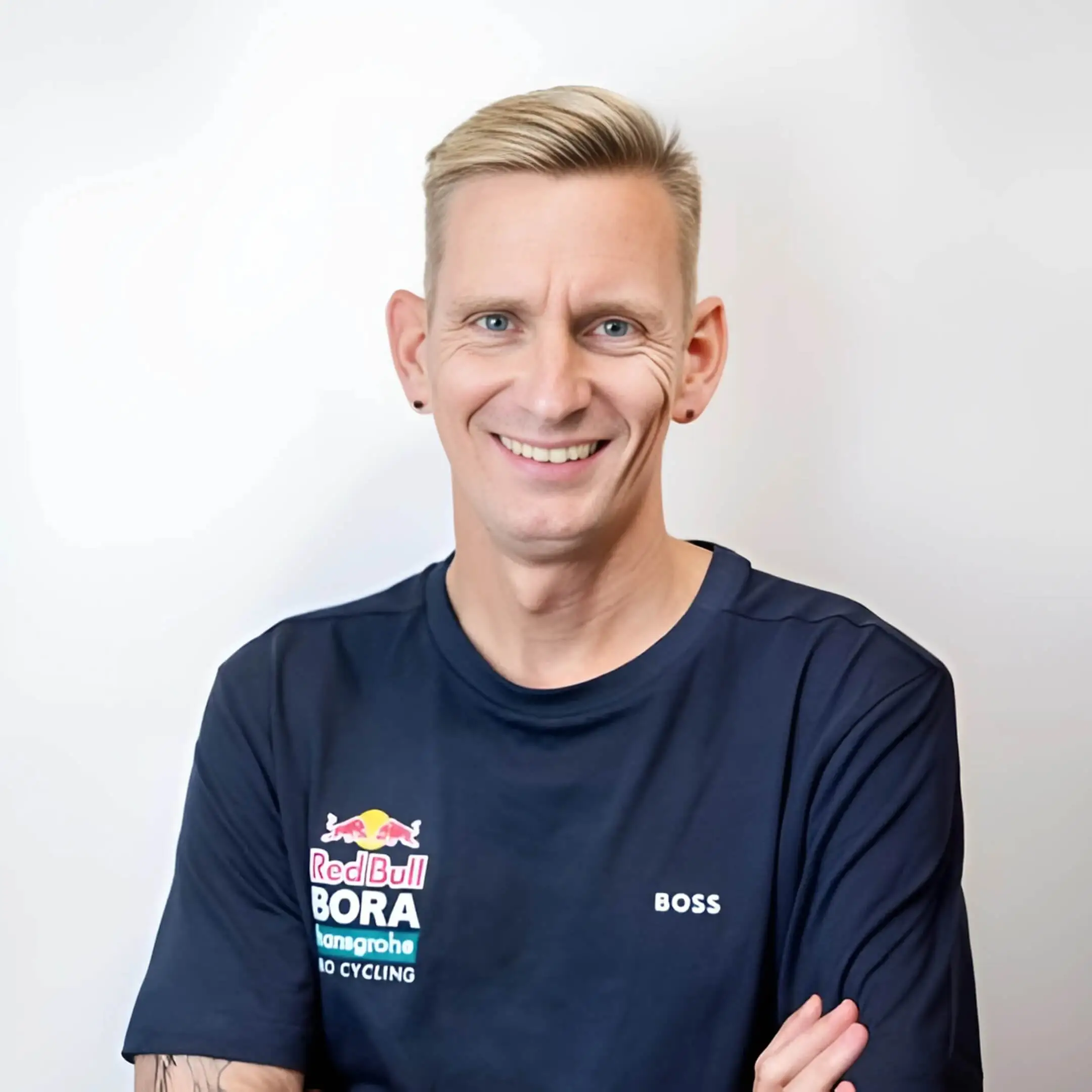
John Wakefield is a cycling coach and bike fitter. He is a coach and Director of Development at Red Bull - BORA - hansgrohe, and coaches riders at the World Tour level, as well as working directly with and managing the U23 and younger development teams. In this interview, we dive deep into John's thoughts training and coaching, as well as his approach to bike fitting in detail.
HIGHLIGHTS AND KEY TOPICS:
- John's training philosophy
- The importance of focusing on recovery and adaptation to training
- Using a submaximal test to measure training response and readiness
- The volume and intensity of world tour cyclists' training
- Why and how to use torque training
- How to balance comfort, power production, and aerodynamics in a bike fit
- Common ailments and injuries and how to solve them with a good bike fit
- The role of technology in bike fitting
- Common issues in bike fits among amateur cyclists
- Listener questions
Sponsored by:

Precision Fuel & Hydration
Precision Fuel & Hydration produce our favourite gels, sports drinks, and electrolyte and carbohydrate products here at That Triathlon Show and Scientific Triathlon. Use the free Fuel & Hydration Planner to get a personalised plan for your carbohydrate, sodium and fluid intake in your next event, and get 15% off your first 2026 order by using the code TTS2026 at checkout.
Shownotes
John's background
02:22 -
- I was born and raised in Cape Town, South Africa, although I currently live in Europe. My path into cycling was rather unconventional. I did not come from the typical trajectory of a young cyclist who turns professional and later becomes a coach. Instead, my involvement in cycling happened almost by accident.
- In 2001, when I was in my early twenties, I crashed my motocross bike. The rehabilitation process involved cycling, which I grew to enjoy. I started racing bikes locally in Cape Town and South Africa.
- From there, I transitioned from motocross coaching to cycling coaching after meeting my now business partner. That was around 2007 or 2008, and from then on, I gradually built my career in cycling to where I am today.
- Although no two days are exactly alike, my work always revolves around performance. My day usually starts early, around 6:00 or 6:30 in the morning, when I catch up on emails from the previous day. Then I log into the performance platforms, review both my personal athletes and the team’s athletes, and handle any issues that arise.
- I make contact with athletes early so that by the time they start their day, I’ve already addressed what’s needed. The rest of the day varies: I might be at a race, attending a training camp, analyzing data, scouting riders with the help of one of our scouts, conducting biomechanical testing, or working on other performance-related tasks.
- If I’m at home, my day usually ends around 9:00 p.m., but if I’m at a race, it can go on until midnight or later. The variety keeps the work dynamic and interesting, but it is undeniably demanding.
- At the end of the 2022 season, I transitioned from UAE Team Emirates to Bora-Hansgrohe, joining their performance department as a coach through a collaboration with Red Bull. They have a strong focus on talent development, and as part of what they call the Rookie Project, I was asked to take over the directorship and help build that program.
- While a significant part of my work is within the under-19 and under-23 environments, I also maintain a close connection with the WorldTour team. I still coach a few athletes at that level, and the integration between the WorldTour and the Rookie Project is crucial. So I wear several hats throughout my day.
- Much of my time now is dedicated to my work with Red Bull and Bora-Hansgrohe, thanks to an excellent staff and directors who handle much of the day-to-day responsibilities. However, I do remain involved with the company on a smaller scale. I still engage with certain projects, which also serves as an opportunity to continue learning and stay at the forefront of scientific advancements.
- Our company prides itself on research—whether it is in biomechanics, testing, or other performance domains. We apply this knowledge directly to our athletes, which I believe is invaluable.
How John learn from past work experiences
07:52 -
- I have definitely learned to think before I speak — that is the one thing I can say with certainty. Beyond that, in the context of cycling and performance, I have learned that it is a constantly evolving and dynamic environment.
- If I were to coach today in the same way I did six years ago, it would no longer be appropriate. Cycling has changed dramatically in the last five to six years, and you must evolve along with it, keeping your finger on the pulse of the sport.
- I’ve also realized how incredibly fine the line is between success and failure — the margin is exceptionally thin. Attention to detail has become even more critical than before, and it is in those small details where true performance gains are found.
- The biggest change I see is not necessarily in specific training models — whether threshold-based, polarized, or 80/20 approaches — but rather in how we monitor athletes and their well-being. Today, the intensity, volume, and overall stress of racing have increased so much that recovery has become paramount.
- Monitoring recovery effectively and understanding how it drives adaptation and progression has become a central focus. What worked six years ago without this level of monitoring and emphasis on recovery would no longer be sufficient in today’s environment.
Coaching philosophy
10:20 -
- I would say that consistency over time is fundamental. Results essentially stem from structure and execution. Another key principle is adaptation tracking: training is only effective if it drives adaptation rather than fatigue. Individualization is also critical; it is necessary to train the athlete in the context of their profile and physiology.
- As athletes age or reach a more professional level, training should become increasingly specific, both energetically and mechanically, to reflect the demands of their racing.
- I also believe strongly in keeping things simple. One should not overcomplicate the process; every session should have a clear purpose. People often forget that the basics are what deliver results.
- Regarding adaptation tracking, I personally rely on the submaximal fatigue test. If the athlete answers the subjective questions accurately, I find the method to be almost bulletproof.
- This approach is derived from Professor Lambert’s submaximal fatigue test, which we as a company adapted to make it more specific and relevant to modern cycling. In addition to this test, I also monitor HRV, weight, sleep, subjective check-ins, training load, blood markers, and even the athlete’s mood. We have written about our adaptations of the test on our website, and we are currently working on publishing the data more formally, though we are still some time away from that publication.
Training adaptation
13:34 -
- I believe that the most significant marker of adaptation to training is recovery. This is a critical aspect often overlooked, as many athletes tend to overtrain when they perceive a negative trend in their performance. Rather than acknowledging fatigue or the need for rest, they assume a lack of fitness and push harder or train longer, which only exacerbates the problem.
- Recovery is, in my view, the single most important factor in determining how effectively one adapts to training load. Within recovery, sleep stands out as paramount — both in quality and quantity. It is essential to prioritize sleep and ensure it is protected.
- Alongside sleep, nutrition plays a crucial role in supporting recovery and adaptation. Monitoring subjective indicators such as motivation, feelings of freshness, perceived exertion compared to expected effort (session RPE), and the ability to repeat key sessions are also valuable markers.
- This notion of repeatability of key efforts is particularly insightful. Being able to consistently reproduce performance in important sessions from week to week — or even improve — is a strong indicator of progress.
- For example, consider a simple session like three intervals of ten minutes each. If one can repeatedly complete this session at the same or better level over time, it suggests that adaptation is occurring properly.
- When considering recovery from the perspective of amateur or age-group athletes, the challenge becomes even greater. Unlike professional athletes — whose primary job is to train and recover — amateurs must fit training around work, family responsibilities, and other life stresses.
- A professional may deal with administrative tasks at home, but largely their time is structured to facilitate recovery. In contrast, an amateur often juggles dropping children at school, a stressful workday, family obligations, and more — all of which erode recovery capacity.
- Therefore, it is even more crucial for amateur athletes to ensure their training is balanced and sustainable. Focusing on the quality of sessions over sheer quantity is essential.
- They should not attempt to replicate the volume or time commitment of professionals, nor should they neglect nutrition and fueling habits. Managing external stressors is key because they directly influence recovery, and without adequate recovery, adaptation is significantly impaired.
Genetic impact on training adaptation
18:16 -
- To put it another way: if I were to leave everything behind and dedicate myself fully to training like a professional cyclist for a year, but with the genetics of an amateur, would I still be limited in my capacity to adapt to that training load, regardless of my effort or circumstances?
- The answer seems clear: yes, genetics impose limits. Of course, one can improve—perhaps by 3%, 5%, or even 10%—through greater mitochondrial density, efficiency, and other adaptations. One can learn to handle a greater load than before.
- However, everyone has a ceiling for how much volume and stress they can sustain, and that ceiling is heavily influenced by genetics. Even after one or two years of living and training like a professional, unless one has exceptional genetics, it is unlikely to reach the WorldTour level.
- For example, even if I lived as a completely dedicated professional triathlete, I still would not go to Kona and win my age group. That illustrates how, despite full commitment, genetic limitations still define the ultimate potential.
Training intensity and volume
20:20 -
- When considering volume and intensity in training, I see them as equally important; one cannot exist effectively without the other. If we separate them for clarity, volume is fundamental for building the base.
- As all the research shows, volume promotes mitochondrial density, capillarization, improved efficiency, and durability. On the other hand, intensity is necessary to develop adaptations at and above the threshold level.
- The balance between the two depends heavily on several factors: the time of year, the athlete’s type and goals, their recovery capacity, and their historical ability to tolerate load. Both have their place, particularly at different moments throughout the season.
- Speaking broadly about cyclists, the typical training load during the season averages around 18 to 20 hours per week, though there are weeks when more is done. In terms of intensity within that volume, I generally prescribe two, occasionally three, intensity sessions per week.
- The type of intensity also changes over the course of the season. In the off-season, I emphasize volume, neuromuscular work, and metabolic conditioning. This includes developing neuromuscular pathways, force production, pedal economy, and building durability.
- I also focus on stimulating type I muscle fibers and increasing blood volume during this period. Practically speaking, this translates to torque work, low-cadence strength sessions, and intermediate work at fat-max intensity.
- As we move toward the spring and cobbled classics, I continue to include torque work because it remains important — riders need short bursts of high torque and strong pedal force to handle cobbles effectively. However, I gradually introduce more high-intensity work as the races approach.
- When the season reaches the grand tours, the focus shifts again, and the approach becomes highly individualized, depending on the rider’s role. The demands of a team leader, a mountain domestique, and a sprinter are very different.
- For example, a super-domestique needs to sustain strong, long efforts at threshold and tempo throughout the day to support the leader during key moments and selections. At that point, more personalized and specific work is required.
- By the time of the grand tours, much of the preparation has already been done. The priority is to arrive with the necessary base and the ability to survive and perform over 21 consecutive days of racing.
- Beyond that, it is a matter of maintaining form and managing the demands of each stage based on the rider’s specific role within the team.
Torque training
24:42 -
- Regarding torque training, I believe it is valuable for everyone — amateurs and professionals alike. It integrates well into any training schedule and delivers significant benefits.
- For amateur riders, it is especially important to provide clear guidance and supervision, particularly if they have never done it before. Typically, I prescribe efforts of either four or ten minutes. For a well-trained athlete, cadence can be as low as 40 rpm; for someone new to this kind of work, I recommend starting at 60–65 rpm and progressively lowering it as they adapt.
- I still favor performing these sessions outdoors, ideally on a climb with a gradient of around 4–7%, which provides sufficient resistance and a more realistic environment. Although indoor training has clear benefits, I find outdoor sessions more effective for this purpose. Indoors, particularly at very low cadences, riders often struggle with gearing or erg mode, which can lead to a loss of rhythm.
- In terms of intensity, these efforts should remain below threshold — for a ten-minute interval, around mid-zone 3, and for a four-minute effort, upper zone 2. The goal is not to push maximal power but rather to develop force and pedal economy.
- I also prescribe torque work in terms of Newton meters as a more specific metric. Once I understand an athlete's capabilities, I may set a target, for example, 0.7 Nm per kilogram for ten minutes.
- This reference point comes from a combination of experience, historical athlete data, and observations during initial sessions. For someone starting out, I might set a range of 0.5–0.7 Nm/kg, observe where they land, and then progress from there.
Natural cadence and torque training response
29:02 -
- In my experience, everyone responds positively to this type of session. I have yet to encounter an athlete who does not benefit from it, unless they explicitly say they dislike the session — which I have never personally experienced.
- From a triathlete’s perspective, it is critical to remember that the run is often the decisive element of the race. Therefore, it is essential to arrive at the run segment in the best possible condition, which is directly influenced by how you finish the bike segment.
- Both your position on the bike and the way you manage your effort determine how effectively you transition to the run.
- If you manage your effort properly on the bike and preserve your legs, you can maintain a higher cadence even as fatigue sets in during longer events like an Ironman. When fatigue causes cadence to drop, riders tend to rely more on torque to turn the pedals.
- Having trained those neuromuscular pathways and developed higher torque capacity enables you to dismount the bike in much better shape compared to someone who is fatigued, grinding at low cadence without that preparation.
- When focusing on amateur cyclists and triathletes, after they have completed several weeks of progression — including both the “four-minute” and the “ten-minute” torque sessions — it is natural to ask what a reasonable goal is for the number of intervals and the appropriate recovery between them.
- Typically, for the four-minute intervals, I recommend equal rest, and for the ten-minute intervals, I also prefer equal rest. The exact progression depends on the individual athlete, so it is difficult to define a universal percentage improvement — whether 2%, 3%, or 10% — since every athlete responds differently.
- That said, it is meaningful when an athlete progresses, for example, from generating 0.7 newton-meters of torque per kilogram to over 1.0, or from a starting point to 3.0 newton-meters in absolute terms. These are significant improvements.
- Regarding the number of intervals: if it is an athlete’s first time doing this session, I generally recommend four repetitions of four minutes each. As they progress, I may increase this to a maximum of six or eight repetitions. For the ten-minute intervals, I typically recommend between three and five repetitions.
- I have seen others attempt sessions such as five repetitions of twenty minutes each, but I personally do not see sufficient quality maintained beyond the third repetition.
- I always test the sessions myself before prescribing them, and I have never been able to sustain good quality across five by twenty. Given the neuromuscular demands of these sessions, the quality simply diminishes after a certain point.
Factors of training individualisation
33:18 -
- It is clear to me that there is no single mold or system that fits everyone. When evaluating an athlete, I first consider their phenotype: are they more of a diesel engine, a sprinter, or highly VO₂max-dominant? I also assess their recovery rate — some recover quickly between key sessions, while others need more time.
- Training history and injury profile are equally important, not only from a physical standpoint but also because they influence how an athlete responds psychologically to different workloads. Understanding how they handle stress and training demands helps me tailor the plan effectively.
- I also take into account their specific performance goals and the time horizon to reach them. Preparing someone for an Ironman in two weeks requires a completely different strategy than if we have six months.
- Lastly, I consider the environmental context: the climate and conditions in which the athlete trains matter — whether they are at altitude, in extreme heat, or snowed in for half the year — and this affects the approach as well.
Athlete Phenotype
35:08 -
- For me, I do not focus solely on one aspect over another. For example, a sprinter is naturally fast, but my approach begins by identifying the type of rider and then examining their history to confirm what they excel at—whether sprinting, climbing, or something else.
- Once I have identified their strengths, I look more closely at what they are not good at, or at areas that need improvement. If, for instance, a rider has poor fat oxidation, that would be something I aim to improve.
- While I continue to develop and maintain their strengths, such as their sprinting or climbing ability, I focus equally—if not more—on improving the underlying weaknesses. I believe that if you build the foundation properly, everything above it will also improve.
- So, it is not just a matter of focusing exclusively on the weaknesses, nor only on the strengths; it is about strengthening the weaknesses while preserving and enhancing the rider’s natural abilities. In this way, as the base becomes stronger, the overall performance rises accordingly.
Current training trends that are overrated and underrated
37:02 -
- I do not consider things to be simply overrated. In my view, everyone today has easy access to scientific knowledge, and what I observe more often are trends or fads rather than truly overrated practices. For example, when Tadej adopted shorter crank arms, it caused a huge stir, and suddenly everyone was focused on that.
- More recently, the focus seems to have shifted entirely to heat training. Yet both of these methods have their place and can be highly effective when applied properly.
- Shorter cranks work very well for some riders but not for others. Similarly, heat training can be valuable, but I see people engaging in it as early as December or January, supposedly to increase hemoglobin mass, without aligning it to their competitive season—sometimes racing only in March or April. Often, they do not follow appropriate protocols and end up wasting their time.
- I do not say that any of these methods are inherently good or bad. Rather, it comes down to how and when we apply them, and whether we understand their correct use.
- If I had to name one aspect of training that is undervalued, it would be recovery. In the endurance world, there is a pervasive belief that more is always better. Yet the more one trains, typically, the less one recovers. This is often overlooked, yet it is crucial to improving performance.
- Regarding the approach to athletes’ strengths and weaknesses, my philosophy is nuanced. While it is essential to maintain and even enhance an athlete’s strengths—since those are what make them stand out—it is equally important to improve their weaknesses.
- When you build a stronger foundation by addressing weaknesses, the overall performance, including their strengths, tends to rise as well. In other words, strengthening the base elevates the entire athlete.
Common training mistakes
38:57 -
- I believe one of the most common mistakes is chasing intensity too frequently — packing too many intense, high-intensity sessions into a short period.
- Another frequent error is going too hard during endurance rides. It’s not unusual to see riders out on what should be an easy day riding far too hard, often chasing others or simply not respecting the purpose of the session.
- Equally important is failing to listen to the body’s signals. When you’re feeling truly flat and depleted, the right decision is to take a day off and allow yourself to reset, but many ignore these signs. Inconsistency in training patterns is another significant mistake that undermines progress.
- On the topic of endurance rides, I think there is also a tendency — perhaps encouraged by current trends — to overrate the importance of riding at the high end of zone two.
- From my perspective, especially at higher training volumes, much of the endurance work really needs to fall into zone one in order to preserve the ability to perform quality work when it matters. When athletes spend all their “easy” or endurance rides pushing the top of zone two, they risk digging themselves into a hole.
- This is because, despite being labeled “endurance,” zone two is still a relatively high energy-consuming zone. It generates significant fatigue, and as fatigue accumulates, the ability to adapt to the overall training load declines. Fatigue also prevents athletes from hitting the necessary numbers on high-intensity sessions.
- This creates a cascade of negative effects — the more fatigued you become, the less you can execute, and the more you try to compensate by chasing intensity, worsening the situation further.
- I think part of why this mistake is so prevalent is that influential figures promote it, often without accounting for context. An athlete with an FTP of 150–170 watts may be able to tolerate a lot of zone two because their energy demands at that level remain manageable.
- But as you move to higher performance levels, with FTPs of 250–270 watts, the energy cost of sustaining high zone two becomes much greater.
- At elite levels, with FTPs of 350–400 watts or more, the energy consumption in zone two becomes massive — and even at the amateur level, it can quickly become more demanding than is commonly acknowledged.
What amateurs can learn from the pros
42:31 -
- I emphasize the importance of structure, proper recovery, and consistent fueling habits. It is essential to fuel for every ride, regardless of whether it is an endurance session or a high-intensity workout, and to respect the intended purpose of each session in the program. Staying within that purpose ensures that the training is effective and sustainable.
- It is also important to recognize that, as an amateur, it is not realistic to replicate the volume, time availability, or support systems that professionals have at their disposal—such as massages, nutritionists, or dedicated staff.
- Acknowledging these differences and adjusting expectations accordingly allows amateurs to perform well within their own context, and many achieve excellent results by doing so.
Three pieces of advice for amateur cyclists
43:44 -
- For triathletes, I would emphasize the importance of focusing on endurance. As we discussed, zone two training, when executed properly, is a powerful tool and should be approached with intent.
- Recovery must also be prioritized—more is not always better, and effectiveness comes from quality rather than sheer quantity. Given the cumulative load of training for three disciplines, it is critical to fuel properly. Under-fueling limits both adaptation and recovery.
- I often joke with a triathlete friend of mine, an amateur who performs quite well, that the athlete who arrives at the start line the least depleted is the one who wins. Many triathletes dig themselves into a hole before they even begin. Therefore, my key advice would be: focus on endurance with proper intensity, prioritize recovery, and ensure adequate fueling.
Listener questions
45.14 -
Training interventions to improve durability.
- Durability has become a crucial concept in modern cycling and, more broadly, in endurance sports. In my experience, the most effective way to improve durability is through a solid foundation of volume and endurance training, ensuring that you remain within the appropriate zones and respect the prescribed power targets during those sessions.
- Beyond this, I also find that specific cadence or torque work contributes meaningfully to enhancing durability, as these targeted interventions help build resilience over longer efforts.
A 19-year-old triathlete focusing on middle-distance racing at a high level, asks whether he should focus more on FTP development or VO₂max.
- For a 19-year-old athlete, VO₂max is typically already quite high due to youth. Therefore, I would prioritize working on durability first, particularly if the goal is to compete at a professional level and possibly transition to longer events in the future.
- Alongside durability, I would also focus on improving threshold power (FTP), as raising the threshold will directly make him faster. VO₂max should not be neglected entirely, but at his age and with his objectives, durability and threshold are the key priorities at this stage.
Do you tend to work more on VO₂max with young developing riders or with older WorldTour cyclists, where there may be a natural decline in VO₂max?
- In practice, you work on VO₂max at all stages of an athlete’s career. Even as riders age and experience a natural decline in VO₂max, you continue to address it.
- The aim is always to bring the threshold as close as possible to VO₂max, as that gap is a crucial performance metric. Whether it’s with young riders or seasoned professionals, when VO₂max is identified as a limiter, it becomes a priority to improve it.
How do you measure VO₂max and threshold in practice?
- You can estimate VO₂max using calculations based on metrics such as five-minute power. However, for accuracy, I prefer a controlled laboratory environment, conducting a standard ramp test to determine VO₂max directly. This remains the most reliable way to assess it and monitor progress over time.
Bike fitting practices
47:58 -
- Our core projects and main services revolve around biomechanics. We conduct a significant amount of research while simultaneously delivering services, and we have developed our own bike fitment software, which we use in conjunction with another software package.
- Alongside that, we focus heavily on education—offering both biomechanical and bike fitting education. That reflects our history as a company and as individuals.
- We have a physical presence in several locations.. In South Africa, based at the Sports Science Institute, we run the performance testing and biomechanical research department. We also have a presence in the United States, on the East Coast. Beyond these locations, our software and system are sold and implemented worldwide.
- My journey into bike fitting began around the same time I got involved in coaching. It was sparked by an injury I suffered on a motocross bike, which involved fairly complex biomechanical challenges.
- That experience led me to take an interest in biomechanics, initially to ensure that everything was properly aligned and comfortable for myself. As the company grew and became more invested in this area, I became deeply involved professionally as well.
- I still practice bike fitting extensively, and I enjoy it greatly. Everyone is unique, whether they ride a road bike, a time trial bike, or a track bike, and I find that diversity very engaging.
- I make it a priority to stay current with the latest developments in the field and remain hands-on. While I may have let other areas take a backseat, biomechanics has always remained a central focus for me.
Bike Fitting process
50:26 -
- I begin with a rider interview to understand the client’s history, including any previous injuries, medical issues, current complaints, riding style, goals, and what kind of riding they do.
- After this, I perform an off-bike assessment, which involves evaluating flexibility, measuring full and lower leg length, identifying any discrepancies, determining arm length, reach, shoe and foot size.
- Next, I document the client’s current bike setup and proceed to the on-bike analysis. This combines both motion capture and static analysis to ensure accuracy and consistency in what we observe.
- I also conduct saddle pressure mapping to evaluate pressure distribution and use this to guide adjustments. In addition, I assess and adjust cleat position, pedaling mechanics, and capture pedaling motion to refine the fit further.
- The process is thorough and concludes with documentation of the initial and final setup, along with the rationale behind each change.
- In those cases, I often find the position is too aggressive — not sustainable over time — which can lead to discomfort or even saddle sores. One of the most frequent problems I observe is a saddle that is set too high, or a front end that is excessively low or aggressive, sometimes even after having been modified with spacers or cut-down components.
- Recently, the trend toward shorter cranks has also revealed issues. While shorter cranks work well for some, they do not suit everyone, and part of my role is to explain why certain setups may not feel right for a given rider, clarifying the reasons behind the discomfort and educating them about appropriate choices.
Common injuries and bike fitting issues
53:19 -
- First and foremost, I would say saddle sores. This is a common issue, typically stemming from an incorrect saddle or an improper position, leading to chafing and discomfort.
- After that, I would probably mention knee pain, which can manifest as patellofemoral pain, discomfort at the front or back of the knee, or irritation of a tendon rubbing against the bone. These two problems are generally the most frequent concerns I encounter.
- When addressing saddle sores, I begin by conducting pressure mapping to identify precisely where and how the pressure is distributed. I also measure the sit bone width to determine whether the rider is on an appropriately sized saddle.
- Often, it is a matter of selecting a slightly wider saddle — for example, moving from a 143 mm to a 155 mm width — or choosing a different saddle shape that better suits the rider. Given the vast variety of saddles available today, it is not uncommon to find that the rider is simply not on the right saddle for their anatomy.
- For knee pain, several factors can contribute. Positioning is a significant factor, but I also assess glute and hamstring strength, as weaknesses there can play a role.
- Saddle height is another key element: if the saddle is too low, it often leads to pain in the front of the knee, whereas if it is too high, the pain typically appears at the back of the knee. These are common patterns that help guide the assessment and adjustments.
Balancing biomechanics and aerodynamics
55:42 -
- Indeed, the purpose of a time trial or triathlon position is to go as fast as possible for the distance while staying within your physical and technical limits. Aerodynamics is crucial, but it only matters if you can sustain it.
- For example, you might achieve a very aggressive position with a CdA of 0.17 and believe you’ve gained an advantage. But if you can’t maintain that position throughout the event — if you start moving around, sitting up, or breaking form — then in reality you’re no longer at 0.17, and the benefit disappears. The power and aerodynamic gains you expected become irrelevant.
- Power production is also tied to joint angles — particularly hip and knee angles — and if those angles are too closed due to the position, you’ll limit your power output.
- This can compromise not just your ride but also your run if it’s a triathlon, as a tough bike leg often leads to a poor run performance. So I prefer someone in a slightly less aggressive position — say, at a CdA of 0.19 — who can hold 300 watts for five hours, than someone who starts at 0.17 but ends up sitting higher, producing less power, and struggling through the race.
- Shorter cranks do offer benefits, but they’re not for everyone. A shorter crank reduces the hip closure at the top of the pedal stroke, which can improve aerodynamics and comfort, and even allow better cornering. It’s particularly helpful for smaller riders — for example, petite women or riders with limited flexibility who struggle to rotate over longer cranks — or for those with injuries.
- However, the shorter the crank, the more neuromuscular strength is required to turn it effectively, especially at higher power outputs, and your cadence naturally increases at the same power.
- If you’re very tall, with very long legs — say, seven feet tall and a leg length of 100–110 cm — a very short crank (like 160 mm) becomes impractical.
- In those cases, the hip angle becomes too open and you lose hamstring and glute engagement. So while I’m generally in favor of shorter cranks when applied appropriately, it’s not simply a matter of copying what someone else does.
- One practice that concerns me, which I see often particularly on triathlon bikes, is pushing the cleats all the way back on the shoes as a default. This is sometimes done without evaluating the rider properly, under the assumption that it’s always better. Personally, I think that’s a mistake.
- When you move the cleats far back, you effectively raise the saddle height because of the changed leg extension. Often, this adjustment is not accounted for, and that can lead to problems. It can also reduce explosiveness and make the pedal stroke more reliant on the hamstrings and glutes, which can be beneficial for endurance in some situations but not universally so.
Technology in bike fitting
1:00:18 -
- I believe that the current state of bike fitting technology, particularly the available software, is already in a very good place. If we consider the combination of static fitting methods using a digital goniometer, pedaling analytics, pressure mapping, and motion capture, the tools we have today are sophisticated and effective.
- As for the future, it’s difficult to predict exactly where it will go, but some interesting possibilities come to mind — such as receiving real-time biofeedback during outdoor rides, AI-informed positional adjustments, or integrated sensors for continuous validation of foot position and other parameters.
- I can’t say for sure how or when these advancements will materialize, but these are the kinds of developments I imagine could emerge.
Things to look for in a bike fitter
1:02:10 -
- If someone cannot come to see me directly, I still recommend seeking out a reputable fitter. Something I always say — and this applies to myself as well — is that any bike or tool is only as good as the person using it. You can have a fitter with all the latest technology and equipment, but if they do not truly understand what they are doing, the outcome will still be a poor fit.
- Therefore, the most important thing is to find someone with a good reputation and a track record of quality work. This does not simply mean they have worked with professional riders or have walls filled with jerseys — that is not the measure of a good fit. Look for someone who consistently delivers positive results.
- When you go to the session, come prepared and be open and honest. Clearly explain any problems you are experiencing and share how each adjustment feels as it is being made.
- Communication is crucial, especially since some riders — and I’ve noticed this particularly among women during their first or second fitting — may hesitate to share discomfort or issues. Building trust with your fitter and expressing yourself openly is key.
- I also recommend asking questions, taking notes, and warming up properly before the session. Spend at least five minutes pedaling to get comfortable before the actual fitting begins.
- It is also important to view bike fitting as a process, not a one-time event. Sometimes one session is enough, but often, as your body adapts to changes, further adjustments may become necessary.
- Finally, do not expect to achieve a professional rider’s position immediately — that is unrealistic and not the goal.
- Regarding the end of the session, I always ensure that the rider pedals throughout the process and spends time in the final position before leaving. I ask how they feel, and we allow them to ride for a few more minutes — it might not be a full ten minutes, but enough to assess their comfort.
- It is critical to remember that even though we can measure and map data, the rider’s own feedback about how they feel is what truly matters.
- Of course, a static indoor environment will never perfectly replicate riding outdoors, but the difference should not be so drastic that you need radical changes after you leave.
- Minor adjustments may still be required later, such as lowering or raising the saddle by a millimeter or making small tweaks to the cockpit, but there should not be any dramatic changes once you start riding outside.
Keeping informed on topics
1:06:54 -
- I am constantly seeking information and making an effort to stay informed. I surround myself with a small group of people I trust and consider to be at the higher end of expertise — whether in bike fitting, coaching, or other areas — and I rely on them as part of my ongoing learning.
- At the same time, I actively look for new knowledge, ask questions, and speak to these trusted colleagues regularly.
- Part of my personality naturally steers me away from what I see as empty claims or unsubstantiated ideas, so I tend to filter through the noise quickly and focus on what is credible and useful. This approach helps me continue learning every day, mostly by engaging with other knowledgeable people.
- Fortunately, within our company, we have a great deal of research underway, which gives me access to insights and ideas from a team of twelve or thirteen colleagues.
- I also make it a point to reach out directly to people I consider knowledgeable when something catches my interest. If it involves a publication or website, I will go and read the relevant material to understand it better.
- For bike fitting specifically, I would say the evolution of cycling itself has naturally required us to adapt our methods and progress along with it, particularly in the biomechanical aspects.
- In coaching and other areas, I similarly strive to stay in step with current trends and practices by remaining engaged with others in the field.
LINKS AND RESOURCES:
- John's website (Science2Sport), Instagram (personal and business), and X
- Markers of overreaching, and the LSCT cycling test with prof. Robert Lamberts and Annemiek Roete | EP#299 - in this interview we discuss the science and practice of the original submaximal fatigue test, which forms the basis for John's submaximal fatigue test
