
LISTEN TO THE EPISODE HERE:
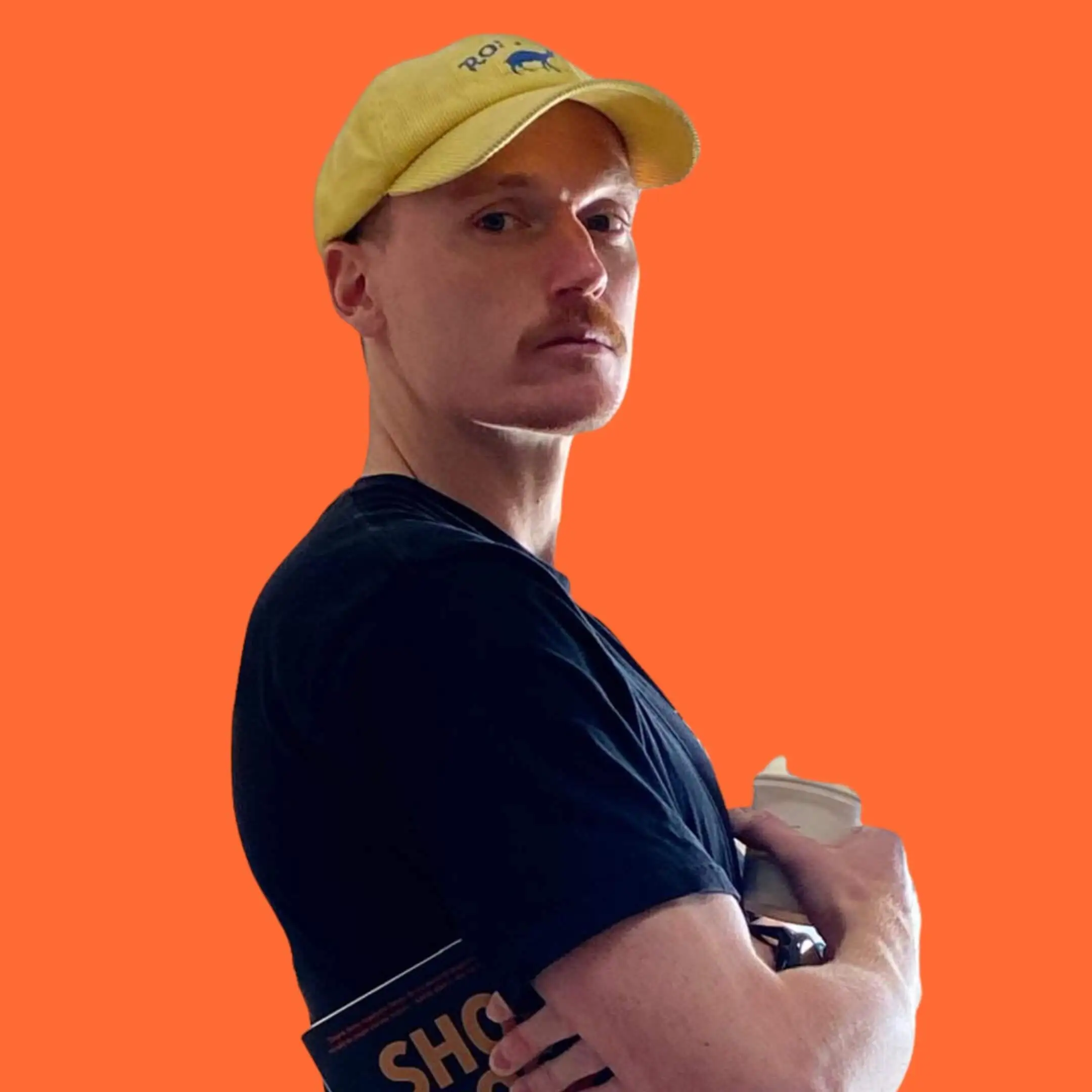
Jack Kelly, professional triathlon coach and host of The Triathlon Hour discusses everything about his coaching methods and thoughts on triathlon training and performance.
HIGHLIGHTS AND KEY TOPICS:
- Intensity and key sessions as the cornerstone of Jack’s training programs
- Not overthinking training volume
- Don’t be afraid of fatigue or overthink your ability to absorb training
- Building a story and a narrative to get the most out of every athlete
- Tips for age-group triathletes on how to improve swimming, cycling and running performance
- How age-grup triathletes should think about their training on a time-crunched schedule.
- Jack’s “overrated and underrated” in triathlon
- Listener questions directly from Jack’s athletes Ari Klau, Sam “Appo” Appleton and Toby Martin.
- …and lots, lots more!
Sponsored by:

Precision Fuel & Hydration
Precision Fuel & Hydration produce our favourite gels, sports drinks, and electrolyte and carbohydrate products here at That Triathlon Show and Scientific Triathlon. Use the free Fuel & Hydration Planner to get a personalised plan for your carbohydrate, sodium and fluid intake in your next event, and get 15% off your first 2026 order by using the code TTS2026 at checkout.

ROUVY
ROUVY is real routes cycling platform that let's you ride thousands of real-world courses with amazing graphics and feel! There are 75+ IRONMAN courses plus more than 20 Challenge Family courses to help you prepare for racing, and tons of other great features you'd expect from an indoor cycling platform like structured workouts, virtual races, and more. Go to rouvy.com and use the code TTS to get your first month for free on top of a 7-day free trial.

Effortless Swimming
Effortless Swimming create the best swim goggles on the market, that combine great fit for every face shape with a truly unique approach to preventing fogging. Instead of using an anti-fog coating, hydrophilic nanoparticles are permanently integrated into the lens, making them the only goggles that maintain their anti-fog properties for the long-term. Use the code TTS15 for 15 percent off, plus a free two-month Effortless Swimming course membership.
Shownotes
Introduction and coaching background
00:40 -
- I've always been involved in sport in some way. As a teenager I loved fitness, and I think I was good at sport back then precisely because I was so obsessed with it. I was always a very good runner and strong at the fitness component of whatever I was doing.
- I wanted to go into sports science at university, and I was always obsessed with following what the best coaches in different sports were doing, so without realising it I'd been setting myself up for this since I was about twelve.
- I got into triathlon through some testing at the Australian Institute of Sport, went and did sports science at university, had a crack at being a pro triathlete and was no good at it, got injured a lot, and had a bad bike crash I never came back from.
- I moved into coaching and sports science in other sports, AFL here in Australia, running, and eventually came back to triathlon as an age group coach and with a couple of professionals, started the podcast, and now I consider myself a professional triathlon coach more than anything else I do.
- Coaching is about 95 to 99 percent of how I spend my time. My TrainingPeaks screen time is genuinely five to six hours a day because I'm constantly on it, tinkering, looking at things, going over things.
- The thing people might find surprising is how little of my time goes into studying, reading, or researching to improve myself.
- Given my sports science background you'd expect the opposite, but I do almost none of it. Almost all my time is spent talking to my athletes, thinking about the training and the person, and tinkering on TrainingPeaks.
- I'll go and look into something if it catches my eye or if someone raises a point I feel I'm not across as well as I'd like.
- When you spend all your time at university getting bogged down in the details, you get out into the real world and realise it doesn't transfer as well as you'd think into day-to-day coaching.
- So I almost purposefully stay away from it because I don't want to be limited by it. I'd rather build my own ideas and create my own case studies with my athletes.
- Chasing every new trend or piece of research and implementing it just hasn't worked well for me.
- Observation is underrated for improving performance, whether that's your own or your athlete's, and being attentive and detail-oriented with what's happening in the athlete's training is very often more important than hunting for the perfect protocol from the latest studies.
Remote coaching tradeoffs
06:12 -
- I coach almost exclusively remotely, outside of a few camps here and there. I don't coach a single athlete in Melbourne where I live, so contact is text, phone, or the very rare camp.
- I've done long stretches of in-person work in the past and some lengthy camps of six to eight weeks with my current professionals.
- The downside of being face-to-face is that you get too involved in the overthinking and emotions that come with being an athlete.
- Without meaning to, you get caught up in what the athlete is telling you about how they feel or what they think. When you coach remotely you spend far less time actually buying into what they say.
- You still listen, but it doesn't affect the decisions you make about programming or the training you set that day nearly as much.
- A lot of people see that as a strength of being in person, the ability to adjust on the fly and be in tune with how the athlete feels, but unless you're really good at stepping back I find it more of a hindrance than a help.
- I think I get more out of my athletes as a remote coach than I would in person.
- I don't know whether that holds if you lived in the same town as them for years, because I've never done it, but for camps or two to three month stretches I find it a little tricky.
- When you spend the whole day with athletes, including meals, it leaves very little time to actually review the objective data, and the emotional side can get an outsized priority compared to looking at what's happening objectively.
- A cornerstone of my philosophy is that you shouldn't adjust training too much.
- The best coach-athlete partnerships are built on setting a program, whether it's four days, seven days, fourteen days, or a month, and following it as close to perfectly as possible.
- It doesn't mean you nail every session. You might have to reduce the power on some bike sessions or the pace on some run sessions, or adjust for heat, but you still get the session done as intended to the best of your ability that day.
- The further you drift from that, the worse the program and the physical outcomes become. That's another reason remote coaching is effective, because there's less time to get caught up and, together with the athlete, decide to change things.
AI coaching and overthinking
10:10 -
- That view on not changing the program too much makes me think about AI coaching, because one of its cornerstones seems to be changing your training every hour of every day.
- I don't use anything like that as a coach or an athlete, but I've played with enough of these tools to see that's what tends to happen.
- Until they produce something more stable, it's going to be very hard to get anything beyond a super average product and average training outcomes. I
- t might be fine for a beginner or a mid-pack age grouper, but that level of constant interventionism is excessive if you want the best out of yourself.
- Overthinking is close to the cardinal sin of coaching and training. It almost never leads to good outcomes with programming.
- The less time you spend overthinking what you do day-to-day, the better, and AI is like the coach that just can't stop overthinking.
- It can't see the forest for the trees. I try not to be that coach, because it's a bad trait to have. Let your athletes overthink, and you be the one who brings them back.
- Give an overthinking athlete an AI program and it's a recipe for disaster, because my experience of these tools is that they're all over the place.
Core coaching principles
12:28 -
- Craig Mottram, the Australian distance runner, was asked in an interview what his coaching philosophy was, and he said he didn't know what that meant and called it a stupid question.
- He was rough about it, but summing up what you do day-to-day succinctly is one of the toughest things to answer as a coach, and I don't really know how to do it.
- What I do know is that I'm obsessed. I wake up thinking about coaching.
- I go to bed thinking I can't wait to wake up and see how Ari went in his 6x2K track session or how an athlete went in his 10x6 minute threshold bike session.
- I sit in bed with a coffee opening their TrainingPeaks with a big smile on my face. That obsession is the cornerstone of the coach I am.
- In terms of the nuts and bolts, I think I'm a very good programmer, and that's my strength and what I work at the most.
- I can struggle with interpersonal things at times, and I've completely messed up coach-athlete relationships by not being empathetic when I needed to be or not listening when I should have.
- But my programming has always been strong, and I have the fundamentals of training philosophy quite down for how young I am, being only thirty rather than fifty and experienced.
- Ultimately, I believe in hard work and in constantly trying to be the best you can, and I try to instil that into my athletes and get them growing as people and as hard workers.
- Hard work is a core training principle, and you can distinguish training principles by whether you believe in doing the most amount of work possible or in a more minimal effective dose.
- I don't know that anything about it is particularly unique, because I haven't spent much time analysing what other coaches do.
- I only know my own programming on a truly deep level. I think a lot about the individual athlete and their profile, where they need to get to in a month, six months, twelve months, two years, and I program accordingly.
- I take a long-term approach rather than getting too caught up in the next three or seven days. A mistake a lot of self-coached athletes make, and the kind of coach who got into the sport in their thirties and took on a bunch of age groupers, is getting fixated on the current seven-day block.
- Good days stacked on good days do add up over time, but it's important to step back and build a program toward the place you think the athlete needs to reach without losing sight of that in the day-to-day.
- As an example, Apo has a clear weakness in his LT2. For the success he's had, it's awful across bike, run, and swim.
- He doesn't have the top-end physiology you'd associate with him.
- Rather than continuing what he'd done in the past, which was ignoring it and developing lower zones, we identified that as the clear weakness and now never lose sight of trying to improve it across the swim, bike, and run sessions over six months, even when he's racing a lot, sick, or injured.
- It doesn't mean doing the same session every day, and he still does easier training, but that's the thing we're ultimately trying to improve.
Strengths versus weaknesses
21:05 -
- I'm probably a strengths-first coach, even though the Apo example doesn't show it. Take Ari Clow, who I've coached basically his whole professional career.
- His swim sucks, always has, still does. But his bike and run right now are very close to the best in the world, a top ten bike-runner in 70.3 without question.
- He loses so much time in the swim. Over the best part of three years we took him from a pretty good runner with a very ordinary bike and swim to having one of the best runs in the world and a bike that's a genuine weapon.
- His swim still sucks. That's a clear example of being a strengths-first, weapons-first coach, and it's got him good results.
- Only now that his strengths are so strong do we really need to work on that weakness, because otherwise he won't improve much.
- With Apo, we're always still trying to improve what he's good at, making his swim more of a strength and improving his bike position because he's so aerodynamic.
- But he hit a performance ceiling and started going backwards, and he was never going to keep up with the rising competition without working on his weaknesses.
- So the rule for an age grouper coaching themselves is to ask whether you can improve your strengths or weapons. If you can, you should, and that should be the priority.
- But if you can't improve them much and your weakness is holding you back to the point where no amount of strength will change your result, that's when you focus on the weakness.
- For age groupers, who are less likely to hit that ceiling and where it's always about improving your time, being strengths-first tends to be more successful.
Excellent basics versus no stone unturned
24:33 -
- Doing the basics well is a good foundation, and every good training program does the basics well. Even if it's not something you think about constantly, you're always trying to do the basics well as an athlete or coach.
- The no stone left unturned thing I find less important. If a coach is really focused on all these things other coaches aren't doing, they're probably either a pretty poor coach or not actually doing those things as much as you think, and it might be marketing hype or a social media thing.
- The good coaches are obsessed with the basics and the fundamentals and instilling them in their athletes.
- If your coach isn't about that but is obsessed with one-percenters, like doing an FTP test every four weeks, you're probably with a pretty bad coach.
- If your coach always focuses on doing the fundamentals well, you're probably with a solid one.
Specificity versus general fitness
26:14 -
- For almost everyone, the best indicator of how you'll perform, as opposed to day-to-day fitness or enjoyment, is the training you've done at the top end of your zones, not the bottom.
- If you took the top five finishers at Kona in a seven to nine hour event and compared their LT2s, and even their VO2 maxes, with the top five age group finishers, the professional LT2s would be way higher across the board.
- That tells you that to be the best you can at any endurance sport you have to be good at your top end. Specificity is interesting, because if you get strict about what an Ironman is, it's not top-end heavy at all. It's zones one, two, and three, maybe four, maybe five at the swim start or following a surge on the bike.
- So specificity probably isn't as important as simply being a really good top-end athlete and then, over time, embedding that in a lot of volume and improving your endurance and durability.
- If you're too specific year-round you miss out compared to a more general program that adds VO2 max, threshold, and easy training.
- Specificity can be a bit of a crutch, and you should use it at the right times rather than focusing on it too much. A good program generally has you becoming a better all-round athlete at the top and bottom of your zones at all times.
- Your LT2 sets the ceiling for your performance across all triathlon distances, and your VO2 max sets the ceiling for your LT2.
- There was a new paper, I think from Andy Jones and his group, revisiting the old Joyner determinants of performance, economy, VO2 max, and fractional utilisation, but across a widespread group from elite to recreational athletes.
- Contrary to previous belief, they found fractional utilisation matters very little compared to VO2 max in a heterogeneous group.
- In a very homogeneous group like elite runners, VO2 max might matter less than fractional utilisation, especially for the marathon.
- But across a wide range of abilities, your VO2 max sets the ceiling for LT2, and your LT2, however you measure it, whether critical power or otherwise, sets the ceiling for triathlon performance across all distances.
Volume without obsession
30:20 -
- I don't get caught up in volume as a starting point or an adjustment point. I don't look at someone's TrainingPeaks and think we have to hit thirty hours, then pad an easy ride or an extra run to get there.
- I keep an eye on it as weeks accumulate, watching training load over the last month or two weeks, and if I sense an athlete is struggling in key sessions, volume is something I'll check.
- If they did an outlier fortnight of forty hours instead of their usual thirty to thirty-five, that might explain the struggle.
- So I think about volume mostly in terms of not killing an athlete with back-to-back weeks they can't tolerate. Overall training volume is still important and a good predictor of performance.
- An athlete who has averaged twenty hours a week for two years is probably going to be a lot better than one who has averaged ten.
- But in the acute seven-day phase, I don't really think about volume at all.
- Twenty hours a week sounds low at a professional level, but it's 1,040 hours a year, and even athletes doing twenty-five to twenty-seven hour weeks often don't reach it because of racing, travel, injury, and time off.
- Generally mid to high volume. I'm not a coach who sets a lot of thirty-five hour weeks.
- For most people, twenty to twenty-six hours would be the typical week.
- But going into Montremblant, which Ari just did, we did two weeks in a row of thirty-three and thirty-six hours, the biggest fortnight we've ever done by far, when for the whole year before that he'd done between eighteen and twenty-four hours as his standard week.
- It can be all over the place. A lot of training is experimental. You try something, then assess whether it worked, which is one of the hardest parts of coaching, because you don't necessarily get immediate results from something you did one, two, three, or four weeks earlier.
- Generally speaking, my athletes sit somewhere between twenty and thirty hours.
Racing toward overload
34:30 -
- The thirty-three and thirty-six hour fortnight was a high-volume overload three and four weeks out from the race.
- We then brought it back to twenty-four hours two weeks out and a taper week of ten to twelve hours, which was a little lower than his usual twelve to fourteen hour taper because of travel.
- The thinking was to see whether he responded well to a lot of bike volume, because he hadn't been riding the way we wanted.
- Going into the race we wanted him to come into T2 in the lead on the bike, which he hadn't done all year.
- He'd been running up into the podium but coming off the bike three, four, or five minutes down, racing like an age grouper time-trialling from start to finish, which is genuinely how you get the best out of yourself in a professional 70.3.
- Working backwards, the goal was for him to push really hard for the first twenty to thirty kilometres, take a big chunk out of people, and still ride faster than everyone else to lead into T2.
- So we asked whether two really big bike weeks could build the endurance, durability, and repeatability that a layperson would call strength. It worked well.
- He rode thirty to forty watts higher for the first twenty to thirty kilometres than in any other race that year, took a minute to two minutes out of everyone, held on, came into T2 in the lead, and won the race easily on his run.
- He pushed the highest average power he ever has in a 70.3 bike, rode strong early, and showed no signs of fatigue, both from his own reporting and from the data, with no drop-off and no big rise in heart rate through the bike.
Intensity as the priority
37:40 -
- Training intensity and sessions are the cornerstone of my programming. I don't think about volume, but I think about sessions all the time.
- The main priority of anyone's training program should be the sessions they do, and the intensity of the high-intensity sessions, whether a VO2 session, a threshold session, or even an LT1 session.
- Anything above pure zone one or the low end of zone two should be what you build your training around.
- If an athlete's bike threshold is 300 watts and I think it needs to be 330 to be competitive, I obsess over the one, two, or three bike sessions they do.
- Nailing those sessions week after week, month after month, year after year, is the cornerstone of high performance.
- Intensity matters less if you don't care about performance and just love training and staying consistent, healthy, and injury-free.
- But if you care about performance, I'll drop volume, duration, or frequency, whatever I need to, to make sure sessions are done well and consistently.
- I had this conversation with Ari this morning. There's been a hijacking of what actually works versus what's considered acceptable to talk about, a softening of how coaches discuss the truth of what gets the most out of an athlete.
- You can get gossiped about for saying it plainly, because it's not in vogue to say that being the best in the world means training brutally hard, doing insanely hard sessions all the time.
- No amount of volume makes up for the deficit created by not doing sessions well or frequently.
- If you want to be the best swim-bike-runner you can, do a lot of sessions year-round, progressively overload them, and always prioritise them, even if it means throwing out easy work.
- Generally you're better off on the easier side of sessions so you get the duration and reps done at the assigned pace or power, then go again the next day.
- You'll be a better athlete doing six sessions a week at ten percent below your ceiling than one session a fortnight at 110 percent.
- No good sports-science-minded coach disagrees with that. But you won't get the most out of yourself always erring easy either.
- You do have to push things at times. Brett Sutton once had Belinda Granger, an awful runner, do a 75K run in the heat because he thought she needed to overcome mental barriers, and she became a good runner.
- I don't go that far, but if a session is 6x2K usually done at four minutes per kilometre, every now and then you need to do them at 3:45 or 3:50.
Periodization reconsidered
43:36 -
- At university the word periodization gets talked about constantly from day one, and then you get into the field and think about it far less than you expected.
- I think about it less and less as I get better as a coach, and I don't think it's that important in general.
- You can't push seven days a week all year round, so you do need to read yourself or the athlete and know when rest is required.
- If you've had a year of fifteen races you might need an off-season, even if it's not what gets the best out of you in the next six months, because it helps twelve months later at championship season.
- For an age grouper doing one goal race, you could argue the whole program should be periodized toward it, but I'd lean the other way.
- You're not really periodizing anything, you're just spending a year getting as good as you can until the race arrives. I don't run traditional or reverse periodization models with distinct phases.
- I have the mindset of always trying to improve the athlete across the board, year after year, week after week.
- There's very little good science on periodization. It's mostly theories, with few if any good controlled studies, and definitely none specific to endurance sport.
- Much of it comes from strength training, which is far less complex because you have fewer variables, especially compared to multi-sport like triathlon.
- This is what I mean about scientific coaching being hijacked. I don't consider myself a sports scientist because I'm not in a lab or involved in research.
- But when you do the degree, you figure out that we actually know very little, and that a lot of the research people cite is quite poor. It was done over six weeks, it doesn't prove much, and you can manipulate any six-week trial to get the result you want.
- The longest research you'll find in endurance sport is about twelve weeks, with almost nothing longer, and very few case studies following an athlete's career or year.
- Those case studies are valuable, and coaching is essentially doing your own case study rather than deep-diving one narrow piece of research.
- There's a huge discrepancy between what we actually know and what we apply day-to-day. We're guessing a lot, mostly following or copying what we see works, like noticing that Kristian Blummenfelt does something that seems to be working and trying it.
- If you want the most out of an athlete you shouldn't follow the literature too much, because it's limited and almost never applied to a good athlete over a long period.
- I focus instead on knowing the athlete, hard work, constant improvement, and judging progress by observation rather than the latest research.
- I get frustrated by people too obsessed with being scientific who think they know more than they do based on something deeply limited that they read.
Science and storytelling
49:58 -
- Before triathlon coaching I was employed in sports science fields, doing programming and overseeing strength and conditioning for professional athletes in other sports, so you'd technically call me a sports scientist.
- But I hate it. I get frustrated seeing coaches try to be too scientific and think too much about the science.
- I focus on hard work and on creating stories with athletes, their motivations, and getting the most out of them psychologically as much as physiologically.
- I probably use sports science without knowing it, and it builds the foundation of how I think about programming, so maybe I'm being a little hyperbolic.
- But from the moment I start with an athlete I build a story with them. I instil belief and tell them what I think they could become and what they could do if we do certain things.
- Then day-to-day I keep going back to that story.
- Every human walks around telling themselves a story, athlete or not. What you're going to do, the work, the relationships, who you're trying to be, it all comes from an internal narrative.
- That's important to human existence, and no more so than for an athlete.
- With Ari, we build this story together day-to-day, cultivating it, making the snowball bigger with the story that we're going to be the best in the world.
- I obsess over instilling belief in that vision, so that when I ask him to do a session or a week of training he doesn't question it, because he isn't caught up in the details, he's focused on getting to the end point we constantly talk about.
- I'm more a psychological coach than a scientific one. I'd much rather an athlete not obsess over taking lactate on reps three, four, seven, and nine, or wearing a heart rate monitor, and instead go out, enjoy their training, work hard, and be motivated and disciplined.
- For me, the scientific method really is that observation we talked about, systematically trying things and observing the results, like Ari's two-week volume block, with the caveat that there are always confounding variables and it takes time for an intervention to show its effect.
- That's the original science, a few smart people running experiments, and coaching is that kind of science.
- Part of being a coach who wants the most out of someone is that you have to be yourself and not be fake, especially for a long-term relationship.
- So I instil things I believe in and that get the most out of me. In my own life I need to be inspired and motivated with strong whys, and without them I'm really average at whatever I'm doing.
- I've been fit my whole life except for a two-year period in 2023 and 2024 when I went from the high seventies or low eighties in kilos to 124 at my heaviest, because I had no why, no motivation, no drive or purpose.
- Then I found it again and lost about thirty-five kilos in a year to eighteen months. So I push that onto my athletes.
- To be the best version of yourself you need a story and a narrative for why you're doing what you do, because it helps you get out of bed, do the tough session, go for the long run in poor weather. You need something deeper than a superficial motivator, a strong why, purpose, and story.
- Having a strong why helps an athlete perform better and more consistently, even on days they don't feel like it.
- This element is different for every athlete, never close to the same for two of them, which is why getting to know your athlete matters and why, as an athlete wanting a coach, you want one who tries to know you.
- Apo, who I coach, was sick of triathlon and about to retire before we started, so figuring out how to motivate someone who's been around twenty years is completely different from motivating Toby Martin, an age grouper who would do fifty-hour weeks if I didn't stop him.
- They're at opposite ends, but I do the same thing with both, creating a story and a narrative to make them as passionate and excited about training as possible.
- The stories are completely different, but the philosophy is the same, and the way I go about it is always individual.
Tapering insights
1:00:05 -
- I don't think the taper is nearly as important as people think. The years and months of training dictate race-day performance.
- If you took ten athletes on a start list and could see their last six months of training but not their taper week, you'd accurately predict nine or ten out of ten.
- Reverse it, seeing only the taper week, and you couldn't predict most of them. The thing that helps you taper well is experience.
- The more tapers and races you go through, the better you handle it, because the key is not doing anything stupid.
- Whether you do five, ten, or fifteen hours, or have sessions in the week or not, you're mainly trying to avoid anything crazy and reach the race in a good mental position, not drained or exhausted from letting nervous energy ruin it.
Athlete pushback and empathy
01:02:23 -
- Not much at the moment, though there has been. My current athletes probably aren't experienced enough to really butt heads.
- With Jocelyn McCauley in 2025, who's super experienced, we'd have robust discussions about why we were doing certain things.
- She'd ask why, I'd explain, she'd push back, I'd explain again, and you'd reach a position on whether to do it.
- You're just trying to do right by the athlete. In the past I've had to learn from interpersonal mistakes, times I wasn't empathetic enough, and I've had to work on being more empathetic to become a better coach.
- I haven't fixed it, none of us is perfect at how we treat people, but being the healthiest, fittest version of myself lets me be a calmer, more considered, empathetic person. When I wasn't that was when I was at my lowest with my own mental and physical health.
- When I got into coaching I was coaching professional men between eighteen and forty while I was around twenty, trying to hold authority over people older, stronger, and more strong-willed than me, who had formed their own opinions.
- The one thing I had was being a good runner compared to them, so there were areas where they'd listen and I could build rapport.
- Early on I got walked all over, which wasn't necessarily bad, because it taught me when to give autonomy and when not to.
- Athletes need autonomy. Very rarely does an athlete perform at their best being dictated to constantly.
- There's always a push and pull, giving as much autonomy as you can because it makes for a happier athlete who feels in control, unless it's so much that it starts to hurt the actual program.
Coach experience matters
01:06:45 -
- Triathlon is far more competitive now than in the 2000s or early 2010s, so it's harder to be a coach with no experience. It's beneficial to have some experience, whether in triathlon or just in high performance and trying to be a high performer with your own fitness.
- But the best triathlon coaches are rarely very high-level triathletes.
- That's a negative. Jan Frodeno, a mate of mine and in my opinion the greatest male professional triathlete of all time, would not be a good professional coach.
- As someone to go to for advice for certain personality types, brilliant, but to actually coach you, terrible, because he'd bring too much of his own experience into it.
- There's a perfect middle amount of experience, but too high a level isn't good in endurance sport.
- At that level talent plays a huge role, and someone who has been slightly lower and had to work really hard without always getting the results can have an advantage, because most athletes won't have world-class talent.
- Frodeno's limiter is that he'd struggle to pivot and experiment, because he knows one way, the way that took him from average to the greatest ever, and it worked better for him than anyone in history.
- He'd have a harder time adjusting for an athlete than I would, because I never did something that made me the very best at it, so I'm not limited by it.
- I'm more flexible and malleable, and I constantly experiment and change things because I'm not hardwired by what I did to become the best.
Rethinking training volume
01:10:53 -
- I used to think volume was everything and was obsessed with it. I thought a long run was everything, that hills were great, that volume in the water was amazing.
- I now think volume in the water is pretty much neither here nor there for most people.
- I very rarely set an easy long run for a triathlete, barely ever set hill reps, and barely ever set hilly mid-long runs. All the things I used to do week in, week out, I just don't really do anymore.
Race day starts early
01:12:20 -
- 99.99 percent of the work should be done before race week.
- With Ari at that Mont-Tremblant, win, in the four or five week block between his previous race and this one, we talked constantly about what we'd do in the race, how we'd train to implement it, and what it might look like on the day.
- During race week we just solidify those things with a final phone call the night before. I'm not saying anything groundbreaking then.
- If you're waiting until that point, particularly in long course, it rarely has any impact and probably just leads to confusion.
- Very occasionally you find one thing that resonates and the athlete obsesses over it during the race, but strategically there's almost never a single piece of wisdom the day before or on race morning that meaningfully helps.
- It may differ in short course, which I don't have much experience coaching.
- But in long course, or a marathon or ultra-endurance event, 99 percent of the psychological and physiological work is done through the build, the year, the years, and very few things said on race week will meaningfully change performance.
- Big difference. His power profile shows he rode ridiculously hard for 20K, which helped him and will help him going forward.
- You can positively affect the strategy an athlete implements, which is why I believe in building narratives and goals throughout a training block. Doing it the day before is just solidifying earlier conversations.
- The same result might have happened, but how he got there would have differed, because he wouldn't have pushed that hard early.
- Now he has the belief going into Boise, a stronger field, that he can push hard in the first twenty to thirty kilometres, which might get him into a better group and ultimately help him at a world championship-style race a year later, which would never have happened if left to his own devices.
- The takeaway is that you have to train for the race strategy, not just talk about it. If you talk strategy but he doesn't have the fitness to push hard, it won't happen, or he'll be too fatigued for the rest of the bike and run.
- Words are just words with athletes, and their power diminishes the better the athlete.
- David Goggins can motivate a very inactive person to go for a run, but Alistair Brownlee or Danny Allerreef are never watching a Goggins reel and suddenly training harder.
- If your athlete is good, you have to back up your words with actions, whether that's your programming or the athlete seeing the fruits of what you say.
- I had the strategy conversation with Ari, implemented training that showed him he was capable of executing it, and he went and got a good result, so the words were franked by action.
- Without that, words don't have much impact on professional athletes, good age groupers, or really fit people, who need the whole holistic package to line up.
Myths about fatigue
01:18:57 -
- I hate the fear-mongering around fatigue, and it's more prevalent every year.
- The obsessive use of "absorb" and "recovery" is like fingernails on a chalkboard for me. You don't need to fear fatigue nearly as much as most people in endurance sport will have you think.
- You don't need to treat your body like a fragile sports car. If you're relatively fit, your body is far more like a 2004 Toyota Corolla with a million miles on it that still runs than a Ferrari 458, which was known for catching fire if you pushed it too hard.
- People talk about endurance athletes as if they're a Ferrari that will catch fire without immediate recovery, and that's a myth. Realise how robust and adaptive your body is.
- There's too much fear about hard work and about absorbing training. It's common for age groupers who aren't doing much training in the first place.
- Outside stressors matter a lot, but if you don't train you won't get fitter, and often done is better than perfect.
- Perfect is training a lot, hard, and recovering hard, but if you train quite a bit and quite hard with imperfect recovery you can still improve, as long as you don't do something completely stupid.
- Progressive overload still matters, you can't go from zero to a hundred, but working a little more and a little harder generally isn't an issue.
- It's not that you should train insanely hard all the time and be a terrible person to be around, just don't be too far the other way.
- Don't let a bit of tiredness stop you doing a session. Do it to the best of your ability. Not every session has to be amazing, and you don't have to be scared of feeling a bit rough.
- Annoyingly, I just use experience, intuition, and knowledge of the person and of training, and I don't fully know how I think about it. I definitely do it, there are times I need to back off or change a day, but I try to avoid it.
- I try to instil the belief that best practice is completing the set training to the best of your ability on the day. If you're tired and have that 6x2K usually done at four minutes per kilometre and can only manage 4:20 or 4:10, go and do it and don't be disappointed.
- That's better than pushing it to the next day and nailing it, especially over time.
- Too much tinkering, changing sessions, riding easy today and pushing it to tomorrow, then doing the same next week, is toxic to a program. Do what's set to the best of your ability, even if it's much easier than planned, and move on.
Strength training and swim basics
01:26:10 -
- I don't think strength training helps that much or is that important for a high-performing endurance athlete. It's not a myth, and to be a healthy, well-rounded human it's great, but for a really high-performing triathlete it's overrated.
- I'd rather see you work relentlessly on technique, preferably with an expert twice a week, and not swim at all outside that, than swim 30,000 metres a week as an average swimmer hoping to improve.
- Volume of swimming rarely matters for an age grouper.
- Focus on how fast you are and on your speed in the water, with technique a big part of that.
- Don't worry about how far you swim in a session or feel worse doing 1,000 metres than 5,000. Endurance athletes have it ingrained that a 16K run feels better than 8K, or that stopping at 2,000 metres when you planned 5,000 feels bad.
- Don't structure swimming that way. Do really fast, good-quality metres and fewer of them. Five by 100 metres with a 500 warm-up and a small 200 cool-down is a good session for most age groupers, better than 12x400.
- True speed, not threshold or VO2 max. A great session is 10x50 metres or 5x100 metres at a three or four to one work-to-rest ratio, literally three, four, or five minutes of rest between each.
- You'll be at the pool the same amount of time as a 4,000 metre session but only do 2,000 metres, and you'll become a better swimmer.
- I don't have a rule, but off the top of my head, if you can do 10x100 metres cycling on 1:25 or 1:30 you could treat volume as a little more important, and if you can cycle on 1:20, these being metres, not yards, you should start doing a bit more volume and focusing on threshold in the water.
Bike intensity and TT position
01:30:50 -
- Intensity is your best friend on the bike. Don't get stuck doing too much easy riding if you want to be the best you can. If you love long easy rides for their own sake, go for it, but if you care about performance, hard bike riding matters.
- Second, as a long course triathlete you must get insanely good at holding power in your TT position for long periods, so practise it and obsess over it.
- If you can do 100 percent of your intensity year-round in your TT position, it helps on race day. Third, fuelling matters, and it's the one area where an age grouper should be pretty obsessed, on the bike and before and after rides.
- It's important as a triathlete not to think of yourself as a cyclist.
- A professional cyclist trains twenty to thirty hours a week, and doing that in the aggressive TT positions of a Josh Tarling or Remco, far more aggressive than triathlon and especially than age group triathlon, is very hard on the body.
- There probably isn't a single age-group triathlete with a CDA lower than Remco's, which comes from his aggressive position and tiny frame.
- If he rode twenty to thirty hours a week in that position up mountains it would be brutal. But for a triathlete, high volume on the bike might be ten to fifteen hours a week, so you're just not on the bike as much.
- If those cyclists wanted to be the best time trialists in the world, it would be important for them to do as many sessions as possible in the TT position, but they're riding road bikes for 100 to 200 kilometre stages with a short TT thrown in, so of course they spend more time on the road bike.
- For a long course triathlete, be really strong in your TT position and spend as many sessions as possible locked into it. The critical part is discipline.
- Don't be the person who drops into position, gets out, drops back in, gets out. If you have 6x8 minutes, stay locked in for the full eight minutes.
- If you have 3x20 or 4x20 minutes, stay locked in. If you find it hard, go and get good at it, be disciplined, and push through the discomfort, because once you adapt to holding the position, it's hugely beneficial on race day.
- This assumes you have a good bike fit and are comfortable in the position, at which point all you have to do is get really adapted to it, particularly when pushing power.
- You should also do over-threshold work, VO2 max intervals, 30/15s, 5x4 minutes, 10x2 minutes, in the TT position.
Running consistency wins
01:37::15 -
- Running I find harder for age groupers, and I've coached more professionals for longer than age groupers, having taken on two this year, so bear with me that my opinions are less strong here.
- Generally, for most age groupers or runners, twelve good months of running beats four exceptional weeks.
- This is less true for the other two sports, where you can get good four-week bumps in cycling fitness, but with the run it's rarely a good idea to do a random crazy session.
- There are examples like the Belinda Granger 75K, which I'd never set, but for most people avoid the outlier session, avoid a run 10K longer than anything you've done, avoid a week 40K bigger than ever.
- Focus on consistency and walk away from most runs with that nagging feeling that you could have done more.
- Don't make an executive decision to run 5K longer, add a rep, or sprint the last 300 metres just because, with the long-term view that twelve good months beats anything on a single day.
- The most common way people go wrong is the constant push for more weekly volume or pushing a first or last rep too hard.
- Shoe choice matters, having a good rotation, trying good shoes, going to a run specialty store, talking to experts rather than copying a friend. I'm pretty big on that, though it's not as important as consistency.
- I have some controversial takes. Weight is important, and the heavier you are the less frequently you should wear super shoes.
- The exception is that an experienced heavier runner can get away with it more than a light inexperienced runner.
- For most people, progressively overload the time spent in a super shoe. If you've never worn one, do it less frequently and build to potentially wearing one for all sessions, however long that takes.
- Going from zero to hero in a super shoe will likely lead to more proximal stress-related injury.
- They're not the safest shoes, and I don't have a hard rule, it's an experience and trial-and-error thing. If you're inexperienced or heavy, tread carefully and progress slowly.
Time-crunched athlete plans
01:41:05 -
- There's a huge focus on intensity for a time-strapped athlete.
- With ten to twelve hours a week, if you want to be the best you can, we'll do a lot of intensity, particularly on the bike and less so on the run depending on who you are.
- If you're a conditioned runner we'll do a lot of threshold running, not junk or easy running. On the bike, very limited easy rides, most rides having some intensity, rarely a five to six hour easy ride.
- Every minute in the pool counts, no junk swimming, no 5K low-intensity swims. The less time you have, the higher the percentage of intensity, and I don't mean VO2 max specifically, just not zone one.
- We're talking zones two through whatever your model has, not a heap of very low intensity. With twenty-five to forty-five hours a week we'd do more easy training.
- It might sound like I'd just say work hard, it doesn't change much, but that's the opposite of the truth.
- I fundamentally believe part of your role as a coach is developing the athlete as a person, not just an athlete.
- That comes from the professional team sport environment I grew up coaching in, with eighteen-year-olds who are far from the finished product.
- Now in my early thirties I coach people older than me, which is a strange position where you help people with more life experience become the best version of themselves as humans first and athletes second.
- I'm never going to let an age grouper ruin their relationship, time with their children, or their job for their amateur sport.
- I only ever try to make their sport lead to everything else in their life being better.
- It has to be the cherry on top, making them a better parent, partner, employee, boss, and friend. If it isn't doing that, it's a bad program.
Overrated and underrated ideas
01:46:03 -
- Overrated: recovery modules like ice baths, foam rolling, and recovery boots, especially ice baths.
- If you're addicted to the adrenaline hit post-ice bath, go for it, but if you're tolerating it because you think it aids recovery, stop, because I'd say it inhibits recovery more than it helps.
- The 80-20 training philosophy is overrated for most age groupers. Too much talking is overrated. You don't need to talk everything to death with your coach or seek clarity on absolutely everything.
- You're better off going out, doing, experiencing, and learning inside the session rather than texting or calling with nitpicky question after question, which keeps you stuck in the weeds.
- It's a trap that high-achieving type A personalities fall into.
- Underrated: what time you wake up and go to bed, particularly a consistent wake-up time.
- Uploading your training the day you do it so your coach can see it, rather than three weeks later.
- I'm not obsessed with data for age groupers, but if you use it, actually use it. And the most underrated thing for age groupers and professionals alike is race experience.
- If you care about performance, race frequently and get experience rather than setting yourself up for one day a year.
- If you love training and racing isn't important to you, don't worry about it, but if you want good race results, race often.
- You can learn to love racing. What holds people back is putting too much pressure on one big race.
- Treat it exploratively, see what happens on the day, do different courses and distances, sprints and super sprints, and find courses that aren't PB courses, with hills, so you're not always measuring yourself against a PB. That can help you fall in love with racing.
Testing the two-session theory
01:50:45 -
- It's a great question, and I don't know. If I could tell you that six sessions a week, two per discipline, was optimal, I'd have it all figured out.
- It's pretty good, and as a general rule it's probably the foundation of a good program, particularly if everything else complements those sessions, keeping you from being too cooked and building endurance over time.
- But it isn't optimal all the time, because not everyone can do two run sessions a week without breaking down, and inexperienced runners shouldn't jump straight into that.
- Ari could do two, probably get away with three, though I won't necessarily give him three or even two every week.
- Definitely. Greg Harper, who I coach, has done three bike sessions a week because his bike is absurdly weak while he's one of the best swimmers in the sport and a good runner.
- We've experimented to force adaptation and get him quicker on the bike, even touching four sessions once or twice, and also two, one, and none. I'm constantly experimenting and seeing what works.
- If a coach has only ever given you two swim, two bike, two run every week from the start, that's poor programming, and you should question it and try something different.
- You might find the two-two-two method was best all along, which is great, and doesn't mean trying something different was a waste.
- Both of you were guessing, and now you know for certain because you tried, with the possible benefit of finding a better way.
Coaching old pros versus young athletes
01:54:48 -
- Every human has a story they constantly tell themselves. It's really hard to change the narrative of an older, battle-hardened, change-resistant athlete, and really easy to build one with an inexperienced younger athlete and nurture them into a way of thinking, living, and being.
- With Jocelyn it was one of the hardest things I've done in coaching.
- We took her to her best ever career result, seventh at Kona last year, her highest world championship finish by a long way.
- The journey was incredibly difficult because she was so resistant to the change I was trying to make, but you know you have to get change or they'll keep doing what they've always done and getting the same results.
- I'm finding that with Apo now, and it's hard. With Ari, Toby, and younger athletes it's easy because they don't know any different and aren't wily veterans resistant to your input.
- You're opening their hearts and minds to the fact that you have their best interest at heart and are trying things they may not have done because you want what's best for them.
- They resist because they want to do what they've always done. You're not building these stories or instilling belief from a manipulative position.
- You're not lying or twisting how they think.
- You're asking who this person is and how to make them the best version of who they already are, not fundamentally changing them, but bringing out the best in who they are and in the story they tell themselves.
- She had a really strong work ethic, hard and tough as nails, mentally strong, no question. But she was more on the scared-of-fatigue, scared-of-intensity side than any athlete I've had.
- She was brilliant, generational, at handling long intervals. I could give her 4x30 minutes or 2x1 hour on the bike at race intensity twice a week all year round and she'd nail it, love it, and thrive on it, and she'd love six-hour rides.
- But give her 4x5 minutes at a power she'd never pushed and she'd hate it, question why we were doing it, message or call before it, and tell you afterwards it was pointless.
- I found it a fun challenge to transfer her incredible strengths and mentality into VO2 max riding or threshold running she wouldn't usually do. I never fully brought her around, because she became pregnant.
- We worked together twelve months, building toward Ironman New Zealand to start the year, and I truly thought she could top-five at Kona and podium in New Zealand.
- She got pregnant during that process, which is far more important to her than any of my dreams for her.
- I probably only got her 60 to 70 percent of the way, and I don't know if we'll get the chance again, since she's old for a professional now and committed to being the best wife and mother she can be.
- I wish I'd started with her five years earlier, but it was fun while it lasted, and seventh at Kona is a brilliant result.
- Most men want to push the top end of their zones much more than most women, and most women are exceptionally good at the one-to-three-hour intervals at a middle intensity, locking in and doing it all day.
- I've also noticed injury risk seems slightly higher in women with VO2 max running, a slight shift, maybe 55 to 45, so you might injure a female athlete with 10-out-of-10 max hill sprints more readily than a male athlete.
Indoor training and environment
02:02:52 -
- I love indoor bike riding. If you're not the best cyclist you can be as a triathlete, locking into TT position on a trainer and pushing the power you want to hold will make you incredibly good on the bike eventually.
- But there's a point where you have to get outside, because riding fast generally only comes from actually doing it on the road, so balance the two, especially if you're not yet good.
- The trainer is a great tool but must be balanced with practising being fast in the TT position outdoors. The benefit of riding inside is you don't risk your life, it's efficient, weather doesn't matter, and you get it done more quickly.
- I love treadmills, though I personally don't use or program them as much as I probably should.
- Sessions like 5x2K, 10x1K, 5x6 minutes, 6x6 minutes, 5x5 minutes, or 10x3 minutes on a treadmill set to a sustainably comfortably hard controlled threshold pace, resisting the urge to speed up, hopping off for a minute break and back on, is a good way to become a good runner.
- But running outside is a different sport, and if you only run on the treadmill you'll feel awful outside, so mix both. If you can only do one, run outside, but if you can do both, do both. A 50 metre pool is always better than a 25 metre pool.
- It's personality dependent. Some people are hugely social and need others around, and some are hugely introverted, get anxious around people, and dread training or feel guilty about not replying to training invitations.
- So know yourself, get a coach who wants to know you, and develop an environment that works for you.
- Don't assume one size fits all. It's easy to look at Kristian, Gustav, and Casper and think you must train with two or three high-level friends to be your best, but that doesn't work for everyone.
- It works for them and probably others, and there are people not doing it who'd benefit, but also people copying it in training groups, federations, and swim squads who aren't getting the most out of themselves because of it.
- Be honest with yourself about what works, what makes you feel depressed and anxious, and what fills you with energy and joy, and cultivate your environment accordingly.
Melbourne recommendations
02:07:40 -
- I'm in Melbourne, the capital of Victoria, the southernmost state on the main island.
- For your own physical activity, go and run a lap of the Tan and the Yarra River region, lovely running with plenty of people out exercising, then get a coffee afterwards for a good morning.
- As a spectator, go to the MCG, our 100,000-seat stadium, and watch a game of Australian Rules football. It's one of the best live in-person sports in the world, if not the best.
Final advice
02:09:15
- My one piece of advice is to do things you love.
- Jack's one piece of advice is to be clear in what you're going to say, because your words are important, whether to your wife, husband, kids, friends, or athletes.
- You need to be clear in what you think, and you shouldn't speak before you're clear about what you actually think.
LINKS & RESOURCES
- Follow Jack on The Triathlon Hour on Spotify and Instagram
- The shownotes for today's episode can be found here.
- The full podcast episode archives (including category filters) can be found here.
- Kolie Moore – Overrated and Underrated Factors for Cycling Performance - referenced in today’s episode

hey, just wondering how I could contact jack for coaching enquiries?
I’m Jim Logan 62 years old lifelong old lifelong long distance endurance enthusiast! Racing and raising funds for the IRONMAN Foundation in the IRONMAN world championship October 10 2026 while battling stage 4 terminal cancer diagnosis since April of 2024. I also published an Amazon bestselling book titled “Just Keep TRI-ING”. The purpose of the book is to bring faith to the faithless hope to the hopeless and prove the IRONMAN motto: Anything Is Possible! Profit from the book will be applied to the $100,000 fundraising goal until achieved! I would love to be a guest on your podcast I think your listeners will find this story compelling and motivational! My IG stage42025. Thank you for your time and consideration!