
LISTEN TO THE EPISODE HERE:
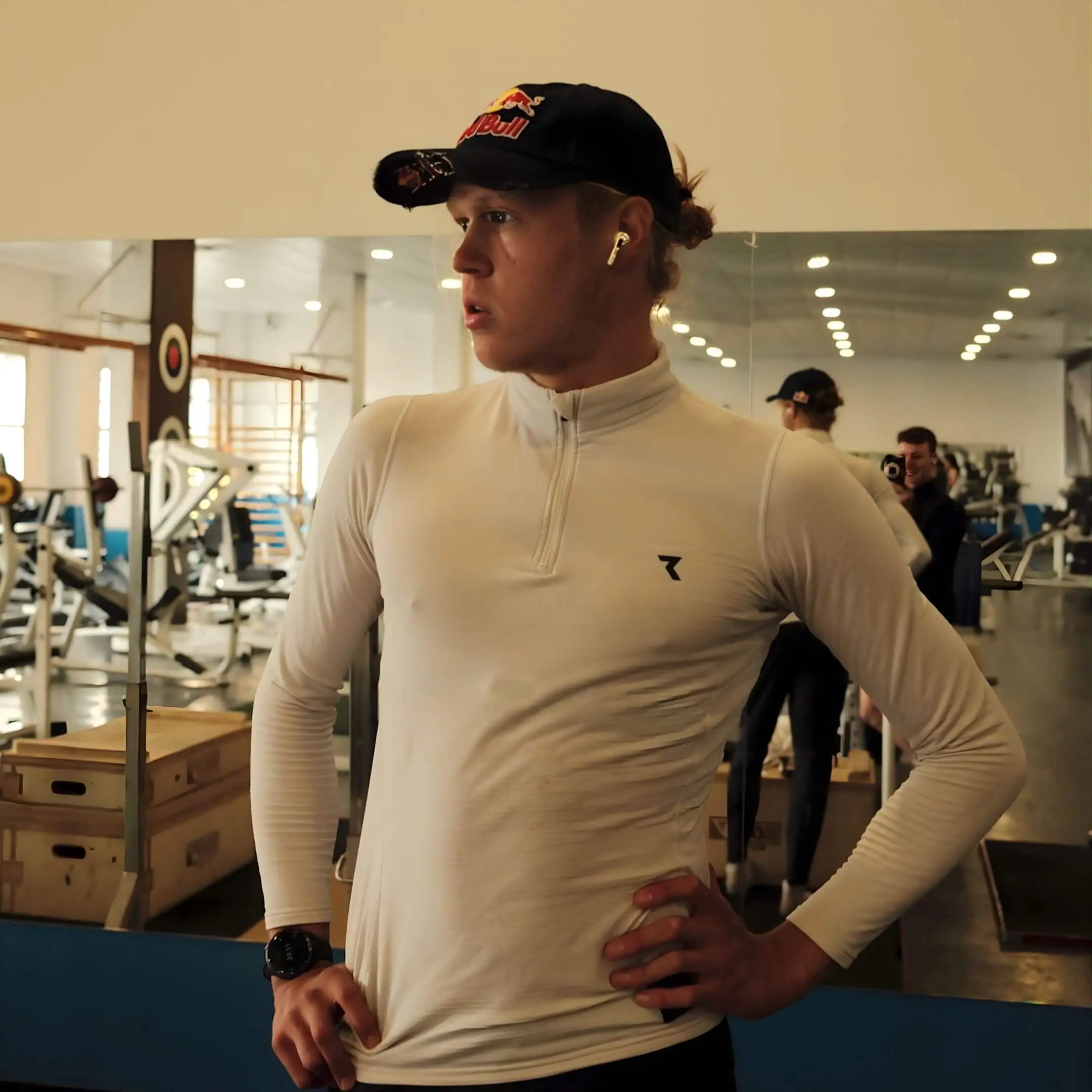
Mika Noodt is ranked second in the T100 World Tour standings (with two races to go), has four T100 podiums so far in 2025, and has multiple Ironman 70.3 and Challenge Family wins and podiums on his resume. In this interview we discuss Mika's training in great detail, get into the specific dynamics of racing in T100 races, and we even discuss how Mika might have ended up being a Formula 1 driver rather than a triathlete if circumstances had allowed.
HIGHLIGHTS AND KEY TOPICS:
- How Mika got into triathlon
- A deep-dive into Mika's training, including key swimming, cycling and running sessions
- His unconventional (you might say epic!) strength training blocks
- A breakdown of a full week of triathlon training with Mika - from the lead-up to T100 Wollongong (where he finished 2nd)
- The dynamics of racing on the T100 World Tour - what is the swim, bike and run like, and how does it compare to Ironman 70.3 races?
- The pacing strategy Mika uses to maximise his performance in T100 races
- Mika's decision to focus exclusively on the T100 series in 2025
- A full Ironman in Mika's future?
- Listener questions
- ...and more!
Sponsored by:

Precision Fuel & Hydration
Precision Fuel & Hydration produce our favourite gels, sports drinks, and electrolyte and carbohydrate products here at That Triathlon Show and Scientific Triathlon. Use the free Fuel & Hydration Planner to get a personalised plan for your carbohydrate, sodium and fluid intake in your next event, and get 15% off your first 2026 order by using the code TTS2026 at checkout.
Shownotes
An interesting fact about Mika
05:11 -
- Before reaching the top 100 in the world in triathlon, it took me several years of dedication and progression. Interestingly, I had already reached a similar level in another competitive field — e-sports.
- As a child, I was deeply involved in Formula One racing games, particularly F1 2011. With a basic computer setup that I gradually upgraded with a proper steering wheel and pedals, I managed to achieve a world ranking of P60 when I was just ten years old.
- It wasn’t until I was around twenty-three that I reached the top 100 in triathlon, marking a long journey between two very different but competitive disciplines.
- Growing up, I had dreams of becoming a Formula One or MotoGP driver, and I still follow both sports closely. However, pursuing motorsports at a professional level requires significant financial resources — owning a kart, constant equipment upgrades, and new tires — which my family couldn’t afford.
- I did have some opportunities to practice karting as a child, and I performed well, but the costs made it impossible to pursue seriously.
Mika’s background in triathlon
06:45 -
- I started in 2013, which was my first racing season. I began training at the end of 2012, and by May 2013, I competed in my first race. I wouldn’t call myself a professional athlete until the end of 2021; before that, it was mostly junior racing.
- When I finished my A-levels, I moved to Darmstadt to study computer science. At that point, I didn’t have the intention of becoming a professional athlete — I was just a normal student.
- During the COVID period, I suddenly had more time to train. I wouldn’t say “thanks” to COVID, but it gave me the opportunity to focus more on my development, and that’s when I started improving consistently and slowly making my way up.
- I was born in 2000, so when I began racing in 2012–2013, I was around twelve or thirteen years old. Before that, I wasn’t into competitive sports at all. I learned how to swim when I was about four and joined a swimming club for a few years, but it wasn’t serious — I wasn’t very motivated and went only once or twice a week.
- I stopped swimming when I was nine. Still, when I started triathlon, I already knew how to swim properly, which made the beginning much easier.
- As a kid, I was more of an all-rounder. I spent a lot of time outdoors, often playing in the forest. Once a year there was a running competition in my hometown that I never trained for but still managed to win, so I realized I had some natural talent. I also loved mountain biking, pretending I was a MotoGP driver.
- In the summer of 2012, I watched a triathlon in my hometown and was fascinated by the athletes and their aero helmets that looked like something out of Star Wars.
- That inspired me to give the sport a try. I was lucky to join a great training group with an excellent coach who later became something of a mentor. I’m still very grateful for that experience, and I believe it continues to benefit me even today.
- I competed in the short-course scene as a junior, but I never progressed very far simply because I wasn’t good enough at the time. My goal back then was to improve, but my environment was very different from Germany’s top athletes. I lived at home, not in a sports school, and I was quite small and skinny as a youth athlete.
- At the start of my junior years, I would place around twentieth to thirtieth at national races, and later, as I developed, I managed to reach between fifth and tenth nationally.
- I was good, but not great. I also had to organize everything myself — logistics, training, racing — which wasn’t easy, but looking back, it was valuable. It taught me to be independent and make my own training decisions.
- I did have a coach, but we didn’t see each other often. Maybe every three weeks in person, and we’d talk on the phone roughly every ten days. Coaching wasn’t his main job, so he acted more as a mentor guiding me through the process, but ultimately I had to make most decisions myself. I didn’t have a training group, so I learned to be very self-organized.
- After finishing school, I moved to Darmstadt, where I still live when I’m home. The environment here is much more professional. I have access to great facilities — the pool is five minutes away, there’s a running track nearby, and I have training partners around me. Back home, it always felt more like a hobby, but here it became something serious.
Training environment
11:27 -
- When the weather is good, which unfortunately isn’t very often, Darmstadt is an excellent training location. We have a 50-meter indoor pool and not just one but two 50-meter outdoor pools — one of them heated, which is quite rare in Germany.
- There are running tracks, great trails, and varied terrain that allows both uphill and flat running. The riding conditions are also exceptional, offering everything from quality gravel routes, which I enjoy a lot, to flat and hilly roads that are ideal for time trial training.
- Looking back now, I’d say that almost everywhere else I go tends to be worse for triathlon training. For TT riding in particular, Darmstadt is close to perfect.
- In altitude locations, for instance, the roads are mostly uphill or downhill, which isn’t ideal for TT work. Altitude has its benefits, of course, but it’s not always convenient. Here, I have everything I need — except altitude and consistently good weather — which is why I still travel to training camps.
- Throughout the season, I usually attend two altitude camps. I gain significant benefits from them, both immediate and delayed. Right after altitude, I often feel a strong improvement in my breathing and can race quite well.
- Then, about ten to twenty days later, I notice a secondary performance boost. Personally, I don’t experience many of the negative effects that some athletes report after altitude training. Some people, in my opinion, tend to exaggerate or use it as an excuse for poor performance. That’s not the case for me. I handle altitude training well and feel that it integrates effectively into my overall plan.
- We’ve refined a training approach that works for me at altitude, whether it’s adapting during the first week or tapering before racing. For instance, before Wollongong, I chose to travel early rather than attend another altitude camp. That allowed me to adapt better to the climate, time zone, and local conditions.
- In general, I prefer arriving early for races because travel remains one of my weaknesses. I don’t particularly enjoy it and often feel more drained by it than I should.
- It’s an area where I still see room for improvement. Modern racing schedules are increasingly international, stretching from March to December, and managing travel fatigue has become a real challenge.
- When I’m settled in one place, training is straightforward and consistent, but constant travel, jet lag, and finding suitable routes can be difficult. That’s why we make a conscious effort to balance these aspects in my yearly program.
Altitude training blocks
15:08 -
- My altitude training camps usually vary from year to year. In May, I trained in Sierra Nevada, and later in the summer, before the T100 London race, I went to Tignes in the French Alps.
- Both places have their advantages. Tignes was great because, as someone who really enjoys cycling, it was inspiring to train alongside several WorldTour teams who were also preparing there. In Sierra Nevada, on the other hand, the swimming facilities are much better, with access to a proper pool, whereas
- Tignes only has a 25-meter pool that’s often crowded. However, the running there is excellent, even though it’s difficult to find a completely flat loop for intervals. Each place has its compromises, but we usually find ways to make it work effectively.
- As for warm-weather training camps, I have tried them, such as before the T100 Singapore race when I trained in Phuket. For the upcoming period between Dubai and Qatar, I’ll discuss with my coach, but it’s likely that I’ll return home instead of staying abroad.
- I’ve realized that heat training camps don’t provide me with significant benefits. In fact, they can be more draining than altitude camps because the conditions are harder to control.
- At home, I can decide when and how to introduce heat training into my program. If it’s too hot or I feel fatigued, I can simply adjust. But in a hot environment, I’m forced to train in extreme heat regardless, which often becomes counterproductive. For that reason, I prefer altitude camps over heat training.
- When it comes to escaping the German winter, that’s not really something I enjoy. During the off-season, I prefer to stay at home whenever possible.
- The race calendar already keeps me away for most of the year, so the winter months are a chance to rest, see friends, and recharge. I don’t mind spending long hours on the indoor trainer if needed.
- It’s also important for me to maintain a calm environment during winter. I’m not competitive in training and don’t feel the need to push myself against others outside of races.
- I prefer to focus on my own sessions, stay relaxed, and save that competitive energy for race day. That’s another reason I avoid large winter training camps — they often turn into informal competitions where athletes push too hard. I’d rather stay in my own familiar setting, training alongside a few like-minded partners who share a more balanced and measured approach.
Mika’s coach
18:20 -
- I’ve been working with my coach for over three years now, and I’d say that both results-wise and personally, things have been progressing steadily in the right direction.
- My performances continue to improve, but just as importantly, I’ve become much more professional behind the scenes — something I credit him for as well.
- As a junior athlete, my coaching relationship was very loose but still a positive one, and I wouldn’t have wanted it any other way back then. Now, our collaboration is much closer and more structured.
- Beyond training, he also supports me with performance management. I have an agent who handles the commercial side — contract negotiations and sponsorships — but when it comes to decisions that directly affect performance, such as equipment choices for swimming, cycling, or running, my coach plays a key role.
- For example, I’m currently not interested in certain sponsorships, like helmets or shoes, because I prefer having the fastest equipment available rather than being tied to a brand deal.
- I’d rather optimize performance than make extra income from endorsements that might compromise that. In those cases, my coach is always there to advise me and ensure that decisions are made with long-term performance in mind.
- What I value most is that he also gives me freedom. We’ve built a strong relationship based on trust. During the winter, for instance, I like to take a more relaxed approach to training, doing plenty of gravel rides and sometimes even leaving my Garmin at home.
- It helps me mentally to disconnect and remove any unnecessary pressure. Some athletes find it strange, but for me, it’s a way to enjoy the process — just being outside and appreciating the surroundings.
- Even before big races like the T100 Wollongong, I’ve done rides without data collection simply to clear my mind. My coach fully understands and supports that approach. He knows that I’m professional enough to do the work even without constant monitoring.
- I find it surprising that not all athletes have this kind of trust with their coaches, but for us, it works perfectly. I think that’s one of the main reasons why things are going so well between us.
Additional people in your team
20:57 -
- When it comes to performance, the first person I have to mention is my physiotherapist, who is based near Munich. I’ve been working with him for almost three years, and he plays a major role in my overall performance — not just in injury prevention or treatment.
- Fortunately, I haven’t had any injuries this year, but his influence goes far beyond recovery work. He’s deeply involved in the performance side, particularly in strength training, which has become an essential component of my preparation.
- In addition to him, I have a reliable medical network in the background. My orthopedic doctor is always available whenever something feels off — I can quickly get an MRI or whatever diagnostic check is needed.
- I also have a physician who monitors my blood work regularly to ensure everything is in balance and to catch any potential issues early.
- On the administrative and commercial side, my agent handles contract and sponsorship matters. In swimming, I also work with a specialized coach.
- During the racing season, our contact is less frequent since I focus mainly on maintaining rhythm and consistency. However, during the off-season, or in specific circumstances — like last year when I crashed on the bike and couldn’t swim for about ten or eleven weeks — we collaborate closely to rebuild and refine my technique.
- Overall, I feel that in every area of performance, I have the right experts supporting me. Thanks to Red Bull, I also have access to exceptional resources, from nutrition and biomechanics to aerodynamic expertise.
- Most of these connections were developed together with my coach, Ben, and now I feel that I’m very well-supported and structured across all departments.
Mika’s training
22:34 -
- Looking back, I would describe my season as very consistent. I managed to stay healthy throughout the year, without any major injuries or illnesses, and maintained a solid, steady training volume.
- It wasn’t extremely high, but it was reliable — typically around twenty-five to thirty hours per week. My structure followed a fairly classic pattern: beginning the year with more speed-focused sessions and gradually shifting toward race-specific work as the season progressed.
- A big emphasis in my program is on strength and gym-based training, though not just traditional heavy lifting. I incorporate a variety of exercises that I think are still somewhat uncommon in triathlon, at least compared to what I see from others.
- Another important aspect is the flexibility I have within my sessions. My coach gives me a framework but allows me to adjust based on how I feel — for example, easy rides might have a power range that spans forty watts or more, and I can decide where to sit within that range depending on my sensations.
- Similarly, a ride might be prescribed as three and a half to four and a half hours, giving me room to adapt to how my body responds on the day.
- In swimming, I also modify the plan based on how I feel in the water — the rhythm, the flow, and the quality of my technique. Overall, every part of the program is carefully planned and well-structured, but it also integrates smoothly with daily life.
- I’ve learned a lot this year about how much normal life still affects performance, even as a professional athlete. I may not have a conventional job, but everyday responsibilities and personal routines still influence how I feel and train.
- I track HRV, but I’ve noticed that it doesn’t correlate much with my training load. Instead, it reflects how well I’m settled in a particular environment — how comfortable and balanced I feel in daily life. That understanding has helped me make better day-to-day adjustments in training, which in turn supports consistency over time.
- When it comes to intensity, I’d say I do push myself quite hard in race-specific blocks. The sessions aren’t just controlled threshold work — we include VO₂max intervals and other demanding sets, even close to races. There’s always a bit left in the tank, but the intensity is high.
- Some athletes prefer to take it easier leading into competitions, but I tend to train quite close to race effort. Having daily communication and mutual trust with my coach allows me to make on-the-fly decisions within sessions, adjusting when necessary without losing focus or overreaching.
Swim training
26:06 -
- I usually swim five to six times per week, covering around twenty-five to twenty-eight kilometers in total. A typical session is between five and six kilometers, lasting about ninety minutes.
- I always begin with one to two kilometers of warm-up, which includes some drills and technique work of my choice. The main set is typically around two kilometers, followed by a cool-down — often including some paddle work toward the end.
- Out of those weekly sessions, three are easy aerobic swims, and two are more demanding. One of the harder ones focuses on shorter, high-intensity efforts — mainly 50-meter intervals aimed at improving takeout speed.
- These are fairly standard sets, such as three blocks of six by fifty meters, leaving on fifty to sixty seconds per repeat. The other hard swim involves longer efforts, which I prefer to do in open water when possible. For instance, leading into Wollongong, I did these sessions in Australia, building sets of 500 to 800 meters.
- I like to progress them within the same session — starting around LT1 pace and finishing near LT2, slightly faster than race pace.
- This year, I also added more paddle work to build upper-body strength and robustness in the water. I naturally developed a relatively high stroke rate, which suits me well in open-water racing, but now I’m combining that with more arm strength.
- The improvements have been noticeable, especially during paddle sets, where I feel stronger and more stable in the water.
- Swimming has been the most complex discipline for me to understand over the years. In the past, my form and performance would fluctuate a lot.
- After the off-season, I would often feel great in the pool after just a few weeks, hitting strong times, but by April or May my performance would drop, only to improve again in the summer. This year, however, I’ve managed to stay consistent at a high level from March until now.
- I think that stability came partly from the forced break I had a year ago. After a bike crash, I couldn’t swim for ten or eleven weeks, which gave me a complete reset.
- It taught me that taking time off the pool isn’t as damaging as I once feared. The feel for the water comes back faster than expected — especially after years of consistent swimming — and sometimes a break even helps correct small biomechanical habits and refine technique.
- That’s something I’ll apply again this off-season: taking a proper rest from swimming, even if just for a short period. The challenge now is that the race calendar keeps expanding, making it harder to find time for that reset. Still, I’ve learned how valuable it can be for long-term progress.
Bike training
30:08 -
- When it comes to cycling, I’d estimate that around seventy percent of my training is done on gravel or off-road terrain — either on the gravel bike or occasionally on the mountain bike.
- That’s the case especially when I’m at home, but even on training camps I often bring the gravel bike with me now.
- Of the remaining volume, roughly ten percent is on the road bike and about twenty percent on the TT bike. I use the TT bike year-round, but only for the key sessions.
- I avoid riding it too often because it’s simply too fast and, in many places, too risky. At home it’s manageable, but during training camps — for example in Australia — I find it stressful due to traffic and limited visibility.
- By focusing the TT sessions on key workouts and doing strong complementary work in the gym, I maintain the strength, mobility, and stability needed to ride in an aggressive position without issues.
- All my easy sessions are done on the gravel bike. I don’t tackle highly technical trails, though on rest days I sometimes explore a few for fun. We have what I call “forest highways” in Germany — long, smooth gravel roads that allow constant pedaling, similar to road riding but without the stress of cars.
- That’s something I value a lot because it lets me switch off mentally, relax, and truly recover. I think people underestimate how much tension and stress hormones are triggered when you’re riding in risky environments. When I go easy, I want everything — physically and mentally — to be easy.
- I’m not particularly influenced by the current “zone 2” training trend, perhaps because of my cycling background. My easy rides are typically between 180 and 230 watts.
- I don’t race with a power meter, but based on comparisons with other athletes, my race power for T100 events is likely around 340 to 360 watts, with my threshold somewhere in the high 300s to low 400s. So my easy rides are about fifty percent of threshold power.
- Hard sessions vary depending on the training cycle. They can range from long LT1 repetitions to short, intense thirty-second efforts, especially further away from races.
- I also include torque-focused work, from short sprints to efforts up to six minutes, which helps maintain muscular strength and variability in the pedal stroke.
- I don’t have fixed “key sets” that I repeat before races, as my training remains quite diverse across all intensities. Regarding racing without a power meter, that’s a deliberate decision.
- There are a few reasons for it — marginal gains from saving the weight of the power meter and bike computer, but also psychological ones. In middle-distance races, I can go all-out without worrying about pacing data.
- If I have to attack early, I don’t want to see the numbers and start second-guessing myself. I’d rather race instinctively, using feel and body awareness, which I’ve developed through years of training both with and without power data.
- My approach to gravel riding also has physiological advantages. The terrain naturally introduces small torque spikes that engage different muscle fibers and force micro-adjustments in the pedal stroke.
- These involuntary variations provide a more dynamic and complete muscular stimulus compared to purely steady TT or indoor riding. Over the years, I’ve learned to choose routes that strike the right balance — challenging enough to add value, but not so rough that they compromise recovery.
- Overall, this combination keeps my training effective, varied, and mentally sustainable.
- For the short, high-intensity intervals — like 30-second efforts or even 40/20s — I usually do them in the base bar position rather than in full TT. Even leading into races, I’ll perform sessions like that outside the aero position. My coach, Ben, doesn’t insist that I stay in TT for every hard effort; he trusts that I know when it’s appropriate.
- Sometimes I start the session in TT and then switch to the base bar if I’m not feeling great or need a bit of relief. Interestingly, there are also days when staying in TT actually feels easier, so I make those adjustments depending on how my body responds.
- Ben gives me the flexibility to decide, though occasionally he specifies it in the plan if it’s particularly important for a session’s goal.
Run training
37:58 -
- Running has been the discipline most affected by setbacks over the past few years. I’ve had three serious bike crashes, and while the most recent one mainly impacted my swimming, the first two forced me into long breaks from running — each lasting between twelve and fifteen weeks.
- The injuries involved broken bones, so we had to be very cautious during my returns. After such long periods without impact, I often experienced minor niggles as my body readapted to running.
- Complete rest is necessary when injured, of course, but in general, maintaining some level of impact is beneficial for the musculoskeletal system, which I lacked for quite a while.
- Even now, I still feel like I’m rebuilding my running form. At the moment, I’m running four times a week, covering around fifty kilometers in total — not a huge volume, but appropriate for my current phase.
- The gym work plays a major role here as well, helping with strength and injury prevention. Typically, I do two key sessions per week along with two easy runs, and sometimes a short recovery jog on a rest day, bringing it up to five runs if the schedule allows.
- My run training follows a progressive structure. I start the season with shorter efforts — intervals between twenty-five and fifty seconds, often including overspeed work — and then move toward more race-specific sessions as competitions approach.
- These usually consist of classic sets like 3 x 3 kilometers or 10 x 1 kilometer, performed around threshold intensity. My easy runs are generally between 4:00 and 4:30 per kilometer, which allows me to maintain technical control without overexertion.
- Since the overall weekly volume isn’t excessive, I prefer keeping the easy pace moderately steady rather than too slow.
- In terms of terrain, I try to run on gravel or light trails whenever possible, similar to my cycling approach. It depends on where I’m training, but easy runs are mostly on softer surfaces, while the key workouts are done on tarmac — not too much on the track, as I prefer replicating race conditions, which are typically on the road.
- I also use the treadmill occasionally, especially for supplementary sessions that increase total run volume or during rehabilitation phases. After injuries, I relied quite a bit on the treadmill, and I still include it roughly once a week or once every two weeks, depending on the training block.
Strength training
41:13 -
- In terms of strength training, we’ve developed a structured system over the past few years that follows a clear macro-periodization around races.
- After each competition, I take a rest period — the duration depending on the race’s location, travel fatigue, and how I feel — but ideally, I have six to eight weeks between events.
- Following that, I usually take one to one and a half weeks of complete rest before entering a four- to five-day “gym block.” After this block, the training transitions into an aerobic phase that gradually becomes more race-specific.
- During the gym block, I work with my physiotherapist near Munich, where I spend four to five hours per day focused exclusively on strength and conditioning.
- Most athletes in triathlon associate gym work with core stability or simple bodyweight exercises, but this phase is entirely different. It’s highly demanding, both physically and mentally. Aerobic work is limited to very easy sessions, mainly to recover from or warm up for the gym training.
- Each day begins with one or two treatment sessions where we assess my physical state, discuss any minor issues, and review the last race. Ben, my coach, always coordinates with my physiotherapist beforehand to align on what we want to target. Fortunately, I haven’t had any injuries this year, so these sessions are primarily performance-focused.
- The gym work itself is largely anaerobic and performed at high intensity — often in a Tabata-style format with twenty to forty seconds of maximal effort followed by short rest periods.
- The exercises are varied and complex, never just standard movements. A gym coach works alongside the physiotherapist to monitor my technique and continuously adjust the program based on feedback.
- A typical session might include explosive movements such as jump lunges with resistance bands pulling me laterally to challenge my stability. These are highly specific, multi-planar exercises that require constant control.
- The sessions feel comparable to doing three hours of 30/60 intervals on the bike — thirty seconds of work, sixty seconds off, repeated continuously. It’s exhausting, and even though it might not look impressive on a training file, it leaves me completely drained by the end.
- This approach has clear benefits beyond injury prevention. It functions as a unique form of high-intensity training — not the typical “Rønnestad-style” cycling intervals you’d find in research, but a different kind of stimulus that primes my body for the aerobic block to follow.
- After the gym block, I take a few days off, depending on how fatigued I am, and then transition back into endurance training. Each time, I feel more robust, stable, and ready for race preparation.
- During the regular training phases that follow, I maintain three gym sessions per week. Two of them remain fairly intense and last around an hour, while the third is lighter and focuses on mobility and control — the kind of work most triathletes would consider traditional gym training.
- We’ve been refining this system for about three years. It didn’t start this way; it evolved gradually as my collaboration with my physiotherapist deepened.
- We recognized that my performance improved, injuries disappeared, and recovery between races became smoother, so we continued building on it. Each year, the intensity and complexity of the exercises have increased progressively.
- The reason for structuring it as a concentrated block is twofold. Practically, it allows me to work directly with my physiotherapist in Munich, ensuring close supervision and high technical quality.
- But physiologically, it also serves as a powerful reset — a way to shock the system, build resilience, and prepare the body for the aerobic phase that follows. The combination of those factors has made this block a permanent and essential part of my training cycle.
Impact of this type of training
47:40 -
- If I were to skip just the next gym block, I probably wouldn’t notice a major difference immediately — these adaptations come from doing it consistently, month after month, across the whole season.
- But if I stopped strength training altogether, the effects would become noticeable fairly quickly.
- The most obvious change would be in my running technique. Especially in T100 racing, the bike leg is so demanding that I always start the run already fatigued.
- This season, I rarely began the run feeling fresh, but what made the difference was that my form held together. My technique didn’t collapse even when I was tired, and I attribute that stability directly to the gym work.
- On the bike, the benefits are just as clear. The strength training helps me recruit my glutes more effectively and maintain efficiency even under high load.
- I also feel generally more flexible and balanced, which improves both power transfer and injury resilience. So overall, I’d say the gym work doesn’t just make me stronger — it makes me more durable and technically stable across both the bike and the run.
Sample week
48:49 -
- Two weeks before the T100 Wollongong race, I was already settled on the Gold Coast, having arrived three weeks prior to adjust to the time zone and climate.
- That allowed me to complete two solid training weeks before tapering. The week I’ll describe ended six days before the race and totaled just over twenty-six hours of training.
- Monday was a recovery day after a demanding thirty-hour week. I did one hour of easy open-water swimming and one hour of gym work — still an intense session, Tabata-style, but only for about an hour.
- Tuesday included two key sessions. The first was a 2-hour 50-minute ride on the TT bike featuring three sets of six-minute intervals — each beginning with two minutes above race pace and four minutes settling into race pace, with six minutes of recovery between sets.
- After a longer recovery of fifteen minutes, I did two sets of fifteen minutes of over-under work: one minute above threshold followed by four minutes just below. The terrain made it tricky to maintain steady power — small ramps and corners created torque spikes — but overall it was a demanding session.
- In the afternoon, I swam 6,000 meters (90 minutes) with a local squad. The main set was 10 x 200 meters alternating between hard (VO₂max) and easy efforts. The Australians tend to push extremely hard — what they call “threshold” is often closer to all-out — so it was a real quality session, finished off with additional paddle work.
- Wednesday started with a hard run: 5 x 1 km followed by 8 x 400 m. The 1 km intervals were around race pace, while the 400s were faster, around 65 seconds each — challenging but not maximal.
- After that, I did one hour of easy gym work and a one-hour recovery spin at about 160 watts. Later in the day, I swam another 6,000 meters, this time focused entirely on aerobic and strength work with no anaerobic efforts.
- Thursday was the last of three big days. It began with an easy run of 15.5 km in 1 hour 5 minutes along the Gold Coast promenade. The terrain was flat, and although there were some trails, I avoided them out of caution — I was slightly wary of snakes.
- After that, I rode for four hours at around 185 watts. It was a warm day, so I did this ride partially low-carb, delaying fueling and using about 30 grams of slow-release carbohydrates (isomaltulose).
- I don’t do many of these sessions during the season because of their impact on recovery and the immune system, but this one was controlled and went well.
- Friday was easier in intensity but still busy. I started with a 25-minute jog, then joined a 90-minute open-water swim group session focused on mass starts, buoy turns, and technical drills.
- Later, I did a one-hour recovery spin (without a power meter) and another hour of gym training — this one more intense again.
- Saturday, one week out from the race, fatigue was setting in. My coach, Ben, gave me two options for the key run — either race-pace work or easier LT1 efforts.
- I decided to attempt the race-pace version and adjust if needed. I felt fine and completed 3 x 3 km at around race effort, building from 3:18 to 3:12 per kilometer, with 400 meters (about two minutes) of easy jogging between intervals.
- After five hours of rest, I did another session: a 2-hour 40-minute TT bike ride with four main intervals of 10 to 15 minutes. These alternated between 40/20-style efforts and steadier threshold blocks, with about four minutes of recovery between sets.
- Sunday, six days before the race, was already reduced in load. I did a 2-hour easy spin averaging roughly 190 watts (heart rate around 110 bpm), a 30-minute light gym session focused on mobility, a short recovery run, and a one-hour solo swim to keep everything relaxed and under control.
- After that week, I flew to Wollongong on Tuesday. My tapering approach is to complete a substantial training block one week out and then reduce the load significantly closer to race day.
- The T100 events involve a lot of media obligations, so I prefer to arrive with most of the work already done, keeping the final days calm and stress-free.
- During race week itself — from Monday to Friday — TrainingPeaks showed about ten hours, though I didn’t log everything. In reality, it was probably around thirteen to fourteen hours, since I often left the Garmin at home and went by feel to stay relaxed heading into the race.
T100 Race Dynamics
57:44 -
- Racing the T100 format feels quite different from a standard middle-distance triathlon. The biggest difference, at least in my view, is the 20-meter drafting rule, which changes the dynamics completely.
- The races are also a bit shorter — around 20 to 30 minutes less — but it’s really the spacing rule that defines the effort. Because of it, I approach the race almost like a time trial rather than a tactical group race.
- Before the start, I’m usually relaxed. I don’t stress about being in a particular swim group; if I make the front group, great, but if not, I stick to my own plan and focus on efficiency.
- That said, I’ve consistently exited the water with the leaders. The swim itself is hard but controlled — fast at the start, then settling into a strong rhythm without overreaching. In draft-legal or 10-meter-rule races, I would push much harder early on to secure position, but here I prioritize conserving energy and managing core temperature.
- Many athletes underestimate how much heat buildup and glycogen depletion occur during the swim, and both can have a big impact on the run. So for me, the goal is to stay fast but efficient, avoiding unnecessary spikes.
- The bike leg is essentially a full-on time trial. Even though there are other athletes on course, the 20-meter gap means you’re effectively racing alone. Sometimes it’s tempting to follow others, but I’ve learned that it’s more efficient to focus purely on my own pacing.
- In San Francisco, for the first time, I fully committed to riding independently — staying about twenty to thirty seconds behind a group instead of chasing.
- It felt awkward initially, but it was a breakthrough. Riding alone allowed me to avoid power spikes coming out of corners or over small hills, which saved energy and helped me stay smoother overall.
- Since then, I’ve focused solely on riding for speed, not on what others around me are doing. I prefer to hold a steady effort just below threshold rather than reacting to every surge.
- I also don’t get distracted by the race ranger lights anymore; I’d rather keep my head down in the aero position and stay consistent. Although I don’t ride with a power meter in races, I know the effort is extremely close to threshold — essentially a one-hour time trial effort sustained for the full 80 kilometers.
- I suspect I couldn’t go much faster even in a pure time trial, as we’re already near the limit of aerodynamic efficiency, where each additional kilometer per hour demands exponentially more power.
- By the time the run starts, it often feels like survival mode. Many athletes, especially those new to T100 racing, underestimate how much the bike leg takes out of you. The run splits can look unimpressive on paper, but that’s because the preceding ride is so demanding. For me, the run is about holding form and rhythm just below threshold, maintaining control while pushing to the limit.
- When I’m in good shape, I can manage the effort strategically — for example, in Wollongong, I allowed Yuri to close the gap slightly before accelerating again toward the finish.
- But overall, the run tends to be steady and solitary; the gaps from the bike are already large, so there’s little tactical interplay.
- As for what limits me most on the run, it depends on the course. In hot races like Singapore, core temperature becomes the main constraint. On cooler courses, it’s more metabolic — once glycogen stores are depleted from the hard bike effort, you’re essentially capped at threshold intensity for an hour.
- Cardiovascularly, it feels controlled, but metabolically, the body simply can’t push beyond that limit without falling apart.
T100 vs 70.3
1:03:05 -
- If I were to prepare for a different race format — something more like a traditional 70.3 or a shorter draft-legal event — I’d adjust my training slightly, especially by including more anaerobic work in the swim and the run.
- In those races, positioning in the water is much more critical, because being among the first out of the swim can determine whether you make the lead group or have to chase. That requires sharper top-end speed and the ability to handle repeated surges early on.
- On the bike, although the effort looks easier on paper in those formats, the dynamics are more unpredictable, with more accelerations and pace changes.
- I’d prepare for that by adding more variable-intensity work to handle those surges effectively. The run would also need to include more speed-focused training, depending on how hard the bike leg is expected to be.
- Overall, it would mostly be fine-tuning rather than a complete change in structure, but the goal would be to sharpen my anaerobic capacity and responsiveness for tactical racing.
- This year, I decided to focus fully on the T100 series, although that wasn’t an absolute decision from the beginning. The plan was always to race middle distance only — primarily T100 events and potentially the 70.3 World Championships, for which I had already qualified last year. As the season progressed, though, and given the amount of travel involved, we decided to go all in on T100.
- It made sense both logistically and strategically, as we had tailored my training specifically for this format, and I was well-positioned in the overall standings. Rather than rushing from one race to the next, I preferred to race fewer times but arrive fully prepared and rested.
- With two races left in the series, I’m currently sitting third overall. There’s a comfortable gap to fourth and a manageable one to second, so with two strong performances, moving up is definitely possible.
- My main goal is to get the best possible results in the remaining races and ideally finish on the overall podium.
- The situation in the standings is interesting — Marten has only completed three races, so it could turn into a three- or even four-man battle between Jelle, Marten, Rico (if he performs again like he did in Dubai last year), and myself.
- The final in Qatar will be decisive since it offers 1.5 times the usual points and counts 100% toward the overall total. That means even Hayden, who’s leading, isn’t entirely safe if he has a bad race.
- So the focus now is on arriving in Qatar at 100%, ready to deliver the best performance possible. Finishing the season on the podium would be an ideal outcome and a strong reflection of the consistency we’ve built throughout the year.
General Q&A
1:06:38 -
What are the most important things for you to do to avoid injury? Are there any other factors besides strength training that you consider important?
Yes, I’d say confidence in listening to my body is key — being willing and confident enough to adjust training based on how I feel rather than strictly following what the plan says.
And what is the biggest training or performance mistake you’ve made?
Not trusting what my body was telling me — even when the signals were subtle. Ignoring those small warnings in the past has cost me.
Do you have an example of an injury that came from that?
Yes, one for sure when I was about eighteen. It’s an example of something that could have been avoided if I had reacted earlier. I’ve also learned that this applies to everyday situations — when something doesn’t feel right, even if it’s not obvious, it’s important to make adjustments instead of just continuing as usual. In the end, I’m responsible for my own performance, so I’ve learned to take action rather than ignore the signs.
What is the best piece of coaching advice you’ve ever received?
It’s not really about physiology but more about mindset. My first coach once told me, “Don’t worry too much — you are good the way you are.” It sounds simple, but it stuck with me. There’s so much noise and comparison on social media, and as a young athlete, that can really affect confidence. I’ve learned to stay immune to it, to trust my process, and to believe that if I get my work done, I’ll perform well without needing to compare myself to others.
What’s the most hilarious example you’ve seen of someone using social media to play mind games before a race?
It happens a lot during race weeks when people are already nervous. I remember once sharing a room with another athlete who couldn’t sleep for three nights because he was obsessing over a training session someone had posted online. After the race, we found out those numbers were completely fake — and that same athlete ended up finishing third to last.
What’s your favorite app or website that you use for triathlon — for training, racing, or planning?
Professionally, TrainingPeaks for sure. I log all my sessions there and communicate with Ben through it. Outside of that, I’d say Spotify — it’s what gets me through indoor sessions. I never listen to music or podcasts outdoors, but indoors it definitely helps.
What advice would you give to a young athlete, maybe in their mid to late teens, who wants to become a professional triathlete?
Don’t stress. Focus on getting the work done without putting unnecessary pressure on yourself. Avoid setting short-term goals and trust that consistent training will pay off in the long run. For example, skip things like 400-meter or 3K time trials in the winter — just focus on solid, structured work instead. And if you’re someone who gets caught up in comparing, delete Strava. Stay focused on your own journey and believe that if you work professionally and consistently, you have what it takes to reach the top.
Do you have a bucket-list destination race that you’d like to do purely for the experience?
Definitely The Rift gravel race in Iceland. I visited Iceland once when I was fourteen, but I was too young to fully appreciate it. I’d love to go back and experience the landscape properly. I also want to race Norseman — I’ve never been to Norway, and it’s high on my list.
Is there a full Ironman somewhere in your future?
Yes, definitely. I’m not sure exactly when or where yet, but it will happen. Norseman for sure one day — that’s a long-term goal. But within the next one to three years, I plan to do my first full Ironman.
How much, if at all, does your personal enjoyment impact your training plan?
It doesn’t influence my training plan too much, but it definitely affects how I execute it. My personal enjoyment usually comes from being in a new environment — for example, when I travel somewhere new, I can immediately tell whether I enjoy the location or not. But since Ben already plans my sessions in advance, the training structure itself doesn’t change much. Day-to-day, however, enjoyment plays a big role. Ben gives me a lot of flexibility, so if I’m feeling good, I might extend a session, explore a new route on the gravel bike, or just go a bit longer. I think this kind of freedom is important for long-term adaptation. Many athletes focus only on data, but I believe that mental well-being is just as critical. Enjoyment reduces stress and enhances recovery — if you truly enjoy what you’re doing, it has a positive physiological effect too.
What’s the biggest object you’ve ever used as a bowl for breakfast?
That’s a great one. Whenever I arrive somewhere new, the first thing I check in the kitchen is what the biggest bowl is. Sometimes, if there isn’t a proper one, I use something unconventional — once, I used the mixing container from a Thermomix, that big kitchen device. Basically, I just go for the largest thing available. I like to fill it with plenty of cereal and yogurt — no limits there.
Can you give one sport-related recommendation and one non-sport-related recommendation for people visiting there?
For sports, I’d say enjoy the Odenwald — it’s a beautiful area of rolling hills and forest trails. For something non-sport-related, I’d still suggest getting outdoors rather than visiting architectural landmarks. Go explore the forest trails, take a nice hike, and enjoy the nature — that’s what this region is best for.
