
LISTEN TO THE EPISODE HERE:
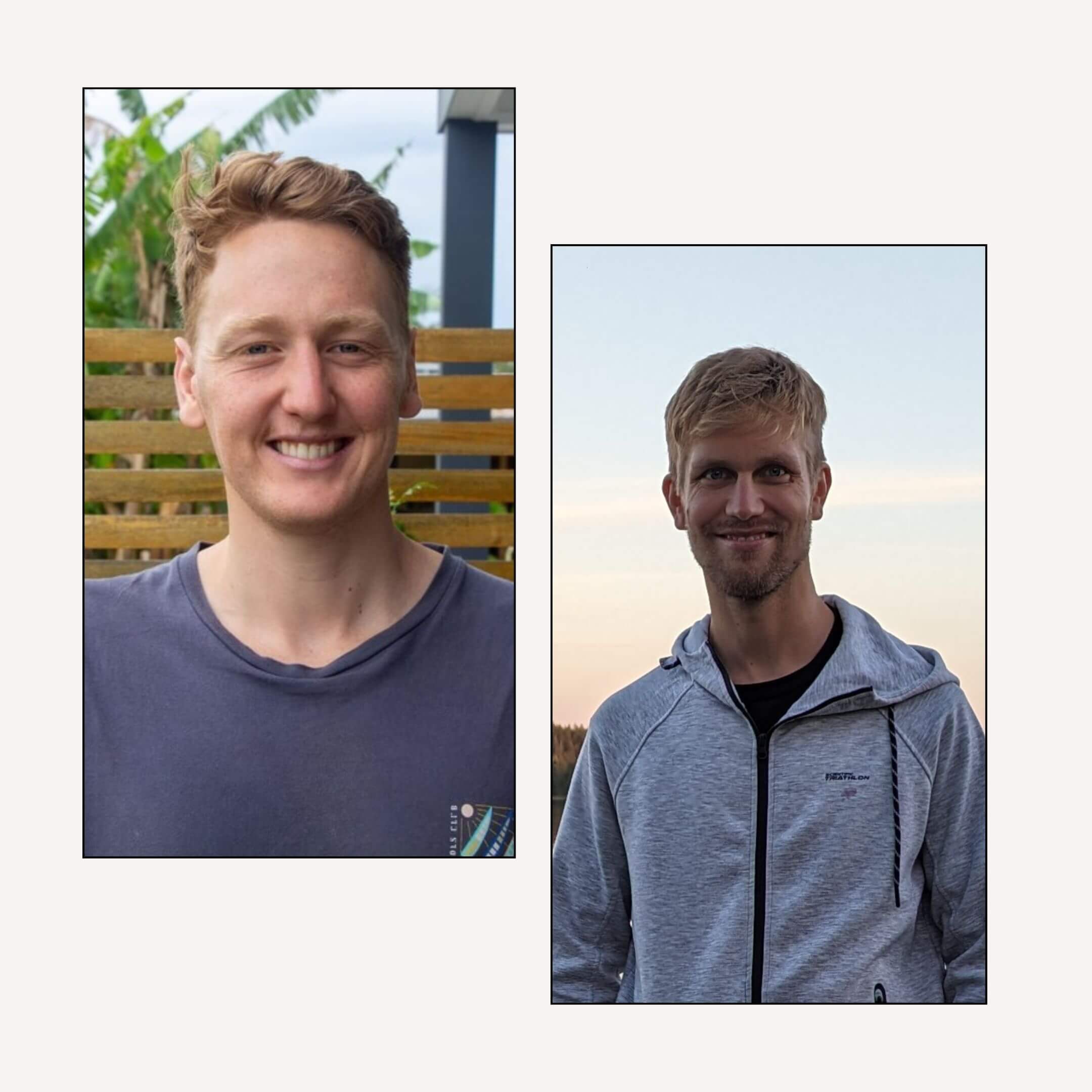
Mikael and Lachlan Kerin answer listener questions.
In this episode you'll learn about:
- Training with a focus on longevity and health
- Differences in power output on flats vs. uphill (and what you can do about it)
- Training strategies for athletes with a "diesel" phenotype
- The tradeoff between stroke (and stride) rate and stroke length
- Should you ride at a lower cadence to "save" your cardiovascular system for the run?
Sponsored by:

Precision Fuel & Hydration
Precision Fuel & Hydration produce our favourite gels, sports drinks, and electrolyte and carbohydrate products here at That Triathlon Show and Scientific Triathlon. Use the free Fuel & Hydration Planner to get a personalised plan for your carbohydrate, sodium and fluid intake in your next event, and get 15% off your first 2026 order by using the code TTS2026 at checkout.

Zen8
The ZEN8 Indoor Swim Trainer allows you to improve technique, power, and swim training consistency. You can target specific aspects of your stroke, like catch and pull-through, work on core activation and body position, and make sure you stay consistent in your swim training even when you don't have time to go to the pool. Try the Zen8 risk-free for 30 days, and get 20% off your first order on zen8swimtrainer.com/tts.
Shownotes
Training for longevity and improved quality of life
04:30 -
- In the past couple of years, I've improved my approach to training by being honest with myself. This honesty is crucial, especially when chasing performance targets or trying to hit past speeds or power levels without proper training.
- The key for me has been prioritizing long-term well-being over immediate performance.
- One thing that's worked well is mixing up challenges. Instead of focusing solely on one annual Ironman, consider alternating with events like swim runs or granfondos.
- These new challenges can free you from past performance benchmarks and help you focus more on longevity and quality of life.
- If you decide to stick with one major event annually, remember you don't need to be specific to that event all year round.
- Delaying specificity and incorporating novel stimuli throughout the year is beneficial. Importantly, strength training should be part of your routine. As we age, strength becomes crucial not just for performance but for overall health.
- I also emphasize the importance of social training. Training with others not only enhances your social network but also adds enjoyment to your sessions.
- This social aspect can sometimes interfere with strict performance goals, but when focusing on health and longevity, it's generally a positive influence.
- Fun and enjoyment in training are paramount. While performance-focused athletes often push through sessions they don’t enjoy, those focusing on health can afford to be more flexible.
- If a ride doesn’t seem appealing, maybe swap it for a strength session or something more enjoyable.
Power differences in hills versus flats
13:06 -
- Firstly, understanding the difference in power output between uphill and flat terrains is crucial. On a steady gradient uphill, maintaining a consistent power range is more manageable.
- On the flats, however, you face short downhill sections, rollers, corners, wind variations, or passing cars, which can significantly impact your average power.
- For example, if you spend five seconds at zero watts, you’d need to do 400 watts for the next five seconds to maintain an average of 200 watts. This environmental variability makes it challenging to sustain consistent power on flat terrain.
- Safety is another critical aspect. Flat roads often have more traffic, road furniture, and other obstacles, making it necessary to prioritize safety over strict power targets.
- I usually advise athletes to maintain power within a range and not get overly concerned with average power because many variables can cause fluctuations. Striving to keep the power range consistent without stressing about hitting an exact average prevents altering the workout stimulus inappropriately.
- Position plays a significant role too. Whether on a road bike or a time trial (TT) bike, the position can vary considerably. On a TT bike, climbing with hands on the tops opens the hip angle more than being on the TT bars.
- This position difference affects muscle engagement, torque application, and possibly cadence. The challenge of maintaining a narrow power range on flat terrain is compounded by these positional differences.
- Melissa's question also touches on variations in power output between uphill and flat terrain. Even professional athletes produce higher power output uphill compared to flat roads.
- It’s essential to recognize that achieving the same power output on flat terrain as on uphill sections isn't always feasible or necessary. Instead, focus on executing sessions correctly and riding as fast as possible in races.
- Specificity in training is key. If training for a flat race, try to simulate flat terrain in training. Similarly, if preparing for a hilly race, replicate that terrain in your workouts.
- The goal is to achieve the best possible power output while riding efficiently on the given terrain.
- Ultimately, the race results depend on who crosses the finish line fastest, not who produces the highest power. Therefore, optimizing your position and power output according to the race profile is crucial.
- For flat races, practice maintaining power in an aero position. For hilly races, focus on producing power on climbs.
- If you primarily have access to hilly terrain but are training for a flat race, you may need to be flexible. Consider indoor training to simulate flat conditions and get extended time in the desired position.
- Balancing training specificity with available terrain is vital for optimal race preparation.
Training for "diesel" athletes
23:06 -
- I'm not sure whether or not there's a direct correlation between various metrics like VO2 or power at VO2, which tend to be relatively high, and those at LT2, critical power, or critical speed.
- In this case, having a relatively high LT1 isn't surprising given the background as a serious age group athlete, consistently training 13 to 16 hours per week over an extended period. This consistent training has likely contributed to this endurance capacity.
- When considering running performance, particularly the notion of having one gear for a 10k or a marathon, there might be biomechanical factors at play.
- Running faster can generally be achieved by either increasing cadence or stride length. However, if increasing cadence significantly becomes inefficient, then stride length must be improved.
- This improvement might be limited by factors like hip mobility, which could restrict stride length.
- Additionally, spending time training at or around my target pace is crucial for maintaining and optimizing this pace without letting my thresholds drop.
- This approach aligns with the idea of optimizing the running economy by regularly training at these intensities.
VO2max not being a limiter
26:14 -
- For me, the situation is not a typical case of a diesel engine. If we're basing this on a power test and not actual lab results, we don't know her VO2 max exactly.
- We could estimate it, but we don't have precise data. This might indicate she’s more glycolytic. However, I tend to think she has a diesel engine profile, especially given her performance consistency across distances like 10k and marathons.
- The assumption that VO2 max is not a limiting factor might be incorrect.
- I'd like to see her power duration curves to better understand this. From what I've gathered, she seems to maintain a similar speed regardless of the race distance, which aligns with a diesel engine profile. I
- If her VO2 max is relatively high compared to her second threshold, extensive work in the heavy domain might help maintain her LT2. Without this, her LT2 might drop due to increased anaerobic contribution and lactate production.
- If my assumptions hold, then incorporating more extensive heavy domain work is advisable. This aligns with maintaining LT2 and improving overall performance.
- However, I'm sceptical that her power output would drop significantly from VO2 max to critical power while remaining steady from LT2 to LT1.
- This seems unlikely based on my experience. I’d be curious to get more information on her power and speed duration curves to analyze further.
- Assuming she is a pure diesel engine, more high-intensity work could help overcome her current limitations. Implementing intervals like 30-15s, 40-20s, or 60-30s could be effective.
- These intervals are short enough to maintain high power and speed, allowing quick recovery due to strong aerobic capacity.
- This method helps reconstitute W', making it suitable for this athlete profile.
- Biomechanics and strength training are crucial. For a female athlete, strength training and plyometrics could improve running economy and cycling power.
- Heavy strength training can enhance max strength and muscle mass on the bike, while plyometrics can boost running economy.
- The psychological aspect also plays a role. Athletes with this profile are often highly motivated and committed to high-volume training but might lack the necessary relative rest to adapt to harder work.
- Ensuring adequate rest and easy sessions is vital to prevent overtraining and allow effective hard sessions.
- Balancing hard and easy sessions is crucial. Occasionally slower sessions aren't a problem and can actually be beneficial for recovery, especially with a history of overtraining.
- Adaptability is key, adjusting sessions based on fatigue and overall training load.
- But on the bright side, I do think that these types of athletes are often super motivated. Even though doing something like a 5K or parkrun might not be their strength, they can get really fired up about the challenge, especially if their marathon is a lot stronger.
- This kind of challenge can motivate them to work on the higher-intensity training they might be less proficient at.
- There's always that debate about whether to train your strengths or your weaknesses. I believe that it doesn't generally work well to just hammer your weaknesses and hope they become strengths.
- For example, if you have a 'diesel' profile, yes, high intensity can help address this to some extent, but you need to be careful with how much you do. The tendency might be to overdo it, trying to become stronger as quickly as possible.
- So, when I talk about adding high intensity, I don't mean making every hard session high-intensity or doing a lot of them right away. It’s about introducing and building it gradually in a sustainable way for the athlete.
- One more thing I'd touch on is performance, especially if it’s measured by age group placements. For an athlete with this profile, race choices are crucial.
- If you're strong in longer races, maybe choosing longer events or 70.3 races that take 30 minutes longer due to the course profile could suit your strengths better.
Stroke/stride length evolution
39:12 -
- If we start with swimming, there's often a misconception among new triathletes about avoiding a glide. It's not so much about avoiding a glide but rather avoiding a position where the elbow drops below the wrist.
- When that happens, the forearm can only push down toward the bottom of the pool, which isn't effective.
- Many athletes aim for a glide and end up in this ineffective position, unable to set up a proper catch.
- This issue can stem from several factors: a lack of swimming experience from childhood, insufficient proprioception of the water, and limited thoracic mobility, including hip and thoracic rotation.
- Additionally, in open water, maintaining a higher stroke rate can be beneficial, especially in choppy conditions or when drafting behind other swimmers. This higher stroke rate helps manage turbulent water effectively.
- From my experience working with swimmers, I've noticed a significant difference in stroke rates between novice and elite swimmers.
- For age-group athletes, there's often a misunderstanding about what constitutes a glide. It's more about extending the stroke rather than gliding through the water without a pause.
- When coaching a new triathlete, particularly one who swims at around two minutes per 100 meters, I usually find that their stroke rate is quite low, often without them realizing it.
- They might be pushing force through their stroke but in the wrong direction. Typically, these swimmers have a stroke rate of about 50 strokes per minute.
- I aim to increase this to 60, 65, or even 70 strokes per minute. Top-end pro swimmers often have stroke rates in the 70 to 80 range.
- However, it's crucial not to increase the stroke rate at the expense of other aspects of the stroke. First, it's important to establish what an effective catch feels like and then develop speed through stroke rate.
- Ideally, swimmers should have a range of stroke rates they can tap into, allowing them to adjust their pace with their rate rather than constantly altering their stroke length.
- In practice, once a swimmer's stroke rate reaches the low 60s, I'm generally satisfied.
- At that point, I focus on improving my stroke technique rather than pushing for a higher stroke rate. For slower swimmers, if their stroke rate is around 50, it's often too slow, and increasing it becomes necessary.
- After achieving a suitable stroke rate, the focus can shift to refining the catch and overall technique.
- This process alternates based on the swimmer's starting point and progress. Early in a triathlete's career, it makes sense to address stroke rate, as beginners often have rates that are too low.
- However, the goal is not to improve stroke rate at the expense of stroke length but to find a balance based on the swimmer's context.
- Swim Smooth has a useful chart that correlates swimming speed with stroke rate ranges, providing a good general guideline. For instance, a two-minute per 100-meter swimmer should aim for a specific stroke rate range, while a faster swimmer would have a different range.
- This chart helps identify whether a swimmer should prioritize stroke rate or stroke length. Additionally, as stroke rate increases, other factors like breathing timing also need to be adjusted, indicating that improvements in stroke rate and technique go hand in hand.
Swim improvement for advanced athletes
47:11 -
- I think there's a lot to consider when evaluating an athlete's performance. While it's clear that a strong bike and run profile indicates high central fitness, it’s crucial to remember that swimming engages different muscle groups, especially the upper body.
- Swimming three times a week might not be sufficient to develop the necessary strength and endurance in those muscles.
- When analyzing an athlete's swim performance, it's often not just about increasing fitness but also addressing flaws in technique.
- For example, a common issue for swimmers in the 2-minute per 100m range is an over-rotation during breathing, which can cause a chain reaction of problems such as misaligned strokes or dropped arms.
- Initially, focusing on correcting such major flaws can have a significant impact. As the swimmer progresses, you can then fine-tune smaller aspects of the stroke, like arm positioning and stroke timing.
- Open-water skills are also crucial for triathletes, given that most races occur in open water. Improving these skills can greatly enhance performance.
- Regarding stroke length, improvements usually come indirectly from refining technique and reducing drag, rather than directly trying to lengthen the stroke.
- Similarly, in running, stride length often increases as a consequence of improved fitness and technique rather than being a primary focus.
- Strength training and plyometric exercises can help enhance the natural elastic recoil from the fascial tissue, directly contributing to a longer stride.
- In terms of cadence, there's a natural ceiling. For instance, running a marathon at 200 steps per minute is impractical.
- If an athlete's cadence is already optimal, further improvements in speed will have to come from increasing stride length, which involves both fitness and technical adjustments.
- On the bike, cadence also reaches an optimal point unique to each athlete, influenced by their anatomy and training.
- Beyond that, improvements in speed and power output depend on both fitness and technique.
Low cadence while cycling
55:13 -
- I don't think I've ever advised an athlete to focus on pulling up the pedals. The evidence doesn't support it, and I don't see its relevance.
- When it comes to saving energy for the run by using a lower cadence on the bike, it’s essential to understand the consequences. The impact varies significantly depending on the power output.
- For instance, riding at 70 RPM and 300 watts is quite different from 70 RPM and 180 watts. You wouldn’t see someone like Magnus Ditlev riding at 65-70 RPM during a race because the output is too intense; it would ruin his marathon.
- It’s an individual thing, but the notion of saving energy by adjusting cadence isn't something I entirely agree with. However, I emphasize training athletes to produce power across a range of cadences.
- This capability is vital for various racing scenarios, whether it’s maintaining power on flats, downhills, or dealing with headwinds, and also for training purposes.
- Athletes need to handle lower cadences for climbing and other specific sessions.
- I agree that some athletes, especially taller ones with longer levers, naturally gravitate towards a lower cadence.
- There’s some evidence suggesting that the economy decreases at higher cadences for those with longer limbs due to more intramuscular movement.
- Consequently, taller athletes might find it less taxing to ride at a lower cadence without compromising their run.
- However, it’s essential to recognize that what works for one person might not work for another.
- Advice should be tailored to the athlete's profile, including their physiological and biomechanical characteristics. Trying different strategies in training is crucial to determine what works best.
- I’ve never recommended riding at an artificially low cadence to save energy for the run. Instead, I support athletes in finding and training at their self-selected cadence.
- If issues arise, such as a poor run after a long ride, we analyze the potential causes, which might include cadence, and adjust accordingly. Generally, if training goes well with a self-selected cadence, it’s a good strategy to stick with.
- Regarding other advice, I don’t advocate targeting a perfect 50/50 left-right balance. There's an inherent asymmetry in human physiology, and striving for perfect balance can be counterproductive. Tools like crank-based power meters don't provide true left-right balance, unlike pedal-based systems, but even then, some asymmetry is normal and acceptable.
Bike fit tips
1:03:25 -
- I've found that bike fit can be a crucial tool for protecting certain muscles, such as the hamstrings. For me, crank length is a major focus. Personally, I ride 165mm cranks on both my road and TT bikes.
- Even though I ride a 58cm road bike, I could probably use a 56cm, but the 165mm cranks and an extra 20mm head tube make a significant difference for my back and hip angle.
- On my TT bike, I've noticed that shorter cranks help open up the hip angle. While some athletes shortened the crank and dropped the front end, I went the other route.
- I shortened the cranks, increased the saddle height, and raised the front end. This resulted in a similar position but with a much more open hip angle.
- Switching to shorter cranks also naturally increased my cadence, although it wasn't a deliberate change—it just felt right.
- I've had a similar experience with my TT bike, where I now use 160mm cranks and 165mm on my road bike due to the difficulty of sourcing 160mm for road bikes. Each time I've shortened the cranks, I've noticed a positive change in my cycling performance
