
LISTEN TO THE EPISODE HERE:
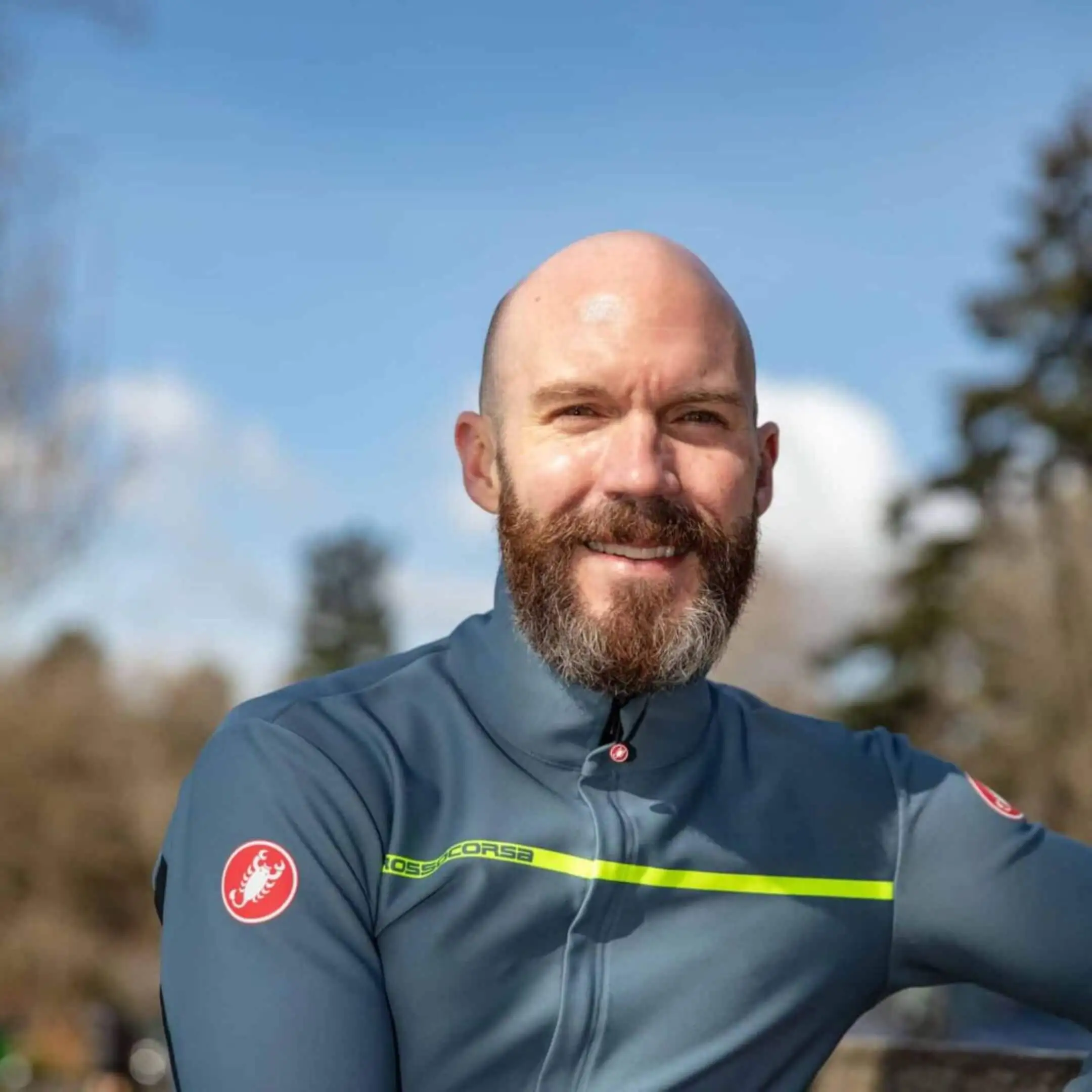
Most triathletes and runners will suffer from injuries almost every single year (and many will suffer multiple injuries per year). In this episode, world-renowned physical therapist Chris Johnson explains how to break out of this injury cycle, by looking at all of the different variables contributing to injuries. This is an in-depth look at how to balance your running or triathlon training with proper strength training, nutrition, and lifestyle factors, to allow you to train and perform more and better in the long run.
HIGHLIGHTS AND KEY TOPICS:
- Which factors contribute to injuries and injury risk, and how?
- How to manage small niggles, aches and pains
- Bone stress injuries and soft tissue injuries
- Return to training protocols
- A minimal effective dose strength training protocol that can be easily combined with triathlon training
- Recommended strength training exercises, from isometrics and heavy slow resistance training to plyometrics
- How heavy should you lift and how hard should you be working in the gym?
- Is stretching, mobility work, massage and manual therapy recommended for injury prevention?
- Myths and misconception about injuries and strength training for triathletes and runners
Sponsored by:

Precision Fuel & Hydration
Precision Fuel & Hydration produce our favourite gels, sports drinks, and electrolyte and carbohydrate products here at That Triathlon Show and Scientific Triathlon. Use the free Fuel & Hydration Planner to get a personalised plan for your carbohydrate, sodium and fluid intake in your next event, and get 15% off your first 2026 order by using the code TTS2026 at checkout.
Shownotes
Chris’s background
01:07 -
- I am a 47-year-old master’s-level endurance athlete with a background in multiple sports. Professionally, I work as a licensed physical therapist, consultant, and coach, and I am heavily involved in teaching, which often requires travelling to share my perspective with other clinicians and coaches.
- I am married and have two children, aged seven and ten, which makes life busy, but I have been able to successfully integrate my professional work with my personal interests and passions.
- Being able to participate in a podcast like this represents an added highlight to that balance, and I am genuinely grateful for the opportunity. It is an honour to be part of a conversation alongside such a strong lineup of previous guests.
How to avoid overuse injuries
02:44 -
- In my clinical and consulting work, I typically meet athletes when things have already started to go wrong. Very few people reach out when everything is running smoothly; most seek help once training, health, or performance has begun to unravel.
- Naturally, the initial focus is often on training load, and this is entirely reasonable, particularly in triathlon, where three distinct disciplines with different performance demands must be integrated into an already busy life.
- When I assess an athlete from an injury standpoint, I deliberately step back and look at the situation from a broader perspective. Of course, I want to understand training load in detail, and I will review training data closely, including weekly structure, intensity distribution, and how training interfaces with daily responsibilities.
- However, what is often missing in both clinical and coaching settings is an appreciation of the athlete as an entire ecosystem rather than a collection of isolated variables.
- I have seen many cases where injuries cannot be fully understood without acknowledging non-training stressors. Significant life events, particularly those associated with high emotional or psychological strain, can profoundly disrupt physiology.
- These stressors affect sleep, recovery, hormonal balance, and overall resilience. In high-performing athletes, even small disruptions can have disproportionate consequences.
- If such stressors are not identified and accounted for, attempts to manage or rehabilitate an injury are unlikely to succeed. Importantly, athletes may not initially disclose these factors; trust must be built before they feel comfortable sharing information that is deeply relevant to their condition.
- Too often, injuries are treated in isolation, as if they exist within a vacuum. In reality, the athlete must be viewed in their totality, with full consideration of training, lifestyle, psychological load, and external pressures.
- From a practical standpoint, I place responsibility back with the athlete and emphasize protecting training consistency above all else. Consistency underpins long-term adaptation, and once it is lost, progress quickly erodes.
- The question then becomes which levers can be adjusted during periods of heightened stress. Often, the most accessible changes involve improving sleep, hydration, and overall recovery habits.
- From a training perspective, reducing intensity is usually the most effective and least disruptive adjustment. High-intensity work should not be forced during periods of low readiness.
- Flexibility is critical. When sleep is poor or daily stress is elevated, rigid adherence to a training plan can be counterproductive. On those days, replacing a demanding session with low-intensity activity or even a walk can preserve momentum without compounding fatigue.
- Being responsive to fluctuations in energy and stress allows athletes to navigate these “yellow light” periods and eventually return to phases where higher demands can be tolerated.
- Intensity, particularly in running, is a common source of trouble for endurance athletes. As speed increases, so do mechanical forces, and these sessions require a high level of readiness to be executed safely.
- Many endurance athletes are highly driven and inclined to push through fatigue regardless of circumstances. While this mindset can be advantageous at times, it often backfires when stress accumulates and recovery capacity is compromised.
- I strongly agree that athletes often have to work against their own personality during periods of elevated stress. What draws many of us to endurance sport is a willingness to tolerate discomfort and push through difficulty, and in many cases, we even take satisfaction in that process.
- This makes it tempting to complete demanding sessions despite not feeling at our best. The challenge lies in recognizing when that approach is productive and when it is not.
- I frequently see this issue in athletes with variable or highly demanding work responsibilities. There are periods when professional demands are so intense that basic needs, such as regular meals, are compromised.
- Attempting high-intensity training after ten or twelve hours of work, without adequate fueling, creates a compounded stress scenario. This is not only a psychological load but also a physiological one, and it significantly increases the risk of injury when the body is asked to perform intense work without sufficient energy availability.
- This naturally leads into concerns around bone stress injuries. When athletes attempt to train hard while under-fueled, the situation can quickly escalate from a performance issue into a medical one. It is still possible to train consistently and even train hard, but it is essential to recognize periods of life that represent a “yellow light.”
- During those times, a small reduction in training stress can be invaluable. This is difficult for many athletes, because the same drive that enables success also encourages them to push through warning signs.
- In these situations, objective data can be extremely helpful. Reviewing markers such as heart rate responses, power trends, or variability relative to previous weeks can provide clear signals that readiness is compromised.
- Elevated heart rate for a given workload or an unusual drop-off in power are indicators that the cost of a session may outweigh its benefit. Without this objective lens, athletes may make impulsive decisions and complete workouts that leave them in a deeper state of fatigue.
- It is also important to reframe how athletes think about training intensity. Many believe that intense sessions are the primary drivers of progress, when in reality they represent the final layer of adaptation rather than the foundation.
- The majority of improvement in endurance sport comes from low-intensity aerobic work. Replacing an intense session with a low-intensity one during a yellow-light period sacrifices only a marginal gain while preserving consistency, which is far more valuable over the long term.
- I often refer to a simple readiness framework when thinking about this balance between fatigue and training demands. High-intensity sessions require a high state of readiness.
- If an athlete is under-fueled, sleep-deprived, or carrying residual fatigue, that is a clear signal to pivot. In those circumstances, the session will likely extract more from the athlete than it provides in return, increasing the risk of musculoskeletal issues and longer-term setbacks.
- For this reason, I do not believe in rigidly adhering to a schedule at all costs. Even when a session is planned, I assess how I feel on the day before deciding how hard to push. Some days that means leaning slightly into intensity, and other days it means keeping things deliberately easy, extending warm-ups and cool-downs, and simply maintaining movement at a conversational pace.
- The goal in those moments is not to force progress but to protect continuity, ensuring that training remains sustainable across both challenging and optimal periods.
Other factors that increase injury risk
14:01 -
- I consider strength training to be a critical component of long-term athletic health, but its application must always be contextualized to the individual.
- When I work with someone, one of my first priorities is understanding their background and where they are coming from in life. An athlete with no history of organized sport, limited exposure to multidirectional movement, and no experience in a weight room requires a fundamentally different approach than someone who grew up playing multiple sports and has extensive familiarity with strength training.
- These distinctions matter because they influence how the musculoskeletal system tolerates load and adapts to stress.
- I view strength training as a way of fortifying the musculoskeletal system, which becomes increasingly important as athletes age. Capacity loss can begin earlier than many expect, often in the late thirties, and becomes more pronounced from the forties onward.
- This is particularly relevant for runners, where structures such as the calf–Achilles complex are under constant repetitive load. If there is one activity to prioritize beyond swim, bike, and run, it is the thoughtful inclusion of strength work.
- At the same time, strength training introduces an additional energy demand that must be respected. Poorly designed programs can create a substantial energy cost, especially if they involve a large number of exercises and high total volume.
- When athletes attempt to absorb that load without adequate fueling, problems quickly emerge. This is one of the common pathways through which bone stress injuries develop.
- By “extensive” strength training, I am referring less to the use of heavy loads and more to overly long exercise lists and excessive volume. Programs built around multiple major lifts performed for several sets of high repetitions can be extremely demanding from an energy availability standpoint.
- In contrast, a more focused approach using a small number of compound lifts, selective single-leg work, or plyometric activities can provide meaningful musculoskeletal stimulus without imposing the same metabolic cost.
- Plyometrics are particularly useful, especially for younger runners, because they promote bone health through mechanical loading while keeping overall energy expenditure relatively low.
- A short session with a controlled number of ground contacts can be followed by a run without overwhelming the system. This makes them an efficient tool for building tissue resilience without significantly increasing injury risk through under-fueling.
- I also place strong emphasis on the importance of deload weeks. Many endurance athletes, once fully engaged in training, feel compelled to push continuously throughout the year.
- This mindset can be problematic, especially for individuals with a history of bone stress injuries. Bones adapt more slowly than other tissues, and it is easy to outpace their capacity for remodeling. Planned periods where volume and intensity are substantially reduced allow skeletal tissue the time it needs to consolidate adaptations and recover.
- Footwear variability is another simple but effective strategy. Rotating different types of running shoes exposes the body to a range of mechanical stresses, encouraging more robust adaptation. This principle extends beyond footwear to training surfaces as well.
- Alternating between treadmill running, road running, softer terrain, and rolling courses introduces variability that can help mitigate injury risk over time.
- Despite all of these strategies, I also remind athletes that injury is never entirely avoidable. Even the best athletes in the world, supported by extensive medical and performance teams, still experience injuries.
- Often, the missing piece is not the training itself but the broader allostatic load the athlete is carrying. If factors beyond training are not accounted for, risk accumulates quietly until something gives.
Different ground surfaces
19:30 -
- I believe it is important to be cautious with training surfaces that are excessively compliant. Extremely soft surfaces can introduce their own set of problems, particularly for athletes with a history of tendon issues.
- I have seen cases where prolonged running on very supple terrain, such as sand, has significantly increased strain on structures like the Achilles tendon, creating a clear risk factor rather than a protective one.
- For this reason, I view variability as the central principle when it comes to surface selection. Repeatedly exposing the body to the same type of ground reaction forces, in the same way, over and over again is not a healthy long-term strategy.
- While it is true that no two foot strikes are ever exactly the same, the concept serves as an important reminder to avoid excessive uniformity in training.
- I see the treadmill as a valuable tool in specific contexts, particularly for athletes returning from bone stress injuries. In cases such as tibial stress injuries, treadmill running can reduce mechanical strain compared to overground running and allow a more controlled reintroduction of impact.
- More broadly, incorporating a mix of surfaces across the training week helps distribute load across different tissues and reduces the likelihood of overuse.
Evaluating niggles
22:43 -
- This ultimately comes back to knowing the athlete in front of me. I need to understand their past medical history and interpret symptoms within that context. If an athlete reports a minor niggle that is not localized to a tendon and has a previous history of bone stress injury, that immediately raises the level of vigilance required. In those situations, even subtle symptoms warrant close monitoring.
- I rely on simple clinical heuristics to guide decision-making. When an athlete does not have a history of bone stress injury and the pain is clearly tendon-related, I am generally comfortable allowing them to continue training through low-level, stable pain.
- On a numerical pain scale from zero to ten, that may range from one up to even five, provided that the athlete is not altering their movement patterns and that symptoms settle and return to baseline by the following morning.
- The threshold changes entirely when bone is a potential concern. If pain is not tendon-related, there was no traumatic mechanism, and the athlete has a documented history of bone stress injury, then tolerance becomes extremely narrow. In those cases, pain should remain at zero to one out of ten at most.
- Bone-related symptoms are more volatile, and early recognition is critical. This is where I want athletes to take a decisive step back rather than attempting to push through, as delayed action can significantly worsen the situation.
- For this reason, I am cautious about applying blanket rules. General guidelines can be useful, but they are only effective if they are filtered through a deep understanding of the individual athlete.
- When working with someone new, I make a point of having an unhurried and thorough conversation about their medical background. Seemingly minor issues, such as a previous ankle sprain, are often dismissed by athletes, yet I have seen incompletely rehabilitated injuries cascade into multiple secondary problems.
- I want to know whether there is a history of lower-limb tendinopathy, prior bone stress injuries, and whether those injuries occurred at low- or high-risk sites.
- I also consider the athlete’s relationship with fueling and nutrition, including any history of unintentional under-fueling, disordered eating, or clinically diagnosed eating disorders.
- Taking the time to understand these factors at the outset is essential. If this process is rushed, those omissions almost inevitably resurface later and compromise the ability to manage training, injury risk, and long-term progress effectively.
Evaluating pain level
26:12 -
- I always start by establishing what the athlete’s true baseline is. There are individuals I have worked with who have long-standing lower-limb tendon issues, and in those cases it is essential to understand where they sit on the spectrum of symptoms. Not all presentations are the same, and athletes tend to fall into different categories depending on their history, current load tolerance, and tissue capacity. Among endurance athletes, these problems are most often load-driven, even though systemic factors can also contribute.
- When I am confident that we are not dealing with a bone stress injury, I am generally comfortable allowing an athlete to run with some low-level, stable pain. The key condition is that symptoms must settle and return to baseline by the following morning.
- If the baseline is zero, that is ideal and may simply indicate that the issue is at an early stage. However, if symptoms begin to carry over and persist into the next day, that is a clear signal that the load exceeded tolerance.
- At that point, my response is to pull back meaningfully, sometimes including a couple of days away from running.
- When the Achilles tendon is involved, I am particularly cautious with speed work and other high-strain activities. In those cases, I tend to limit faster running, incline running, and similar stressors, and I may preferentially use the treadmill to better control load.
- These boundaries act as guardrails, not to restrict progress, but to preserve consistency. The overarching goal is always to keep the athlete training sustainably while preventing small issues from escalating into longer-term setbacks.
Other strategies for common running injuries
27:48 -
- When an athlete reaches a point where they are no longer able to walk pain-free, that is a clear indication that the situation has escalated beyond simple load management. In those cases, the appropriate response is to move to a higher level of intervention.
- I have managed situations like this by implementing a very deliberate deload, including a period of non-weight-bearing activity, specifically to allow a meaningful healing response to occur. The goal is to establish firm guardrails, step back, and give the body time for the dust to settle before reintroducing load.
- The reality, particularly with master’s-level athletes, is that some conditions require prolonged management rather than quick fixes. I have worked with athletes dealing with various forms of patellar tendinopathy where the process spans weeks or even months.
- During that time, the emphasis is on carefully controlling load, respecting symptoms, and progressively reloading tissue in a way that promotes adaptation without provoking setbacks. This requires patience, structure, and consistent adherence to boundaries.
- I regularly use established clinical frameworks from the literature to guide these decisions and to communicate expectations clearly. I share these models with every athlete I work with, not simply as instructions, but as tools.
- My objective is to empower athletes to understand what is happening in their own bodies so they can take ownership of their training decisions. Ultimately, I want them to be capable of making sound, informed choices that allow them to remain consistent and healthy, even when they are no longer working directly with me.
Preventive work
29:42 -
- I do not prioritize the recovery modalities that are often discussed, and I am also not interested in arguing with athletes if they find certain practices calming or personally meaningful.
- If someone tells me that foam rolling or light stretching helps them downregulate after a session, I am comfortable with that, provided it is not interfering with more important elements of their program.
- My overarching aim is usually to simplify rather than add. Energy and time are finite resources, and allocating them to one area inevitably means taking them away from another. For that reason, I would much rather see athletes remove what I consider tertiary interventions and focus on the factors that genuinely move the needle.
- When I think about recovery, I define it far more broadly than most protocols suggest. For me, recovery means spending time with my family, engaging in quiet activities, reading, sitting in a warm bath, or meditating at some point during the day. These are the practices I find most effective for restoring balance and reducing overall stress.
- Stretching is something many endurance athletes do largely because they see others doing it, particularly within running culture. In reality, most athletes only hold stretches for very short periods, often ten to fifteen seconds, which is insufficient to produce any meaningful physiological change.
- The scientific literature does not support stretching as an effective tool for injury prevention in endurance athletes. If there is one adjunct activity worth prioritizing, it is strength training rather than stretching.
- That said, if an athlete enjoys stretching and it does not appear to be aggravating symptoms or sensitizing tissue, particularly in the presence of a lower-limb tendinopathy, I do not discourage it outright.
- I may question whether it is the best use of their time and ask what value they derive from it. If the answer is that it helps them relax, then I consider that a valid reason to keep it in their routine.
Return from injury
32:32 -
- The majority of injuries I see in endurance athletes, particularly runners and triathletes, fall into a relatively narrow set of categories. Most commonly, these athletes deal with muscle strains, lower-limb tendinopathies, and bone stress injuries.
- When I am guiding someone back to running after a bone stress injury, my approach is intentionally conservative. I view the early return to running not as traditional training, but as controlled bone-loading sessions. This distinction is important, because it reframes the purpose of running during this phase.
- In this context, I deliberately avoid using rating of perceived exertion as a guiding tool. Athletes, especially triathletes, may feel cardiovascularly strong after a period of heavy cycling, but their musculoskeletal system is often not prepared to tolerate impact.
- For that reason, I require that certain prerequisites be met before even considering a return to running. The athlete must be fully pain-free in activities of daily living and able to tolerate forty-five to sixty minutes of brisk walking at approximately 3.2 to 3.5 miles per hour, or 5.2 to 5.6 kilometers per hour, with purposeful arm swing on rolling terrain.
- Once those criteria are satisfied, I introduce running in a very structured and incremental way. I begin with short bouts of running, such as one minute of running followed by four minutes of walking, repeated for several cycles.
- I require that athletes successfully complete this level on multiple occasions before progressing to longer running intervals. The process is slow by design. I want it to be systematic, deliberate, and unhurried, because rushing this stage significantly increases the risk of recurrence.
- My approach is slightly different when dealing with lower-limb tendinopathy, such as Achilles tendon issues, where I may be more willing to progress load, provided we have a clear understanding of which activities and surfaces bias stress toward the affected tissues. In these cases, I am cautious with treadmill running.
- If a treadmill is used, I keep the incline at zero percent, as even a slight incline increases load on the calf–Achilles complex. I also avoid zero-drop footwear, not only for Achilles tendinopathy but also in cases of tibial or metatarsal bone stress injuries. Increased plantar flexor demand leads to greater muscular forces acting on bone, which is counterproductive during recovery.
- These decisions are grounded in established research and are translated into practical guardrails that guide short-term behavior. They are not meant to be permanent restrictions but temporary constraints that allow tissue to adapt and training consistency to be rebuilt.
- Reestablishing consistent training is the priority, because without it, long-term progress becomes impossible.
Bone stress return
36:05 -
- I typically begin a return-to-running progression with a one-minute run followed by a four-minute walk, recognizing that there is some acceptable variability in how these programs are structured. Earlier protocols in the literature have been highly conservative, sometimes prescribing a one-minute run with a nine-minute walk before progressing.
- Some authors have suggested that, in cases of low-risk bone stress injury, returning to running may be acceptable after five to seven consecutive pain-free days. I do not use that threshold. In my experience, it has not been a reliable criterion for successful return, and I suspect it may reflect differences in the populations being managed.
- Before I reintroduce running, I require that the athlete meet a set of objective prerequisites. I want them to pass the physical performance tests I use as part of a broader test battery.
- I also require that they are pain-free during all activities of daily living and able to tolerate forty-five to sixty minutes of brisk walking on rolling terrain at approximately 3.2 to 3.5 miles per hour, or 5.2 to 5.6 kilometers per hour. Only once those conditions are satisfied do I initiate the return-to-run structure.
- In the specific context of bone stress injuries, I also evaluate the broader health and recovery environment. If I am working with female athletes, I want reassurance that menstrual function has returned, that a fueling plan is in place, and that blood work is appropriate.
- I treat this as part of a whole-person assessment rather than a narrow musculoskeletal problem, because bone stress injuries do not occur in isolation from energy availability, physiology, and overall system stress.
- Once running begins, I use a deliberately cautious progression. I require athletes to repeat each level at least two, and often three, times before advancing. This aligns with the “rule of twos,” which is essentially a requirement to demonstrate tolerance twice at a given stage prior to progression.
- Early in the process, I schedule these sessions on non-consecutive days. A typical structure might involve running on three days per week with low-impact or walking days in between, and I may substitute a longer walk on rolling terrain instead of adding another run day.
- I treat the early return as a volatile phase of rehabilitation, where the risk of doing too much too soon is high. Bone adapts slowly, and when the process is rushed, recurrence is a common outcome.
- When I consider bone stress injury management more broadly, I also recognize how complex and demanding it can be for the athlete. It can be overwhelming, and it can be expensive.
- Effective care often requires a coordinated team that may include a rehabilitation professional, a physician, a registered dietitian, and sometimes a coach.
- This can begin to feel like a full-time job, and the time, financial burden, and logistical stress involved are themselves additional loads that the athlete must absorb. I take this into account when planning support, because these demands are rarely acknowledged but can materially affect recovery.
- For that reason, I am deliberate in how I build the care pathway. I aim for comprehensive coverage, but I also prioritize sequence and necessity. In many cases, the most immediate steps involve primary care assessment and blood work, alongside early involvement of a registered dietitian.
- Imaging and specialist referral may be appropriate, but that depends on whether the injury site is low risk or high risk, the athlete’s history, and the number of prior bone stress injuries.
- At that stage, my job becomes a process of systematically turning over the relevant stones, so that decisions are based on the athlete’s full context rather than assumptions.
Diagnosing a bone stress injury in other ways
41:55 -
- I generally prefer to have as much diagnostic clarity as possible. Many professional athletes have the advantage of rapid access to imaging, and when that option is available, I value it. There are already enough moving parts in these cases that I do not want to rely on guesswork. The clearer the picture, the better the decisions that follow.
- That said, there are situations where the clinical presentation is fairly characteristic. If someone presents with focal pain along the lower inner portion of the leg, particularly over the distal posterior–medial tibia, with localized tenderness that spans less than five centimeters, combined with pain during hopping and a clear inability to tolerate running, I am highly suspicious of a tibial bone stress injury.
- In those cases, I may not immediately send the athlete for imaging, particularly if it appears to be a low-risk presentation. The same applies to certain low-risk metatarsal bone stress injuries.
- Often, confirmation comes through response to load modification. If running and impact activities are removed and symptoms reliably settle and improve, that strongly supports the diagnosis of a bone stress injury.
- Many athletes simply do not have the financial or logistical ability to obtain an MRI, and clinical reasoning still has an important role in guiding management in those cases.
- However, there are scenarios where I am not willing to take any chances. If someone presents with groin or hip pain, I treat that very differently. In those situations, I want definitive imaging.
- For example, when working with an athlete who has a background in swimming and later transitioned into triathlon, I am particularly concerned about bone density and tolerance to axial load. In that context, an MRI is essential, as it provides complete diagnostic clarity and informs decisions that may involve prolonged offloading, including several weeks on crutches.
- Athletes are often in denial when facing the possibility of a serious injury, and they may underreport or minimize symptoms. At the same time, some rehabilitation providers may not immediately consider bone stress injuries in their differential diagnosis.
- When those factors combine, these injuries can deteriorate rapidly. That is why I am deliberate about recognizing red flags early and escalating appropriately, rather than allowing uncertainty or delay to compromise the outcome.
Advice for situations of undiagnosed bone stress injuries
45:10 -
- These issues are far more common than many people realize. At this point in my career, working primarily with runners and triathletes, the majority of cases I see fall into a familiar pattern: lower-limb tendon problems, bone stress injuries, and muscle strains. Because these conditions present so frequently, there are also recognizable warning signs that extend beyond localized pain.
- I pay close attention to indicators of overall health and energy availability. In young, healthy male athletes, certain physiological markers should be present, and when they are not, that raises concern. This is an area that many healthcare professionals and coaches may feel uncomfortable addressing, but it is essential.
- I look at how the athlete presents in front of me. If they appear persistently fatigued, if their performance metrics are trending in the wrong direction, or if they arrive without having eaten or without food on hand, those are immediate red flags. When pain is not clearly localized to a tendon, my level of suspicion increases further.
- With male athletes, I follow a specific but respectful line of questioning focused on energy availability and hormonal health. I ask about general energy levels, libido, and fueling practices.
- With female athletes, the conversation necessarily shifts toward menstrual health. I want to know when they first began menstruating, whether their cycles have been consistent, and the typical length between cycles. These details matter, because disruptions here often reflect deeper systemic issues.
- Many of these warning signs can be identified early if athletes are self-aware or if they are working with a coach or clinician who is willing to have open, candid conversations. These topics can feel awkward at first, particularly for professionals who are not accustomed to discussing them.
- When I approach these conversations, I am explicit about my intent. I explain that I am trying to understand the athlete’s overall health, that I will be asking questions they may not have been asked before, and that they are free to decline answering anything that makes them uncomfortable. That framing creates psychological safety and allows the discussion to unfold more honestly.
- There are additional health concerns, particularly among female endurance athletes, that are rarely discussed but are clinically relevant. Issues such as pain during sex are not uncommon and often go unaddressed simply because no one asks. These conversations are uncomfortable, but they are necessary. The earlier these signs are identified, the sooner underlying problems can be addressed and the trajectory corrected. Avoiding them does not protect the athlete; it only delays meaningful intervention.
Signs of a bone stress injury
47:56 -
- There are often warning signs long before an injury fully declares itself. Identifying them requires a coach or clinician who is attentive, communicates well, and looks beyond the numbers. Data are important, but they are not sufficient on their own.
- When I speak with athletes and notice irritability, frustration, or a general sense of fatigue, that immediately prompts closer scrutiny. At that point, I want to examine workloads and assess how the athlete is actually responding, rather than assuming the plan is being tolerated as intended. This process demands time, vigilance, and ongoing dialogue when working with athletes.
- I am also very aware that no one gets this right all the time, myself included. I experienced my first bone stress injury last year, despite having what would appear, on paper, to be an ideal background.
- I grew up playing multiple sports, did not specialize in running until my early twenties, consistently prioritized sleep, and maintained a food-first approach to fueling. I am well versed in the research and familiar with the signs and symptoms. Even so, circumstances aligned in a way that created vulnerability.
- At the time, I was working intensively on a major project and disrupted my usual sleep routine. Although I continued to fuel appropriately and even reduced training load, the forced shift in my circadian rhythm proved sufficient to create an imbalance.
- The injury occurred in the calcaneus, a bone with a high proportion of trabecular, or spongy, bone, which is particularly sensitive to changes in energy availability. The consequence was twelve weeks without running.
- Recovery required a return to fundamentals, most notably reestablishing a consistent and adequate sleep schedule. That experience reinforced for me how narrow the margin can be, even in athletes who appear to be doing everything correctly.
- It also underscored the importance of discussing not just training metrics, but life outside of training. External stressors, schedule changes, and perceived pressures all matter. Fueling practices must be continually audited as well, because athletes may believe they are meeting their needs when, in reality, there is still a mismatch between energy intake and expenditure.
Audit fuel programs
51:16 -
- I am very clear about the limits of my role when it comes to nutrition. My job is not to prescribe detailed dietary plans, but to screen for potential fueling issues and recognize when something does not add up.
- Over the years, I have learned a great deal simply by proximity, spending time alongside highly skilled nutrition professionals and absorbing how they think about fatigue, performance, and energy availability.
- That exposure has shaped how I approach conversations with athletes, but it has also reinforced that definitive guidance belongs in the hands of qualified registered dietitians.
- When I suspect a fueling issue, my responsibility is to identify it early and connect the athlete with the appropriate specialist who can properly assess and map out a plan.
- To do that, I start with conversation rather than numbers. I ask athletes to walk me through a typical day from the moment they wake up. Most athletes operate on routines and rituals, and those patterns reveal a great deal. I want to understand when they train, how long sessions last, and what happens nutritionally before, during, and after those sessions.
- Red flags often emerge quickly. If an athlete is routinely heading out for long runs of an hour or more without taking in any fuel beforehand, especially if there is intensity involved, that concerns me.
- At that point, they have effectively been fasting since the previous evening, which is not trivial. Short, easy sessions may be less problematic, but longer or harder efforts without fuel represent a meaningful risk. I even ask about what happens the night before, because late-day intake matters just as much as morning routines.
- I also pay attention to broader patterns around food. I want to know whether athletes are developing aversions to foods they previously tolerated, whether allergies or intolerances are present, and whether work or life demands are causing them to rush or skip meals.
- When someone tells me they regularly work through lunch because they are too busy, that immediately signals compromised fueling. I also ask specifically about carbohydrate intake, both before sessions and during longer workouts, particularly on the bike or during extended runs.
- Through these conversations, I gain a clear picture of how the athlete is approaching nourishment in relation to training load. When I am working with a competitive athlete and I suspect that energy demands are not being met, I will recommend that they consult with a qualified professional.
- I frame this not as a problem, but as an opportunity to improve performance and resilience. I deliberately avoid discussions centered on calories. Instead, I talk about fueling and nourishing the body in a way that supports the demands being placed upon it.
- That shift in language often makes the conversation more productive and helps athletes better understand the role nutrition plays in sustaining both performance and health.
How athletes check if they are not getting enough calories
54:56 -
- I believe precision matters, and there are credible resources available that can help athletes develop a sensible approach to fueling. Frameworks that visually illustrate balanced intake can be useful, particularly as a reference point for what appropriate fueling looks like in practice.
- I also remind athletes that a diet is defined by what is consumed, not by what is restricted. That distinction is important, especially in endurance sport, where restriction is often mistakenly equated with discipline.
- I encourage exposure to trusted, evidence-informed sources that consistently communicate clear and practical guidance. Following knowledgeable professionals who openly share their thinking can be an effective way to stay grounded in sound principles.
- One of the recurring problems I see is that high-quality research often fails to reach the athletes who would benefit from it most. As a result, many athletes operate with incomplete or outdated assumptions.
- For me, persistent fatigue, lethargy, or an inability to hit expected performance numbers are immediate signals that warrant closer examination.
- When those signs appear, one of the first questions I ask is whether fueling is adequate for the demands being placed on the body. Those sensations should not be dismissed or normalized. They are often early indicators that something is off, and energy availability is frequently at the center of that imbalance.
Strength training
56:30 -
- Age is a key factor in how I approach strength and tissue loading. When I am working with younger athletes, I prioritize plyometrics because their bones are in a growth-dominant state and respond well to mechanical disturbance that stimulates adaptation.
- In skeletally mature adults, particularly those returning from injury and without contraindications, my focus shifts toward heavier lifting. This distinction matters, because different tissues adapt to different stimuli depending on age and maturity.
- With lower-limb tendinopathies, especially Achilles tendinopathy, a common issue is a loss of tendon stiffness. That stiffness will not be restored through light loads and high repetitions, which is the default approach many endurance athletes fall into.
- Tendons require high contraction intensities to adapt. For that reason, I am comfortable prescribing loads in the range of roughly seventy percent of one-rep max and, in some cases, progressing closer to ninety percent, provided the athlete tolerates it well. The goal is to meaningfully stress the tissue so that it has a reason to remodel.
- In triathletes, running is overwhelmingly the discipline that causes problems. Shoulder issues may arise from swimming, and cycling injuries are more often traumatic, such as fractures from crashes, but it is running that most frequently leads to overuse injury.
- Because of that, I want these athletes lifting heavier than they are typically comfortable with, following the principle of loading the tissue that is problematic.
- If the Achilles tendon is the issue, I want to remove its ability to compensate or hide. I often use tools such as a Smith machine or a soleus-focused setup, frequently challenging the athlete with the knee straight and the ankle in slight dorsiflexion. Many athletes shy away from this type of loading, but it is often exactly what they need.
- When it comes to contraction types, there was a time when eccentric heel drops were almost universally prescribed, and there are certainly individuals who responded well to that approach, particularly with non-insertional Achilles pain.
- However, tendons fundamentally respond to tensile load, regardless of whether it is eccentric, concentric, or isometric. Running itself places the calf–Achilles complex in a quasi-isometric role, which is why I often include isometric work alongside heavy slow resistance.
- Plyometrics, while valuable for bone, are less effective for tendon adaptation because the load is applied too rapidly.
Strength training for healthy athletes
1:02:40 -
- When deciding which tissues to prioritize in strength training, I always start by looking at the performance demands of the sport. In running, the evidence is very clear about which regions carry the greatest load.
- The tissues that consistently emerge as critical are the calf complex, the quadriceps, and the lateral hip musculature. This becomes especially relevant in distance running, where a substantial proportion of propulsive energy is generated below the knee, particularly by the calf–Achilles complex.
- For that reason, focal loading of these regions is not optional, especially as athletes age.
- In master’s athletes, loss of calf capacity is one of the most important and underappreciated changes. Calf strength and power tend to decline more rapidly than capacity in other muscle groups, and this loss is not automatically compensated for elsewhere in the lower extremity.
- One of the most visible consequences is a gradual shortening of stride length. Preserving calf capacity therefore becomes central to maintaining running mechanics and efficiency over time. For any master’s runner I work with, this is a primary focus, not a secondary consideration.
- When I structure a strength program, I aim for simplicity and relevance. I typically include one larger compound movement, such as a squat or deadlift, followed by a focal exercise that targets a specific tissue based on the athlete’s history, such as a calf raise or knee extension.
- I then add a single-leg exercise that challenges the kinetic chain and finish with either an upper-body push or pull. This creates a balanced but efficient session. I am particularly fond of loaded carries because of their broad transfer and low complexity.
- As an example, a session might include low-level plyometrics, a trap bar deadlift, a step-up, a calf raise or knee extension, and then conclude. If an athlete insists on adding an extra exercise they enjoy, I allow it, but I am clear that a well-designed session should not exceed thirty minutes.
- When the goal is to build strength, recovery between sets matters. I generally prescribe at least two minutes of rest. One of the most important steps, however, is anchoring the load.
- Before prescribing sets and reps, I need to understand what the athlete can actually do. I ask them to self-select a weight they believe they can lift for ten clean repetitions without technical breakdown.
- I observe closely and stop the set when form deteriorates or when there is a visible drop in movement velocity. This gives me a reliable reference point. Without anchoring, athletes often choose loads that are either far too light or unnecessarily heavy, which makes subsequent decisions imprecise.
- Once that anchor is established, meaningful strength work typically occurs in a broad range between five and fifteen repetitions, provided those repetitions are performed close to true capacity. I am not overly concerned with pinpointing an exact number within that range.
- What matters is that the load is sufficient to challenge the tissue and that progression is monitored. When a given weight begins to feel easier and the athlete can exceed the target repetition range with good form, it is time to increase the load.
- Strength progression does not need to be complicated, but it does need to be intentional and grounded in observable performance rather than assumption.
Reps in reserve when doing strength training
1:09:41 -
- I like to combine rating of perceived exertion with the concept of repetitions in reserve, because together they provide a practical and intuitive way to regulate load.
- When I prescribe an effort of roughly eight out of ten on an RPE scale, I am typically looking for the athlete to finish the set with about two repetitions still in reserve. That balance allows the tissue to be challenged meaningfully without pushing into unnecessary fatigue or technical breakdown.
- When I design strength programs, I often structure sets by deliberately pairing a target number of repetitions with a slightly higher repetition maximum.
- For example, I might ask an athlete to perform twelve repetitions using a weight they could lift for fifteen at most, followed by ten repetitions with their twelve-repetition maximum, and then eight repetitions with their ten-repetition maximum.
- Across those sets, the athlete is consistently leaving two repetitions in reserve. This creates a clear, repeatable framework that is easy to understand and execute.
- This approach works well provided the initial anchoring has been done correctly. Once the athlete has an accurate sense of their true repetition maxima, using RPE and repetitions in reserve together becomes a reliable way to manage intensity, guide progression, and ensure that the work being done is both effective and sustainable.
Plyometrics
1:11:00 -
- In general, I do use plyometrics, but always judiciously and with careful consideration of how they interact with the rest of the training load. I am very mindful of how these exercises interface with hard training sessions.
- For that reason, I tend to include plyometrics sparingly and place them early in a training cycle, when the athlete is relatively fresh and movement quality is highest.
- There is a common saying about keeping hard days hard and easy days easy, but that principle only works if it is applied with a deep understanding of the individual athlete.
- When I am working with someone who has a history of bone stress injury, plyometrics become a particularly important stimulus, and timing matters.
- In those cases, I prefer to place plyometrics early in the day, before the athlete has accumulated fatigue from training or daily activity. If an athlete completes a forty-five to sixty minute run and then performs plyometrics afterward, the bones are far less responsive to load at that point. The stimulus is essentially wasted. That raises the question of intent and effectiveness rather than simply following a rule.
Strenth training periodization
1:15:40 -
- That is a fair interpretation of my approach. I generally maintain meaningful loading in strength work throughout the year, but I adjust the frequency, volume, and emphasis as competition approaches.
- As races draw closer, I tend to reduce how often athletes strength train and simplify sessions by using fewer exercises and fewer total sets. The intent is to preserve key qualities without creating unnecessary fatigue or interference with sport-specific training.
- In some cases, I will also shift the emphasis toward speed of movement rather than absolute load. I experienced this myself when preparing for an Ironman, where I reduced the weight on exercises such as trap bar deadlifts but focused on moving the load faster.
- At that stage, the goal was no longer to build maximal strength, but to express force efficiently and maintain neuromuscular sharpness without accumulating fatigue.
- When I design a program, I always start by asking what specific quality will most benefit the athlete’s performance. For many endurance athletes, simply becoming a bit stronger has a meaningful payoff. In other cases, coordination is the limiting factor.
- If an athlete struggles to transfer force smoothly from joint to joint, I will emphasize single-leg and unilateral drills. Strength without coordination does not translate well to running or overall performance. You can be strong in bilateral lifts, but if you lack control and sequencing, that strength does not carry over effectively.
- Ultimately, this process is driven by assessment and context. I look at the athlete’s background and training history to decide which levers matter most. Someone who comes from a highly competitive, multi-sport background may not need the same emphasis on strength development as someone with very limited exposure to strength training.
- In both cases, strength work still has value, but its relative importance and how it is prioritized within the program can differ substantially.
Unilateral movements
1:17:53 -
- When an athlete is coming off a unilateral lower-extremity issue, I place a high priority on addressing that asymmetry directly.
- I often hear athletes describe recurring problems on the same side, and that is something I want to challenge rather than ignore. In those cases, I aim to establish objective baseline data through strength testing, which has become increasingly accessible with advances in technology.
- From a programming standpoint, I generally use bilateral exercises as the foundation for force production. Bilateral movements provide a broader base for recruitment and allow the athlete to generate higher levels of force.
- There is inherent value in that, particularly when the goal is to rebuild or maintain overall strength capacity. Unilateral exercises can also be loaded meaningfully, but I tend to prioritize them for a different reason.
- I use unilateral work primarily to challenge coordination and address side-to-side differences, especially when the injury history is unilateral.
- These movements expose deficits in control, sequencing, and force transfer that bilateral exercises can sometimes mask.
- For that reason, my programs typically blend both approaches rather than relying exclusively on one or the other. The combination allows me to develop global strength while simultaneously targeting coordination and asymmetry, which is often where recurrent issues originate.
Listener Questions
1:20:10 -
What is your opinion on stretching and foam rolling? Do they have a preventive impact?
There is very limited evidence supporting stretching as an injury-prevention strategy for endurance athletes. Foam rolling has appeared in one study where, as part of a broader intervention, injury risk was reduced. However, what that study likely demonstrated was the effect of compliance rather than the specific modality itself. Participants who consistently followed a program tended to do better, regardless of the exact intervention. From that perspective, foam rolling or stretching is probably not the best use of limited time, unless it serves a psychological or relaxation purpose that helps overall consistency.
I have been working with a physical therapist for two years, and every time I fix one issue, another one appears. How can I prehab the future?
If someone has been in a structured physical therapy setting for two years, that suggests something fundamental is being missed. The goal of rehabilitation should be to transition the athlete back into consistent, healthy training, not to remain indefinitely in therapy. Recurrent issues usually indicate that the problem is not being addressed at a systems level. That means zooming out and auditing not just the injury, but training load, life stress, recovery, fueling, and overall capacity. Persistent problems require a deeper reassessment, because something important is falling through the cracks.
What is your opinion on isometric holds for Achilles injuries?
The honest answer is that we still do not know enough to be overly prescriptive. There is good research exploring high-intensity isometric loading, such as protocols using short holds at very high contraction levels. In practice, I keep things simple. I generally use challenging isometric holds in the range of five to fifteen seconds. The key is load intensity rather than the exact duration. For the Achilles, I prefer exercises that load the tendon from a lengthened position, provided the issue is not insertional. That approach creates a strong stimulus for adaptation, and the existing research supports its effectiveness.
Is rest always a good idea for niggles, and how can you tell?
Rest is not always the answer. When athletes tell me they have rested and symptoms have not improved, that often suggests the tissue needs appropriate loading rather than more avoidance. If there is suspicion of a bone stress injury, rest and removal of impact should lead to improvement. If it does not, something is wrong. However, for many muscle strains and tendinopathies, carefully applied load is often therapeutic. Athletes will often notice that symptoms feel better during or after loading, which is a strong indicator that this is what the tissue requires to adapt.
Are there specific preventative measures for people working a standard eight-to-five desk job?
The most important measure is frequent movement throughout the day. I strongly encourage the use of what I call “movement snacks,” which are short, low-fatigue bouts of activity performed regularly. These can include simple marching drills, calf-focused walking, hip mobility exercises, wall sits, or light rhythmic movements. The goal is not to create fatigue, but to avoid prolonged inactivity. Even sixty to ninety seconds at a time can make a meaningful difference. When people stay seated all day without movement breaks, they often arrive at training feeling flat. Regular movement helps maintain readiness and improves how the body responds when it is time to train.
Five myths about running injuries
1:26:54 -
- I think it is important to challenge some persistent myths that continue to circulate in endurance sport. One of the key points I often make is that, unless there is relevant surgical history or specific medical factors, running is actually very healthy for the knees when it is dosed sensibly. Running is chondroprotective.
- I do not commonly see runners presenting primarily with knee osteoarthritis. When athletes present with low back pain, the cause is often something else, such as a poor bike fit or, in rarer cases, a sacral bone stress injury.
- I do not raise these examples to alarm people, but to emphasize that pain is frequently misattributed. Strength training plays a major role here as well. For triathletes in particular, becoming even modestly stronger can have a meaningful impact on both performance and injury resilience.
- Warm-ups are another area where I think things have become unnecessarily complicated. From an injury-prevention standpoint, I do not believe elaborate activation routines are required for most athletes.
- Unless someone is doing a transition run or running directly off the bike, my general recommendation is very simple. I walk for five to ten minutes before running. I may add a few side shuffles or a brief skipping drill lasting ten to fifteen seconds, and then I gradually ease into the run.
- Afterward, I finish with a short walking cool-down. That process helps shift out of daily life, brings some blood flow into the system, and mentally prepares me to train.
- I see many athletes spending excessive time on ancillary activation drills when a simple walk would likely achieve the same or better outcome. I also place importance on what happens after training. Rather than finishing a run and immediately sitting down at a desk, I encourage athletes to hydrate, eat, and allow a brief transition before returning to sedentary work.
- Another point I feel strongly about relates to travel and time zone changes. If I am switching time zones, I do not force a workout on that day. A walk is usually sufficient. After short flights, an easy session may be reasonable, but after long travel days, forcing training rarely makes sense. I learned this lesson the hard way.
- On one occasion, I traveled across multiple time zones, rushed to train immediately upon arrival, and ended up with a serious injury. That experience reinforced the importance of pausing and asking whether a session is truly worth the risk in that moment.
- I remind athletes that we train a lot. Missing a session occasionally is rarely detrimental and is often a blessing in disguise. Progress is built on the collective body of work, not on any single workout. It is important to trust that process.
- This sport is meant to be enjoyable. If things start to feel overly serious or forced, that is usually a signal to step back. Letting off the gas at times is not only acceptable, it is necessary. If fitness is never allowed to ebb at any point during the year, that is often a sign that something is off.
- The goal is long-term consistency, enjoyment, and the ability to keep showing up healthy and motivated.
LINKS AND RESOURCES
How stretching actually changes your muscles - Malachy McHugh - video (TED-Ed)
Return to run from Bone Stress Injuries - Management and Prevention of Bone Stress Injuries in Long-Distance Runners - Warden et al. 2014
Validation of the Athlete’s Plate Nutrition Educational Tool: Phase I - Reguant-Closa et al. 2019
Effects of Bilateral and Unilateral Resistance Training on Horizontally-Orientated Movement Performance: A Systematic Review and Meta-Analysis - Moran et al. 2021
