
LISTEN TO THE EPISODE HERE:
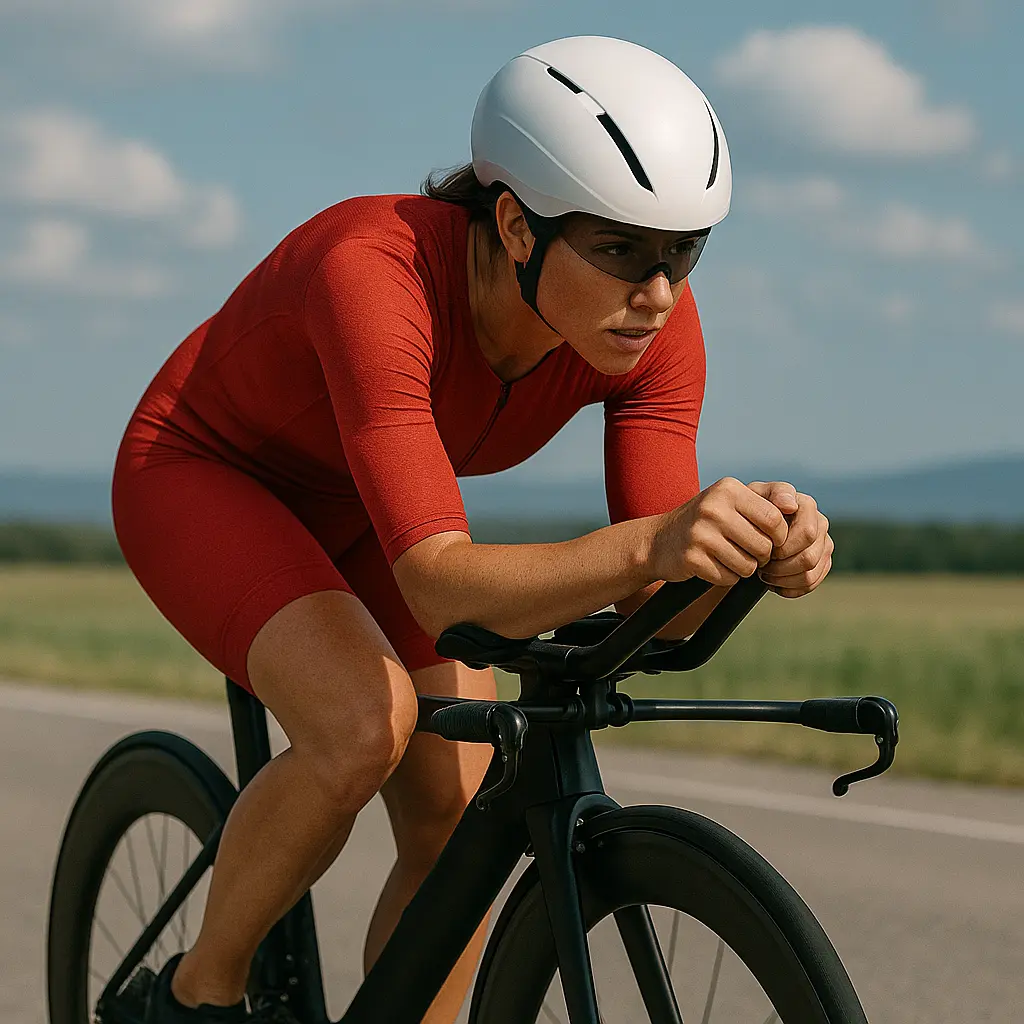
In this Q&A episode, Mikael answers listener questions on training, physiology, long-term athlete development, and more. There are lots of practical tips and takeaways relevant to a wide range of athletes and contexts.
HIGHLIGHTS AND KEY TOPICS:
- How to get as fast as possible at middle-distance triathlon as a 19-year-old
- How to quantify training load and monitor response to load
- Key metrics to monitor for overtraining risk
- How to select bike cadence when using cycling as cross-training for running
- Heart rate drift during Zone 2 cycling
- Discrepancies between cycling and running heart rates
Quick Navigation
Sponsored by:

Precision Fuel & Hydration
Precision Fuel & Hydration produce our favourite gels, sports drinks, and electrolyte and carbohydrate products here at That Triathlon Show and Scientific Triathlon. Use the free Fuel & Hydration Planner to get a personalised plan for your carbohydrate, sodium and fluid intake in your next event, and get 15% off your first 2026 order by using the code TTS2026 at checkout.
Shownotes
Perform better in middle-distance triathlon
02:48 -
- When starting out in triathlon, you don’t necessarily need to focus on Olympic distance first. In fact, middle distance (70.3) may be the smarter option—especially if you're training independently, without support from a national federation or elite squad.
- That said, the decision isn’t just about race distance—it's about how you structure your long-term athletic development.
- Even if your main goal is middle-distance racing, your early training should look similar to that of a sprint or Olympic distance athlete. Why? Because speed peaks earlier than endurance, and developing it takes focused work. You can always build endurance later, but the speed lost early is hard to reclaim.
- So while you can race middle distance now, avoid structuring your entire year around it. Instead:
- Use focused blocks for race-specific preparation.
- Avoid getting trapped in high-volume, low-speed training too early.
- Balance short- and long-term performance goals—you’ll peak in 5–10 years, not now.
Key Priorities for Early-Career Triathletes
- Technique is harder to improve with age, so now is the time to focus:
- Swimming: This is especially critical; poor form becomes costly at longer distances.
- Cycling: Focus on bike handling and efficiency.
- Running: Refine mechanics to prevent injuries and build efficiency.
- Analyze your current technical level, identify weaknesses, and work on them consistently.
- Then, This is a long journey—you’ll only reach your full potential with years of consistent training.
- Find training partners or groups to keep it social.
- Avoid burnout by managing load and life outside sport.
- Choose environments (pools, roads, trails) that encourage routine and performance.
Training Volume & Intensity
- You don’t need Ironman-level volume at this stage.
- Focus on intelligent intensity and progression, not just accumulating hours.
- Avoid the trap of “more is better”—especially if it leads to overtraining or injury.
Injury Prevention
- Work with a trusted physio, even when not injured—aim for 2–4 check-ups per year.
- Preventative care is more cost-effective (and less disruptive) than treatment.
- Manage intensity and recovery with care.
Nutrition, Sleep & Recovery
- Sleep and fuel well—it’s the foundation of all performance.
- If unsure about your diet, book a consultation with a registered dietitian—even a one-off can help.
- Mental recovery matters too: don’t let training become a chore. Keep it purposeful and fulfilling.
Hire a Coach
- If your goal is to reach your full potential, working with a coach is essential.
- It will help you develop progressively and safely, avoid common pitfalls and maximize your performance potential.
- You may also benefit from multiple coaches—a triathlon coach for overall structure, and a dedicated swim coach if that’s a weakness.
- The sooner you start with a coach, the greater the benefits. Good coaching has a compounding effect on your development.
Quantify training load
09:29 -- If we’re talking about pure cyclists, I’d say kilojoules (kJ) are the best internal metric for quantifying training load. They offer a simple and powerful way to reflect the total amount of work done—especially for intra-athlete tracking over time.
- However, kJ is not comparable across athletes. A cyclist with a 300W FTP will always accumulate more kilojoules than one with a 200W FTP, even if the relative effort is the same.
- So the goal shouldn’t be to match someone else's kJ totals, but rather to understand what is sustainable and adaptable for the individual athlete. It’s not about doing more—it’s about responding to what you do.
- In triathlon, kJ cannot be used across all disciplines (e.g., swimming, running). This makes a unified metric more appealing. Enter TSS (Training Stress Score)—a widely adopted system attempting to quantify training across sports.
- But in my experience, TSS has significant limitations, especially in a multi-sport context:
- Swimming: TSS grossly overestimates load, especially when tools (e.g. paddles) are used. You can swim above threshold with low effort and still rack up excessive TSS.
- Terrain and Conditions: TSS based on pace or power doesn’t accurately reflect effort on trails or variable terrain.
- Device Reliability: Athletes frequently experience power meter failures, calibration issues, or missing data. This corrupts TSS calculations and creates noise in the data.
- Misleading Athlete Behavior: Athletes sometimes chase higher TSS scores, going too hard on easy days in pursuit of “more fitness,” which undermines training quality and intent.
- TSS attempts to be precise, but in reality, it suffers from inconsistent input data and flawed assumptions. You could spend your entire day correcting these discrepancies—an inefficient use of time and energy.
- My solution? Track total hours trained across swim, bike, and run (excluding strength, hiking, or other activities that involve different physiological systems).
- Simplicity: Easy to understand and easy to fix if data is missing.
- Adaptability: Works across disciplines without requiring detailed calibration.
- Scalability: Training load tends to scale with hours when intensity distribution is well-managed.
- RPE Integration: While not formally part of the "hours" metric, combining it with session RPE gives valuable context
- Not all hours are equal—a 10-hour week of zone 1 differs from a 10-hour high-intensity block. But in my coaching, weeks rarely swing to those extremes. Once athletes are past the post-break period, we enter a rhythm where most weeks contain a balanced mix of endurance and intensity. Because of this, intensity tends to scale with volume over time.
- For example, an athlete may perform a threshold session, a race-specific 7-on/3-off session, or a VO₂max workout. While the VO₂max session is harder, all fall within a similar perceived intensity range when structured properly.
- Lastly, and most importantly: training load means nothing without context of response.
- Whether measured in kilojoules, TSS, or hours, the athlete’s ability to adapt is what matters.
- A rider with a lower FTP might log fewer kJ but still experience a higher relative training stress than a stronger athlete. That’s why I don’t fixate on "doing more" for the sake of metrics. I look at the athlete response, adaptation over time.
- I use hours because they are robust, adaptable, and simple to manage. They avoid the false precision of TSS, which is often undermined by data collection issues and flawed assumptions.
- Ultimately, they allow me to focus on what really matters: how the athlete responds to the work, not how fancy the tracking system is.
- While quantifying training load (e.g., through hours, kilojoules, or TSS) is important, what truly matters is how the athlete responds to that load.
- Performance doesn’t result from load alone—it comes from adaptation. That’s why I believe monitoring the response to load is even more important than tracking the load itself.
- The primary and most important indicator I rely on is subjective feedback from the athlete. Simple comments like:
- “I feel great”
- “I’m fatigued”
- “Legs feel heavy”
- “That session felt smooth and easy”
- These insights are incredibly valuable. They reflect how the athlete is actually processing and adapting to training—mentally and physically
- Another key strategy is triangulating metrics—comparing external performance indicators with internal physiological responses.
- Let’s say the athlete performs the same workout over several weeks at a fixed external output (e.g., 250W on the bike). We then compare that output with:
- Heart rate (internal physiological load)
- Rate of Perceived Exertion (RPE) (subjective total load)
- Lactate (if available)
- Environmental conditions (temperature, wind, etc.)
- There are two important scenarios to consider:
- Positive Response: Signs of Increased Fitness (External output: Stable Heart rate; Decreasing RPE)
- If this trend holds, it's usually a strong indicator of improved fitness and adaptation. The athlete is doing the same physical work with less physiological and perceptual strain.
- If this is the opposite, it often signals accumulated fatigue or functional overreaching. The athlete is getting the same work done, but it feels harder, and their body is showing strain.
- This isn't inherently bad—planned overload phases can be productive—but it needs to be monitored carefully so that it doesn’t escalate into non-functional overreaching or injury.
- Load metrics—whether hours, TSS, or kilojoules—are context-dependent. Even for the same athlete, the capacity to absorb load can vary from week to week due to:
- Life stress
- Sleep quality
- Nutrition
- Travel or work obligations
- This is why response monitoring is more reliable than tracking load alone. Training plans should always be dynamic, adjusting based on how the athlete is responding—not just what’s on the schedule.
- Great coaching isn’t about chasing the highest load—it’s about delivering the right load at the right time, and adapting as needed. By prioritizing:
- Honest athlete feedback
- Smart data cross-checks (external vs. internal metrics)
- Close observation of trends over time
Cycling During Marathon Training
20:56 -
- Overtraining is a complex condition that usually develops after prolonged periods of excessive load and insufficient recovery. The best strategy is to catch early signs of overreaching—before it progresses into something more serious.
- The most reliable method I use is triangulating three key markers:
- External output: Power (cycling), pace (running/swimming)
- Internal load: Heart rate or lactate
- Perceived effort: RPE (Rate of Perceived Exertion)
- This framework applies across disciplines.
- If an athlete performs a workout at a fixed power (e.g. 250W) over several weeks:
- If heart rate decreases and RPE is stable or lower, this likely signals improving fitness.
- If heart rate decreases but RPE increases, this suggests accumulating fatigue or overreaching.
- If power output or pace drops while heart rate is low and RPE is high, that’s a clear red flag for non-functional overreaching or early overtraining.
- While data is helpful, athlete self-awareness and feedback are just as critical:
- Declining motivation and worsening mood often precede measurable declines in performance.
- Regular conversations and comments in training logs or messages offer insight into how the athlete truly feels.
- If you'd like to use a more formal method, the Profile of Mood States (POMS) questionnaire is a validated tool, though I rarely use it. Informal discussion works well when trust and communication are strong.
- Sleep is a major indicator of recovery status, but its interpretation requires nuance because overreached athletes might sleep more due to fatigue, or they might experience fragmented sleep—frequent waking, difficulty falling asleep, or restless nights.
- I don’t rely on objective sleep tracker data due to questionable accuracy. Instead, I simply ask the athlete something like: "Have you noticed changes in your sleep quality or duration recently?"
- Despite its popularity, I don’t use HRV to monitor overtraining.
- In my own experience with overtraining, my HRV stayed completely stable, even when I was significantly overreached.
- Among well-trained athletes, HRV typically remains unchanged even after very hard days (e.g. double threshold sessions).
- HRV tends to respond more to non-training stressors like:
- Poor sleep
- Alcohol
- Psychological stress
- Travel
- Monitoring overtraining is more about pattern recognition than relying on any one number. It's about observing trends, asking the right questions, and staying connected to the athlete's experience.
- Coaching is not just about managing training load—it’s about managing recovery and response. And those who respond best to training are often not the ones who do the most, but the ones who recover the most effectively.
Bike cadence work
27:44 -
- A quick clarification: lower cadence, not higher, is what actually recruits more fast-twitch muscle fibers. That’s because maintaining a given power output at lower cadence requires more torque per pedal stroke, which engages more of the fast-twitch muscle fibers.
- That said, this isn’t the most relevant factor for marathon training. The goal with cross-training should be to complement your run training, not to replicate a cycling-specific strength program or overly fatigue your legs.
- In the context of marathon preparation, your cross-training should support your aerobic development, avoid excessive muscle fatigue and help you recover, not hinder your run workouts
- Based on that, while it can be useful in cycling-specific training blocks, low cadence riding (e.g., 60–70 rpm) tends to increase muscular fatigue in the legs. That could negatively affect your run workouts, especially your key long runs or speed sessions.
- Higher cadence riding raises heart rate at a given power output, increasing cardiovascular stress, decreases muscular load and fatigue and helps simulate the aerobic intensity of running more effectively
- A favorite high cadence session I use looks like this:
- Set power in mid-Zone 2
- Perform 10-minute blocks:
- 4 minutes @ 95 rpm
- 3 minutes @ 100 rpm
- 2 minutes @ 105 rpm
- 1 minute @ 110 rpm
- 2–3 minutes easy spin between blocks
- Repeat 4–5 times
- This can be done indoors in ERG mode or outdoors on flat terrain. It’s a simple and effective way to raise your heart rate while minimizing leg fatigue.
- For your 1–2 other rides in the week, ride at a comfortable or slightly elevated cadence. If your usual cadence is around 85 rpm, try averaging closer to 90 rpm, but you don’t need to fixate on specific cadence numbers.
- If focusing on cadence makes riding mentally taxing, skip it. The goal of these sessions is to support—not detract from your running. The running is the key driver of marathon performance.
- Cycling is a great cross-training tool for marathon prep, especially for reducing injury risk and building aerobic volume.
- At the end of the day, what you do on the bike matters less than what you do in your running. As long as the bike work is helping—not hurting—your run training, you’re on the right track.
Zone 2 cycling training
35:13 -
- Athletes coming from a running background and relatively new to cycling do not have a lot of durability. Durability refers to the ability to maintain performance output (e.g. power) with a stable internal response (e.g. heart rate and RPE) over longer durations.
- Cardiovascular system handles the workload well at the beginning, but after 2 hours, the accumulated physiological strain causes heart rate to rise—what’s known as cardiac drift.
- Over time, as chronic cycling volume increases, this drift will shift later and become less pronounced.
- While no change is necessary, here are three things you can check or tweak to optimize your sessions
- The first is to ensure proper cooling indoors.
- Poor cooling leads to rising core temperature, which elevates heart rate for a given workload. Therefore, use one or two high-powered fans directed at your upper body.
- To test this: compare with a similar outdoor ride, where natural airflow helps cooling. If cardiac drift is less pronounced outdoors, heat buildup indoors is likely the issue.
- Suboptimal fueling can contribute to rising heart rate via glycogen depletion or dehydration.
- Carbohydrates: Aim for 60–90g per hour. This can be a mix of simple sugars (e.g. maltodextrin + fructose).
- Fluids: we can calculate sweat loss by:
- Weighing nude before and after a ride
- Measuring fluid consumed during the session
- Adjusting so we don’t lose more than ~2.5% of bodyweight through sweat
- Even 1–2% dehydration can elevate heart rate. So drink enough to replace most of what we lose, especially on long indoor rides.
- As cycling-specific volume and consistency increase, the ability to sustain steady-state internal responses over long rides will increase as well.
- The slight RPE increase about one point is perfectly acceptable and expected.
- The heart rate driftin the final hour of a ride is normal for someone relatively new to cycling and will improve naturally with consistent training volume.
Differences in Heart Rate zone in cycling and running
40:00 -
- Most athletes with a strong running background who are relatively new to cycling have different heart rate zones for the two sport. The key reason lies in the different physiological demands of each discipline and how long you've been training in each.
- For example, if you have a running lactate threshold heart rate (LTHR) of 173 bpm and during a 3-hour indoor Zone 2 rides at 190 W, the heart rate is:
- 105–115 bpm in the first two hours
- 125–135 bpm in the final hour
- At first glance, this may seem too low—but it’s not. Cycling max heart rate is usually 5–10 bpm lower than running max HR. If the running LTHR is 173 bpm, we estimate running max HR at ~192 bpm (assuming threshold ≈ 90% max HR).
- The estimated cycling max HR would then be ~182 bpm.
- Based on that, your heart rate during these rides starts at ~60% of cycling max HR and ends at ~72% of cycling max HR
- This falls into Zone 1 to low Zone 2 territory based on max-HR-based zones—perfectly normal for Zone 2 aerobic training.
- The heart is ready to work harder, but your cycling muscles don’t demand it yet. This mismatch is caused by lack of cycling-specific adaptations at the muscular and mitochondrial level, limited capillarization in cycling prime movers (e.g. quads, glutes) and lower neuromuscular efficiency in cycling due to less training history
- So, cardiovascular system could support more output, but the muscles aren’t yet asking for it. As a result, the heart doesn’t need to pump as hard—hence the low HR.
- Adding intensity just to raise heart rate would be counterproductive because it defeats the purpose of Zone 2 work, which is aerobic base building and it could cause unwanted fatigue or hamper consistency
- Include high-cadence work in one session per week because higher cadences can slightly raise heart rate for the same power, help improve pedaling efficiency and muscle recruitment
- One can also track cycling max HR with an all-out 5–20 min test. This gives better clarity when calculating HR zones
- The solution is not intensity—it’s volume and consistency
